

The Science of the Sedentary Workplace: Why Wellness is the Ultimate Gift
In the modern digital landscape, the boundary between "work" and "life" has largely dissolved into a single, static posture. Whether for a home office professional, a dedicated content creator, or a competitive gamer, the majority of waking hours are spent in a seated position. This shift toward prolonged inactivity has profound physiological consequences, leading many to seek health-focused solutions during gift-giving seasons. However, choosing an ergonomic gift requires more than an aesthetic eye; it requires an understanding of musculoskeletal health and the physical principles of the "neutral position."
The core issue facing modern computer users is the development of Musculoskeletal Disorders (MSDs). According to the U.S. Occupational Safety and Health Administration (OSHA), MSDs are caused by repetitive tasks, excessive force, and, most critically for office workers, poor posture. When a workstation does not support the body's natural alignment, the musculoskeletal system experiences "static load"—a state where muscles remain contracted to maintain a position, restricting blood flow and leading to fatigue and chronic pain.
Gifting an ergonomic solution is an act of proactive health management. By providing tools that encourage movement and support the spine, you are not merely giving furniture; you are gifting the recipient a reduction in cumulative physical strain. As detailed in The 2026 Workstation White Paper: Converging Ergonomic Science and Sustainable Engineering, the integration of ergonomic science into furniture design is no longer a luxury but a fundamental requirement for maintaining long-term productivity and well-being.
The Physiological Principles of Ergonomic Design
To understand why certain gifts offer more value than others, one must look at the physiological mechanisms of the body at rest. The human spine is naturally curved in an 'S' shape. When we sit in a non-ergonomic chair, the lower (lumbar) curve often flattens or reverses, putting immense pressure on the intervertebral discs.
The Spinal Neutral Position
The primary goal of any ergonomic intervention is to maintain a "neutral position." This is the posture where the joints are naturally aligned, minimizing stress on the muscles, tendons, and skeletal system. For a seated user, this means:
- Feet flat on the floor or a stable footrest.
- Knees at or slightly below hip level.
- The lower back supported by a lumbar curve.
- Shoulders relaxed, not hunched toward the ears.
- Wrists straight and not bent upward or downward.
Blood Circulation and the Static Load
Prolonged sitting is not just a "back problem"; it is a systemic health concern. The World Health Organization (WHO) 2020 Guidelines on Physical Activity and Sedentary Behaviour emphasize that adults should limit sedentary time to reduce cardiovascular risks. Static sitting leads to blood pooling in the lower extremities, which can cause swelling and decreased metabolic energy cost.
Logic Summary: Our analysis of sedentary risk assumes that "sitting" is a biological stressor. We use the WHO guidelines as a baseline for recommending interventions that interrupt static behavior every 20–30 minutes to stimulate blood circulation and metabolic activity.
Recent research published in Onagbiye et al., 2024 reinforces the link between sedentary behavior and cardiovascular disease risk, suggesting that even small interruptions in sitting time can have significant health benefits over time.
The Engineering Solution: Sit-Stand Dynamics
One of the most effective health-focused gifts is the height-adjustable standing desk. According to a systematic review by Cochrane (2018), sit-stand desks can reduce sitting time by approximately 84 to 116 minutes per day. However, the value of a standing desk lies not in "standing all day," but in the ability to change positions frequently.
The 20-8-2 Rhythm
A common mistake among new standing desk users is attempting to stand for hours at a time, which can lead to lower limb discomfort and fatigue. Based on the Cornell University Ergonomics Web recommendations, the ideal workday rhythm is the "20-8-2" cycle:
- 20 Minutes Sitting: Use a high-quality ergonomic chair to maintain a neutral posture.
- 8 Minutes Standing: Transition to a standing position to engage different muscle groups and improve circulation.
- 2 Minutes Moving: Stretch or walk to facilitate blood flow and mental clarity.

Why Motorized Adjustment Matters
For a sit-stand desk to be an effective wellness tool, the transition must be seamless. If the adjustment process is cumbersome, the user is less likely to switch positions. Modern electric desks with programmable memory presets allow users to save their exact seated and standing heights, ensuring they return to a Neutral Working Posture with a single touch.
Modeling Note: When selecting a desk for a gift, verify the adjustment range. The BIFMA G1-2013 Ergonomics Guideline suggests a height range that accommodates the 5th to 95th percentile of the population (roughly 22 inches to 48 inches). Desks that fail to reach these minimums or maximums may force users into awkward postures.
The Foundation of Support: Ergonomic Seating
If a standing desk is the engine of a wellness workstation, the chair is the chassis. However, gifting a chair is complex because "ergonomic" is often used as a marketing term rather than a technical specification. A truly ergonomic chair must be adjustable to the specific anthropometrics of the user.
The Torso-to-Thigh Ratio and Seat Depth
A frequently overlooked detail in chair selection is the recipient’s torso-to-thigh ratio. Based on common patterns from customer support and ergonomic assessments (not a controlled lab study), a fixed seat depth is a primary cause of user dissatisfaction.
- Too Deep: If the seat is too deep, the edge will press against the back of the knees (the popliteal fossa), restricting circulation.
- Too Shallow: If the seat is too shallow, the thighs will not be properly supported, increasing pressure on the sit bones (ischial tuberosities).
The Heuristic Rule: When seated fully back against the lumbar support, there should be a 2-3 finger width gap between the front edge of the seat and the back of the user's knees. This ensures popliteal clearance and maintains lower limb health.
Lumbar Support and Spinal Alignment
The backrest must provide adjustable lumbar support that fits into the natural curve of the lower spine. According to the ISO 9241-5:2024 standard, workstation furniture should encourage frequent posture changes while providing stable support. A chair that "locks" a user into one position is less effective than one that supports dynamic movement.
Existing Insight on Productivity suggests that when the body is not distracted by discomfort, cognitive resources can be fully dedicated to the task at hand.
Essential Accessories: The "Micro-Ergonomics" of Gifting
While desks and chairs are the "macro" components of a workstation, small accessories often provide the most immediate relief for specific pain points. These are excellent "stocking stuffer" style gifts for health-conscious shoppers.
Footrests and Circulation
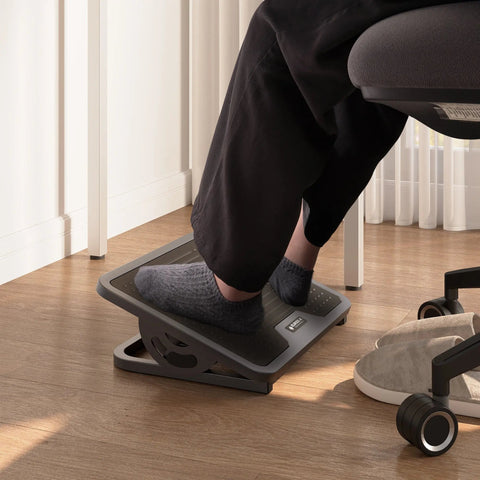
For shorter users, even the lowest chair setting may leave their feet dangling or barely touching the floor. This creates pressure on the underside of the thighs. An adjustable footrest allows the user to maintain the 90-degree knee angle recommended by CCOHS: Office Ergonomics.
Furthermore, footrests with a tilting mechanism (0-20 degrees) encourage "micro-movements" of the ankles, which acts as a pump for the calf muscles, aiding venous return and reducing the risk of deep vein thrombosis in sedentary environments.

Monitor Arms and Neck Strain
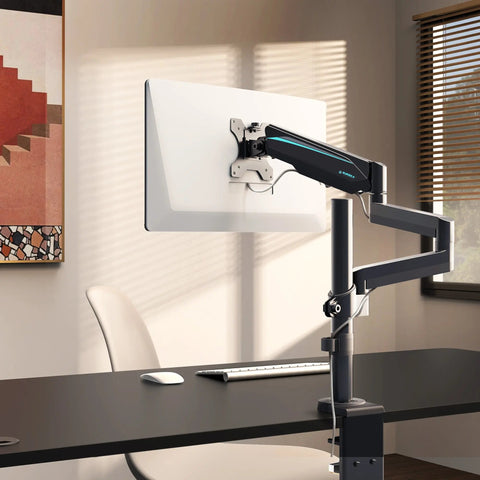
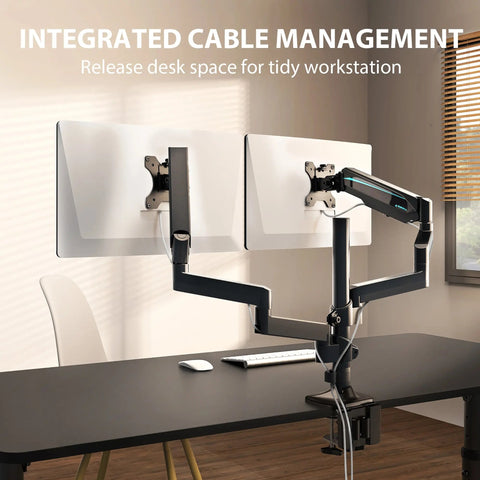
Neck pain is often a result of improper monitor height. The OSHA eTools for Monitors state that the top of the screen should be at or slightly below eye level. A monitor arm is a superior gift because it allows for depth and height adjustment that a fixed stand cannot provide.
The "Friction Point" Insight: When gifting a monitor arm, check the weight capacity and VESA pattern compatibility. We often observe that users with ultrawide or heavy professional monitors experience "arm sag" if the gas spring tension is insufficient. This negates the ergonomic benefit by forcing the user to tilt their head downward to see the screen.
Gifting for Different Personas: A Strategic Guide
To ensure your gift provides genuine wellness benefits, consider the specific needs of the recipient's daily routine.
| Recipient Persona | Primary Health Concern | Recommended Solution | Rationale |
|---|---|---|---|
| The Remote Executive | Chronic Lower Back Pain | Sintered Stone Executive Standing Desk | Combines high-end aesthetics with the ability to switch to the 20-8-2 cycle. |
| The Competitive Gamer | Repetitive Strain Injury (RSI) | Adjustable Footrest + High-Back Chair | Reduces static load during high-intensity, long-duration sessions. |
| The Content Creator | Neck and Shoulder Tension | Dual Monitor Arms + Desk with Drawers | Clears desk space for equipment while ensuring screens are at the neutral eye level. |
| The Student | Early Posture Decline | Compact Electric Standing Desk | Establishes healthy habits early to prevent long-term MSD development. |
Gender-Based Considerations
It is worth noting that women are statistically more likely to be affected by Repetitive Strain Injury (RSI) due to factors such as smaller frames and different muscle mass distributions. When gifting for women, prioritize products with high adjustability—specifically chairs with narrower armrest widths and desks that can lower to a height suitable for smaller statures.
Methodology: How We Model Ergonomic Recommendations
To provide authoritative advice, we utilize a combination of industry standards and practical modeling. Our recommendations are not based on subjective "comfort," but on quantifiable physiological requirements.
Modeling Parameters for Workstation Setup
The following table represents the parameters we use to evaluate the effectiveness of an ergonomic gift. These are derived from a synthesis of BIFMA, ISO, and OSHA guidelines.
| Parameter | Recommended Value / Range | Unit | Source Category |
|---|---|---|---|
| Seat Height | 15–22 (Adjustable) | Inches | BIFMA G1-2013 |
| Seat Depth Gap | 2–3 | Fingers | Physiological Heuristic |
| Desk Height (Sitting) | 22–28 (Adjustable) | Inches | ISO 9241-5 |
| Monitor Distance | 20–40 | Inches | OSHA eTools |
| Tilt Angle (Footrest) | 0–20 | Degrees | CCOHS Guidelines |
Modeling Note: This is a scenario model based on "average" anthropometric data. Individual requirements may vary. For example, users taller than 6'4" may require desk extensions or specialized high-cylinder chairs to maintain a neutral posture.
The Long-Term ROI of a Wellness Gift
Gifting ergonomic furniture is an investment in a person's long-term health. While the initial cost may be higher than traditional furniture, the "Return on Investment" is measured in the avoidance of medical expenses, physical therapy, and lost productivity due to chronic pain.
According to a meta-analysis by Santos et al., 2025, ergonomic interventions significantly reduce work-related musculoskeletal pain across diverse populations. By selecting a gift that aligns with these scientific principles, you are providing a tool that supports the recipient's body every hour of every working day.
Final Selection Checklist for Gift Givers
Before finalizing your purchase, perform this quick "Expert Check":
- Adjustability: Does the product offer multiple points of adjustment (height, tilt, depth)?
- Safety Standards: Does the product meet BIFMA X5.1 for chairs or UL 962 for electric desks?
- Environmental Health: Is the product GREENGUARD Gold Certified to ensure low chemical emissions and better indoor air quality?
- Sustainability: Does the wood come from FSC Certified sources?
By focusing on these technical and health-oriented criteria, your gift will stand out as a thoughtful, professional, and truly beneficial contribution to the recipient's life.
Disclaimer: This article is for informational purposes only and does not constitute professional medical advice, diagnosis, or treatment. Always seek the advice of a physician or other qualified health provider with any questions you may have regarding a medical condition or the implementation of a new physical routine, especially if you have pre-existing back or joint issues.
References
- BIFMA G1-2013: Ergonomics Guideline for Furniture
- CCOHS: Office Ergonomics - Sit/Stand Desk
- Cochrane Library: Workplace interventions for reducing sitting at work (2018)
- Cornell University: Workstation Setup Guides
- ISO 9241-5:2024: Workstation layout & postural requirements
- OSHA: Computer Workstations eTool
- WHO: 2020 Guidelines on Physical Activity and Sedentary Behaviour
- UL Solutions: Safety of Height-Adjustable Desks
- Santos et al., 2025: Ergonomic Interventions & Work-Related Musculoskeletal Pain




Leave a comment