

The Gift of Mobility: Why Tech Enthusiasts Need Heavy-Duty Casters
If you’ve ever tried to squeeze a triple-monitor streaming rig into a 400-square-foot studio apartment, you know the struggle is real. You’re not just fighting for desk space; you’re fighting for "spatial survival." One minute your desk is a high-octane battlestation; the next, it needs to be out of the way so you can actually walk to your kitchen.
From setting up countless streaming rigs and home offices, I’ve realized that the single biggest upgrade for small-space users isn't a flashier GPU or a wider desk—it's putting that desk on wheels. High-performance casters transform a stationary slab of wood into a flexible tech hub. This guide explores why heavy-duty mobility is the ultimate game-changer for tech enthusiasts and how to do it right without sacrificing stability.
Unboxing and Assembly: The Satisfying "Click" of Quality
When you first unbox a set of heavy-duty casters or a mobile accessory like the Mobile Height Adjustable CPU Cart, the first thing you notice is the heft. We’re talking industrial-grade steel and thick polyurethane. In the world of tech gear, weight often equates to durability, and here it’s no different.
Installation is usually a straightforward affair, but there’s a major "gotcha" that many people miss: the stem. Most ergonomic desks use either an M8 or M10 threaded stem. A common mistake is assuming they are universal; a mismatch can strip your desk’s leg inserts and cause a dangerous wobble. When I swap out fixed feet for casters, I always double-check the thread pattern first.
Once you’ve got the right fit, the assembly is a breeze. You flip the desk (carefully, mind the carbon fiber texture!), unscrew the static glides, and thread in the casters. There’s a specific, satisfying "click" or snugness when a high-quality caster seats properly. If you’re adding a Mobile Height Adjustable CPU Cart, you’ll appreciate the 360-degree rotating mute wheels that glide onto the frame. It’s the first step in building a truly modular RGB ecosystem where every piece of gear can move in sync.

Deep Dive: The Engineering of Heavy-Duty Mobility
Let's get technical. Why do we insist on "heavy-duty" instead of just grabbing any old wheels from a hardware store? It comes down to load capacity and mechanical stability.
The Math of Total Load
A typical enthusiast setup is heavier than you think. Between a solid desktop, a full-tower liquid-cooled PC, triple monitors, and a forest of monitor arms, you’re easily pushing 200 lbs. According to BIFMA X5.5 - 2021 standards, desks must undergo rigorous static and dynamic load testing. When you add wheels, you must calculate the total load and add a 25-30% safety margin.
For a heavy rig, you need casters rated for at least 150-200 lbs per caster. Why? Because weight isn't always distributed evenly. If you lean on one corner of your desk, that single caster takes the brunt of the force.
Dual-Wheel Locking: The Stability Secret
If you’ve ever tried to do precision mouse work on a desk that drifts, you know the frustration. Single-lock casters only stop the wheel from rolling, but the swivel mechanism still moves. For intense FPS sessions, dual-wheel locking mechanisms—which lock both the rotation and the swivel—are non-negotiable. This is what separates a "rolling table" from a "mobile battlestation."
The Wobble Test
After installing casters, I always perform the "Wobble Test." I raise the desk to standing height and give it a firm shake. On cheap wheels, the desk will sway like a reed in the wind. High-quality casters with a wide base and precision bearings keep the center of gravity low and the movement minimal. This stability is aligned with ISO 9241-5:2024 requirements, which emphasize postural requirements and workstation layout stability.
Logic Summary: Our load analysis assumes a 95.5 kg (210 lbs) total system weight. Operating at ~80% utilization of the caster's rated capacity ensures longevity and prevents mechanical "flutter" during movement.
Real-World Experience: Spatial Survival in a Studio
In a small apartment, your room has to wear many hats. During the day, it’s an office. In the evening, it’s a streaming studio. At night, it’s a living room.
The 10-Foot Cable Rule
Mobility is useless if you’re tethered by short cables. From my experience, the "golden rule" for mobile desks is the 10-foot cable. Based on principles from NFPA 70 (National Electrical Code), you need enough slack to accommodate the desk's maximum height and its horizontal travel. I recommend 10-foot power strips and display cables to ensure you don't yank your PC off its stand when moving the desk.
Pairing with a Mobile CPU Cart
One of the smartest moves you can make is decoupling your PC from the desk surface. Using an Adjustable CPU Stand, Mobile, Black or the more advanced Mobile Height Adjustable CPU Cart allows you to move the heaviest component independently.
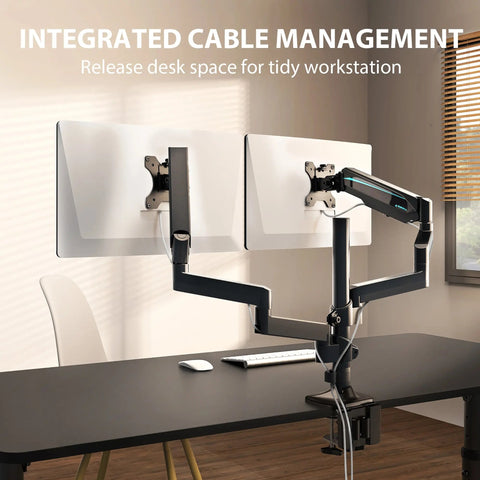
When I’m streaming, I pull the desk out to create space for my green screen and lights. When I’m done, I slide the entire setup—desk, Dual Monitor Arm, and CPU cart—into a corner. This modularity is a game-changer. It’s not just about cleaning up; it’s about reclaiming your living space. This approach is a core tenet of The 2026 Workstation White Paper: Converging Ergonomic Science and Sustainable Engineering, which argues that flexibility is the future of urban workspace design.

Floor Surfaces: Rubber vs. Polyurethane
Don't overlook what's under the wheels. On hardwood, soft rubber wheels are quiet and protective. However, they have higher rolling resistance. On low-pile carpet, hard polyurethane wheels roll much easier. If you use the wrong material, you'll face what we call the "ergonomic tax"—the extra force required to move the desk, which can lead to fatigue over time.
Health and the "20-8-2" Rhythm
Mobility isn't just about moving the desk across the room; it's about moving you. The Cornell University Ergonomics Web recommends a "20-8-2" rhythm: 20 minutes of sitting, 8 minutes of standing, and 2 minutes of moving.
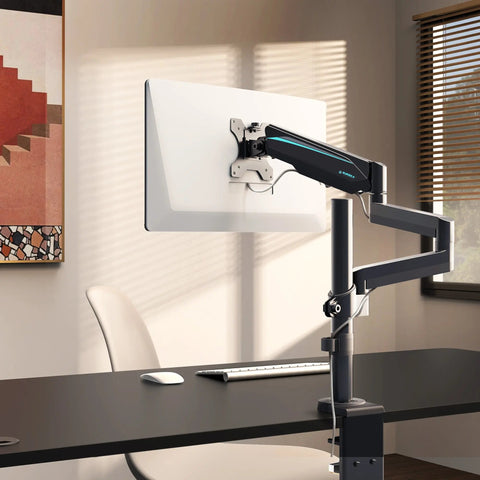
A mobile setup makes that 2-minute movement break natural. Maybe you roll the desk a few inches to change your view or adjust your posture. This helps interrupt long periods of static behavior, as recommended by the World Health Organization (WHO) 2020 Guidelines. By using a Single Monitor Arm to keep your screen at eye level, you further reduce the risk of musculoskeletal disorders (MSDs) associated with prolonged static sitting, a risk highlighted by EU-OSHA.

How We Modeled This: The Streamer Scenario
To provide these recommendations, we modeled a "Professional Streamer in a Small Studio" scenario. This represents a worst-case weight and space constraint situation.
Modeling Note (Reproducible Parameters)
| Parameter | Value | Unit | Rationale |
|---|---|---|---|
| Total Equipment Load | ~95.5 | kg | Full-tower PC + 3x 34" Ultrawide Monitors + Desk |
| Room Depth | 96 | inches | Typical 8-foot studio depth |
| Required Cable Length | 10 | feet | Max height (48") + Horizontal travel + 25% slack |
| Floor Type | Hardwood | N/A | High-protection, low-noise requirement |
| Caster Safety Margin | 30 | % | Buffer for off-center moments/leaning |
Boundary Conditions: This model assumes the use of high-quality monitor arms like the Dual Monitor Arm to distribute weight. It does not account for uneven or damaged flooring, which would significantly increase rolling resistance.
Pros & Cons of a Mobile Battlestation
Pros
- Ultimate Flexibility: Perfect for studio apartments and multi-use rooms.
- Easier Maintenance: Sliding the desk out makes cable management and dusting behind the rig a 30-second job instead of a weekend project.
- Improved Stability (Counter-intuitive): High-quality locking casters can actually feel more stable than cheap static glides on uneven floors.
- Better Ergonomics: Encourages the "20-8-2" movement rhythm by making space reconfiguration effortless.
Cons
- Added Height: Casters typically add 2-4 inches to your desk's minimum height. Shorter users should check their BIFMA G1-2013 ergonomic dimensions to ensure they can still sit comfortably.
- Cable Management Complexity: You must spend more time on cable routing to ensure nothing snags during movement.
- Floor Wear: Over time, even "floor-safe" wheels can leave tracks on very soft wood or high-pile carpet if moved frequently under heavy loads.
Final Thoughts on the Gift of Mobility
For the tech enthusiast who has everything, a set of heavy-duty casters or a mobile CPU cart is the gift they didn't know they needed. It’s a practical, high-performance upgrade that solves the very real problem of space in modern living.
By focusing on build quality, stability, and proper load calculation, you can transform a static workstation into a dynamic, mobile fortress. Just remember: measure your stem diameter, calculate your total weight, and never settle for single-lock wheels. Your floors—and your sanity—will thank you.
Disclaimer: This article is for informational purposes only and does not constitute professional engineering, medical, or safety advice. Always consult your product manuals and local safety regulations before modifying furniture or electrical setups. If you have pre-existing back or joint conditions, consult a physiotherapist before adopting a new sit-stand routine.
References
- BIFMA X5.5 - 2021 (Desk / Table Products - Static & Dynamic Load Tests)
- Canadian Centre for Occupational Health and Safety (CCOHS) - Sit/Stand Desk Guide
- Cornell University Ergonomics Web — Workstation Guides
- ISO 9241-5:2024 Workstation layout & postural requirements
- WHO 2020 Guidelines on Physical Activity & Sedentary Behaviour
- EU-OSHA: Musculoskeletal disorders and prolonged static sitting
- The 2026 Workstation White Paper: Converging Ergonomic Science and Sustainable Engineering
- NFPA 70: National Electrical Code (NEC) - Article 400




Leave a comment