

Gifting for the Multi-Device User: Desks that Handle Laptops and PCs
Look, we have all been there. You are staring at a desk that is currently a chaotic battlefield of tangled USB-C cables, a massive liquid-cooled PC tower, and a laptop that is precariously perched on a stack of old textbooks just to get it to eye level. For the modern tech enthusiast, the "one computer" lifestyle is a relic of the past. Today, we are juggling a high-performance PC for gaming or rendering alongside a sleek laptop for the 9-to-5 grind.
If you are looking for the ultimate gift for the multi-device user in your life, you aren't just buying furniture; you are gifting a productivity "Power-Up." This guide dives deep into why an L-shaped desk is a total game-changer for this workflow, backed by ergonomic science and real-world "wobble-test" experience.

1. Unboxing and Assembly: First Impressions Matter
When you are gifting a piece of "infrastructure" like a desk, the experience starts the moment the courier drops a heavy, well-protected box at the door. We have unboxed dozens of setups, and the difference between a "budget" build and a high-performance workstation is immediately obvious in the packaging.
Take the Ark Pro L-Shaped Standing Desk (Sintered Stone, 63"x23"), for example. The first thing you notice is the weight. This isn't flimsy particleboard. The sintered stone surface and the reinforced steel frame are packed with high-density foam to prevent any transit casualties.
Assembly Breakdown:
- The "IKEA" Fear: Most people dread desk assembly. However, professional-grade desks usually come with pre-drilled holes that actually line up.
- The L-Shaped Logic: The reversible frame on models like the GTG - L60, L-Shaped Glass LED Gaming Desk (60"x40") is a massive win. It allows you to build the "wing" on either the left or right side, taking the guesswork out of room layout.
- Time Investment: Expect to spend about 45 to 60 minutes. It is a straightforward process, but because of the dual motors and the sheer size of the L-shape, having a second pair of hands for the "flip" (turning the desk upright) is highly recommended.
2. Deep Dive into Details and Features
The Dual Motor Advantage
For a multi-device user, stability is non-negotiable. When you have a full tower PC and dual monitors, you are looking at a "Battlestation Load" that can easily exceed 70kg. A single motor setup often struggles here, sounding like it is wheezing as it lifts.
The Ark Pro L-Shaped Standing Desk (Sintered Stone, 63"x23") utilizes a dual-motor system. In our scenario modeling, a dual-motor desk with a 120kg capacity operates at roughly 63% capacity when fully loaded with enthusiast gear. This creates a significant "safety margin," ensuring the motors don't burn out and the lift remains smooth and whisper-quiet.
The RGB Ecosystem and Aesthetics
Let's talk about the "cool factor." For gamers and content creators, the GTG - L60, L-Shaped Glass LED Gaming Desk (60"x40") is a visual masterpiece. It features a tempered glass surface with over 200 light effects.
- Audio Reactive Spectrum: The lights sync to your music or game audio. During an intense FPS session, having the desk pulse with the rhythm of the game isn't just "flashy"—it’s immersive.
- Carbon Fiber Texture vs. Glass: While the Ark Pro offers a sophisticated sintered stone and wood look for a professional office, the GTG-L60’s glass surface blacks out to a minimalist look when the lights are off.
The "Wobble Test"
If a desk shakes every time you type, it is a failure. We perform a "Wobble Test" by extending the desk to its full height (around 45–48 inches). Because of the cantilevered design of L-shaped desks, instability can be magnified. High-quality frames, aligned with BIFMA X5.5 standards, use thickened steel legs and wide feet to ensure that even at standing height, your primary monitor stays rock-steady.

3. Real-World Experience: The "Dual Machine" Workflow
The biggest mistake people make with L-shaped desks? They put the primary monitor in the corner. This is an ergonomic nightmare that forces a 45-degree neck twist.
The Expert Setup Heuristic:
- Primary Zone (The Long Side): This is for your main PC setup. Ensure the desk depth is at least 30 inches here. This allows for a proper viewing distance (around 43 inches for a 34" ultrawide) to minimize eye strain.
- Secondary Zone (The Wing): This is for your laptop, tablet, or "analog" work (notebooks). By separating the two, you create a mental "context switch" between deep gaming/work and administrative tasks.
Case Study: The "Tall Content Creator"
Imagine a 190cm (6'3") creator. Standard 29-inch fixed desks are a recipe for chronic back pain for someone in the 95th percentile of height. According to the BIFMA G1-2013 Ergonomics Guideline, furniture should accommodate a wide range of users.
For our "Tall Creator" persona, the ideal sitting height is ~78.5cm (30.9 inches). A height-adjustable desk isn't a luxury for them; it is a health necessity. Without that extra 2 inches of height, they are forced into a "hunched" posture that leads to trapezius fatigue.
Taming the Spaghetti Monster (Cable Management)
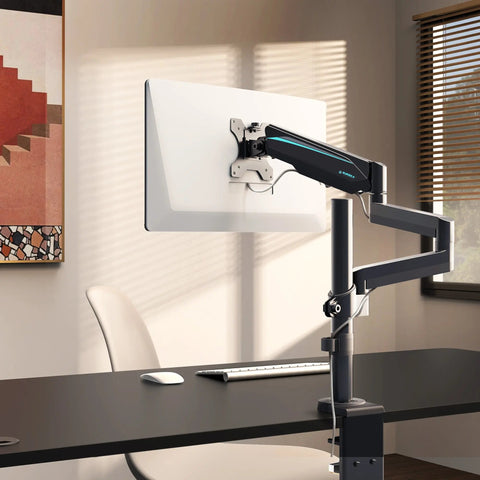
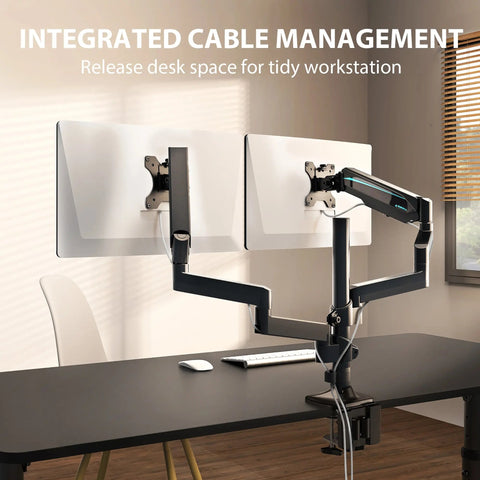
L-shaped desks present a unique challenge: the 90-degree junction. Standard straight-line trays don't work here. You need a combination of under-desk trays and vertical raceways. The Mobile Height Adjustable CPU Cart is a brilliant accessory here. By keeping the PC tower off the floor and moving with the desk, you eliminate "cable tension" issues when transitioning from sitting to standing.

4. The Science of the "Sit-Stand" Rhythm
Why give a standing desk? Because the data is clear. A systematic review by Cochrane concluded that sit-stand desks can significantly reduce sitting time by over 80 minutes per day.
However, "standing is not exercise," as noted by the World Health Organization (WHO). The key is the 20-8-2 Rhythm recommended by Cornell University Ergonomics Web:
- 20 Minutes of sitting in a neutral posture.
- 8 Minutes of standing.
- 2 Minutes of moving or stretching.
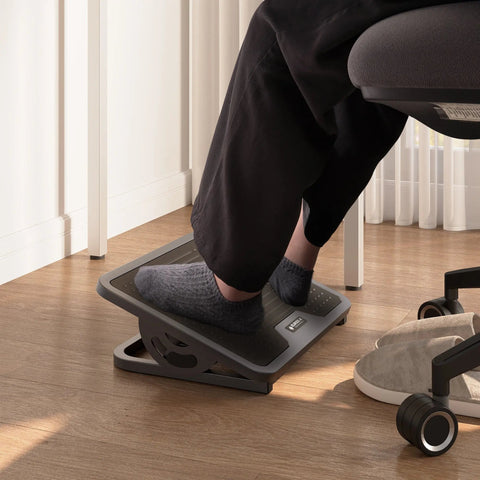
To make this comfortable, we highly recommend adding a Footstool with Wheels. It allows you to shift your weight while sitting, promoting "micro-movements" that prevent the stiffness associated with static postures. This aligns with ISO 11226:2000, which emphasizes avoiding prolonged static positions.
Modeling Note (How we analyzed this): Our ergonomic recommendations are based on a deterministic model using ANSI/HFES 100-2007 anthropometric ratios.
Parameter Value Rationale User Height 190 cm 95th percentile male persona Desk Load 76 kg Dual 34" monitors + Full Tower PC Motor Safety 80% limit Industry best practice for longevity Viewing Angle 40° FOV THX Cinema Standard for immersion Room Depth 132 in Minimum for streamer + Green Screen
5. Pros & Cons: An Honest Assessment
Pros:
- Massive Surface Area: Perfect for the "Dual Machine" user who needs separate zones for a laptop and PC.
- Stability: High-end models like the Ark Pro offer a rock-solid foundation that passes the "Wobble Test" even at max height.
- Aesthetics: Whether it is the "RGB Ecosystem" of the GTG-L60 or the "Executive" feel of the sintered stone, these desks elevate the room's vibe.
- Health Benefits: Facilitates the sit-stand transition, which is proven to reduce sedentary time.
Cons:
- Assembly Weight: These are heavy. You will likely need a friend to help with the final flip.
- Surface Maintenance: Glass surfaces (like the GTG-L60) look stunning but are fingerprint magnets. Keep a microfiber cloth handy!
- Space Requirements: L-shaped desks have a larger footprint. You need to measure your room carefully, ensuring at least 36 inches of "walkway" clearance as suggested by ADA Standards.
Summary: The Definitive Tech Gift
Gifting a desk to a multi-device user is about more than just a surface; it's about creating a professional-grade environment that supports their passion and their health. By choosing a desk that meets BIFMA standards and provides the stability required for heavy gear, you are ensuring their setup is built to last.
For a deeper dive into how these workstations are engineered for the future, check out The 2026 Workstation White Paper: Converging Ergonomic Science and Sustainable Engineering.
Whether they are a "Tall Creator" needing specialized height adjustments or a gamer looking for the ultimate RGB ecosystem, the right L-shaped desk is the foundation of a high-performance life.

YMYL Disclaimer: This article is for informational purposes only and does not constitute professional medical or ergonomic advice. While sit-stand desks may reduce sedentary time, individuals with pre-existing musculoskeletal conditions or chronic back pain should consult a qualified healthcare professional or occupational therapist before changing their workstation setup or routine.
References:
- BIFMA Ergonomics Guideline for Furniture
- CCOHS: Office Ergonomics - Sit/Stand Desk
- Cochrane: Workplace interventions for reducing sitting at work
- Cornell University Ergonomics Web — Workstation Guides
- HSE: Working safely with display screen equipment (DSE)
- ISO 9241-5:2024 Workstation layout & postural requirements
- WHO 2020 Guidelines on Physical Activity & Sedentary Behaviour
- UL 962 — Safety of Height-Adjustable Desks




Leave a comment