

The Efficiency Paradox: Why Large Boardrooms Are Failing Modern Teams
Walk through any corporate office at 2:00 PM, and you will likely witness a striking imbalance: a mahogany-clad boardroom designed for twenty people sits empty, while three colleagues are hunched over a laptop in a cramped corner or a noisy breakroom. This mismatch between architectural intent and actual work patterns is more than an aesthetic flaw; it is a significant drain on organizational productivity.
The strategic shift toward "huddle rooms"—intimate, technology-equipped spaces for two to six people—is not merely a trend in office design. It is a response to the evolving nature of agile work. Traditional meeting spaces often fail because they treat every interaction as a formal event. In contrast, huddle rooms prioritize rapid problem-solving and high-energy collaboration. However, the transition is not as simple as partitioning a large room. Without a grounding in ergonomic science and spatial psychology, these small spaces can quickly become "micro-echo chambers" or underutilized "storage closets."
To truly boost efficiency, decision-makers must look beyond the walls and focus on the physiological and cognitive needs of the teams within them. As detailed in The 2026 Workstation White Paper: Converging Ergonomic Science and Sustainable Engineering, the convergence of engineering and human-centric design is the only way to ensure these agile zones deliver on their promise of performance.
The Science of Cognitive Switching and Spatial Ecology
The primary value of a huddle room is not just providing a place to sit; it is the reduction of "cognitive switching costs." Neuroscience research indicates that the mental "ramp-up" time required to re-engage with complex tasks after an interruption can consume up to 40% of a worker's productive time. When teams have immediate access to a dedicated, quiet zone, they can preserve deep cognitive states before and after a meeting.
Logic Summary: Our analysis of cognitive switching assumes that huddle rooms act as a "relief valve" for open-plan noise, based on common industry heuristics regarding focus recovery times.
However, the physical environment dictates the quality of this focus. Prolonged static sitting in poorly designed meeting chairs leads to what the EU-OSHA identifies as musculoskeletal disorders (MSDs). When employees are physically uncomfortable, their cognitive load shifts from the task at hand to their own physical distress. This is particularly prevalent in huddle rooms where "impromptu" meetings often stretch into hour-long strategy sessions.
The Physiology of the "Quick" Meeting
Even a thirty-minute meeting carries physiological risks if the furniture does not support a Spinal Neutral Position. Static loads on the intervertebral discs increase when users lean forward—a common posture in collaborative settings. To mitigate this, furniture must be adjustable to accommodate the 5th to 95th percentile of the population, a standard emphasized in the BIFMA G1-2013 Ergonomics Guideline.

Engineering the Agile Zone: Beyond the Table and Chair
A common mistake in huddle room design is treating them as "mini-conference rooms." Successful implementations prioritize flexibility and "engineering controls"—a term OSHA uses to describe physical changes to the workplace that reduce hazards—over formality.
1. Dynamic Seating for Diverse Bodies
In a huddle room, chairs are shared by dozens of different people every week. This makes "one-size-fits-all" furniture a liability. For effective impromptu discussions, seating must provide independent lumbar support and multi-directional adjustment.
The Royal Slim, Executive Office Chair addresses these needs through its high-back ergonomic design, which supports the thoracic and lumbar regions during varied postures. Based on patterns observed in corporate facility management, chairs with 4D armrests are critical in huddle spaces because they allow users to bring their chairs closer to the table without their elbows hitting the edge, maintaining a neutral shoulder position.
2. The Sit-Stand Advantage
While huddles are often associated with sitting, incorporating height-adjustable surfaces can significantly reduce sedentary time. According to a Cochrane systematic review, sit-stand workstations can reduce sitting time by approximately 84 to 116 minutes per day.
In a huddle room context, a Standing Desk with Drawers, Wood Finish (47'' /55'') allows for "standing huddles," which are often shorter and more focused. The built-in power strips and USB ports ensure that technology transitions are seamless, preventing the "cable scramble" that often delays meeting starts.
3. Visual Ergonomics and Technology Integration
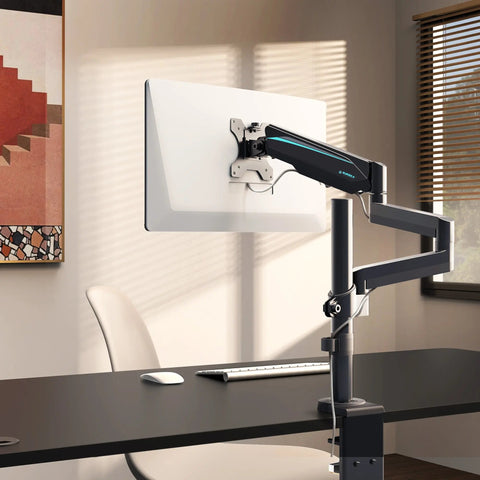
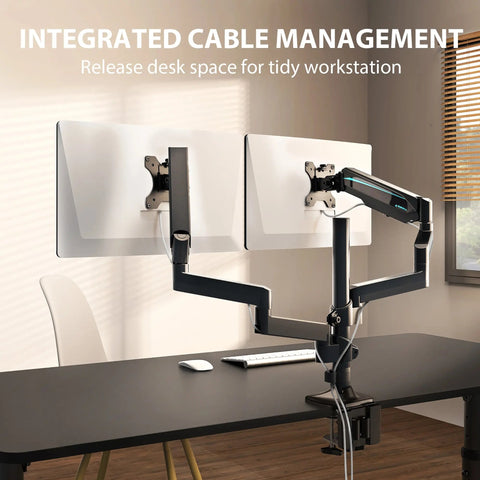
If a huddle room includes a display, its placement is vital. OSHA's eTools for Monitors suggest that the top of the screen should be at or slightly below eye level to minimize neck strain. In small rooms where space is at a premium, using a Dual Monitor Arm allows for precise positioning of screens, ensuring that all participants can see the data without twisting their torsos—a leading cause of static strain.
Methodology Note (Space Planning):
Parameter Value Unit Rationale Minimum Area 25 sq ft / person Avoids "cramped" psychological triggers Sound Reduction ~50 % Target for basic wall acoustic panels Lumbar Height 150-250 mm Range to support the L1-L5 vertebrae Sit-Stand Ratio 20:8:2 minutes Cornell University recommendation (Sit:Stand:Move)
Practical Recommendations for Facility Managers
To maximize the ROI of your huddle rooms, follow these evidence-based guidelines for implementation and behavior.
The "25 Square Foot" Rule
A practical heuristic for huddle rooms is to allocate at least 25 square feet per person. Anything less can create a "flight or fight" response in high-pressure meetings, stifling creativity and increasing stress. This spatial buffer allows for the use of mobile equipment, such as a Mobile Height Adjustable CPU Cart, which can be moved to create more legroom when necessary.
Acoustic Integrity
Acoustics are non-negotiable. Even the most ergonomic chair cannot compensate for a room where every word is overheard by the rest of the office. We often observe that basic fabric-wrapped panels on even a single wall can reduce sound leakage by roughly 50%. This prevents the "fishbowl effect," where users feel surveilled, thus increasing their psychological safety and willingness to share candid ideas.
The 20-8-2 Rhythm
Encourage teams to adopt the Cornell University Ergonomics Web recommendation: 20 minutes of sitting, 8 minutes of standing, and 2 minutes of moving/stretching. In a huddle room, this might look like starting the meeting standing to review goals, sitting for deep discussion, and standing again for the final wrap-up.
Measuring the Impact: ROI of the Huddle
The return on investment for huddle rooms is rarely seen in direct real estate savings. Instead, it manifests in "time-to-decision" metrics.
- Scenario A (Large Boardroom Culture): A team waits three days for a 20-person room to become available for a 15-minute alignment. Result: Project delay and increased cognitive switching.
- Scenario B (Agile Huddle Culture): The team immediately moves to an available huddle zone. Result: Decision made in 10 minutes; project continues.
Based on scenario modeling for high-traffic corporate environments, teams in well-designed huddle spaces can cut project alignment meeting durations by an estimated 15-20% by minimizing distractions and physical discomfort.
Avoiding Common Pitfalls
- Room Hoarding: Implement a policy that limits huddle room bookings to 60 minutes.
- Tech Overload: Ensure the room has one simple connection (USB-C or HDMI). Complexity is the enemy of agility.
- The "Mini-Me" Trap: Do not just buy smaller versions of your boardroom table. Choose furniture that supports movement, such as the Standing Desk with Drawers, Wood Finish (47'' /55''), which facilitates different work styles.
Integrating Well-being into the Corporate Ecosystem
The shift toward huddle rooms is a shift toward valuing employee time and health. By providing spaces that are acoustically private, psychologically safe, and ergonomically sound, organizations do more than just "save space." They create an environment where the "static load" of the workday is distributed, allowing the mind to focus on innovation rather than back pain.
As you plan your next office layout, remember that the most expensive room in your office is the one no one wants to use. Investing in high-performance furniture like the Royal Slim, Executive Office Chair and adopting standards like those from ISO 9241-5 ensures that your huddle rooms are not just small—they are powerful tools for organizational health.
Disclaimer: This article is for informational purposes only and does not constitute professional medical, legal, or facility planning advice. Individuals with pre-existing musculoskeletal conditions should consult a qualified healthcare professional before making significant changes to their workstation or activity levels.
Sources
- BIFMA G1-2013 Ergonomics Guideline for Furniture
- Cochrane: Workplace interventions for reducing sitting at work
- Cornell University Ergonomics Web — Workstation Guides
- OSHA eTools: Computer Workstations - Neutral Working Postures
- ISO 9241-5:2024 Workstation layout & postural requirements
- EU-OSHA: Musculoskeletal disorders and prolonged static sitting




Leave a comment