

Lift recliner weight capacity is a starting point, not the whole fit decision. The listed number tells you the chair's published support limit, but it does not guarantee comfort, seat width, or long-term durability for every body type. In the US, lift chairs sit in a regulated medical device context, so it is worth treating the spec sheet as a serious check, not a marketing line.

What Lift Recliner Weight Capacity Really Means
Think of capacity as the first filter, not the final answer. If the chair's rating is below the user's actual weight, it is the wrong shortlist. If the number looks high enough, you still need to check whether the seat dimensions, frame layout, and lift motion match the person who will sit in it every day.
That is where many delivery-day regrets start. A chair can meet the listed weight limit and still feel too narrow, too deep, or too soft at the edges for stable daily use. The result is not always a dramatic failure. More often, the user just feels crowded, sinks unevenly, or has trouble standing up smoothly.

For heavier users, the practical question is not only, "What is the rating?" It is also, "Will this chair support my body shape and daily routine without feeling cramped?" If you are comparing lift chair weight capacity in plain language, the safest rule is simple: capacity must be paired with fit checks before checkout. The FDA clearance record for a power lift chair is a clearer official example of the device context than a generic sales page.
Heavy-Duty vs. Bariatric Lift Chairs
For most shoppers, the useful split is not "good" versus "better." It is heavy-duty versus bariatric, with the deciding factor being how the chair is built and how the user sits in it.
The 400 lb seating benchmark is a helpful reference point for heavy-duty comparisons, but it should not be treated as a universal bariatric cutoff. It is a practical way to tell shoppers when a standard chair is probably not enough and a more robust build deserves attention. Bariatric, by contrast, usually signals a broader fit-and-structure category rather than just a bigger number on the listing.
| Option | What the label usually tells you | What to verify next | Common mistake |
|---|---|---|---|
| Standard lift recliner | Basic support for everyday use | Seat width, seat depth, and standing stability | Choosing by capacity alone |
| Heavy-duty lift chair | A more robust build and higher support target | Whether the listed rating matches the user with margin | Assuming all heavy-duty chairs feel the same |
| Bariatric lift chair | A broader support-and-fit category | Width, reinforcement, delivery method, and return terms | Treating bariatric as just a higher number |
A heavy-duty chair can be the right answer when the user is near the upper end of standard recliners but does not need the widest bariatric-style seating. Bariatric makes more sense when the body shape, seated width, or support needs call for extra room and a stronger structure. If you are shopping for the best heavy duty lift recliner 400 lb, use that number as a comparison anchor, not a universal promise.
If the rating is enough but the seat is too narrow, the chair is not a fit; if the seat feels right but the build looks light, keep looking. That is why bariatric power lift chair recommendations should be judged by structure and dimensions, not label alone.
What to Check Before You Buy
Before you buy, run a short fit check that goes beyond the headline number. The goal is to cut return risk and avoid a chair that looks right online but feels wrong in your home.
Measure Seat Width and Depth
Start with the user, not the listing. Measure the widest point of the seated hips and compare it with the chair's seat width. Then check seat depth so the person can sit back without pressure behind the knees or sliding forward to compensate. A weight rating alone does not guarantee a proper fit; the chair also needs to match body width, thigh support, and how the user stands up.
A pre-purchase fit test checklist can help here because it pushes you to verify seat depth and other fit points before checkout instead of after delivery.
Check Frame, Base, and Mechanism
Look for clues that the frame and lift mechanism are designed for the stated load instead of just advertising it. Heavier users place repeated stress on the moving parts, especially the lift action and base support, so sturdier construction matters as much as the number on the page. Community discussions about heavy-duty recliners also show a common buyer concern: advertised capacity does not always match real-world durability. That is a caution signal, not proof of failure.
If you are unsure how much adjustment matters in daily comfort, our ergonomics and adjustment basics article is a useful background read. It helps explain why small fit differences can change how stable a chair feels over time.
Review Shipping, Returns, and Delivery Setup
Heavy lift chairs are harder to move, and that makes shipping details more important than many shoppers expect. Check whether the chair ships as freight, how far the carrier delivers it, whether white glove setup is available, and what the return window looks like. A strong capacity rating is less helpful if the chair is difficult to move into the room or expensive to send back.
Confirm User Range and Daily Use
Match the chair to how it will actually be used. A lift recliner for occasional guest seating has a different risk profile than one used every day for standing assistance, reading, and long sitting sessions. If the user is close to the upper end of the listed capacity, daily use calls for more margin, not less. Also check room space, because a chair that fits the user can still fail in a tight room.
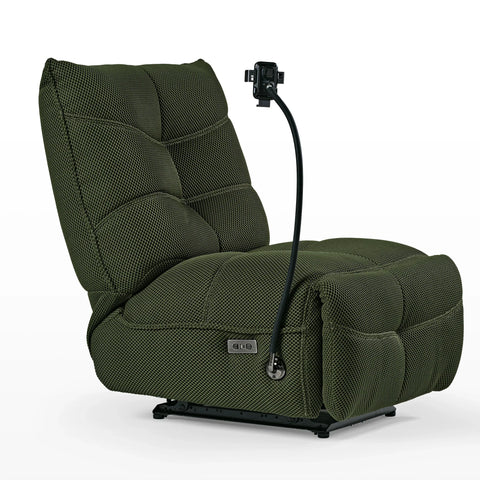
If you are comparing browsing paths, a category like recliner options is useful for narrowing the style first, while a product page like our current recliner check is better when you already know the fit conditions you need to verify. On that product page, the listed support is 360 lbs, so it sits below the 400 lb heavy-duty benchmark and works best for buyers whose actual need stays within that range.
Final Buying Check
Read lift recliner weight capacity as one part of a broader fit test. Start with the published limit, then confirm seat width and depth, frame strength, delivery terms, and the user's daily routine. If those pieces line up, the chair is easier to trust before it reaches your home. Compare the heavy-duty and bariatric paths, then check the specs that matter most for your user before you add anything to cart.
FAQs
Is a 400 Lb Lift Recliner Automatically Bariatric?
Not automatically. A 400 lb rating is a useful heavy-duty benchmark, but bariatric fit usually depends on more than the number alone. Look at seat width, reinforcement, and the way the chair supports standing and reclining before you treat the label as a match.
What Matters More, Weight Capacity or Seat Size?
Both matter, but seat size often decides whether the chair feels usable every day. If the capacity is high enough but the seat is too narrow or too deep, the chair can still feel unstable or tiring to use. Check the user's seated width and leg position first.
How Much Margin Should I Leave Above My Weight?
More margin is better when the chair will be used daily or when the user sits with a wider build. If the user is near the top of the listed capacity, move up to the next stronger option instead of treating the exact limit as a comfortable target.
Should Caregivers Prioritize Delivery Terms?
Yes. For heavier lift chairs, freight handling, room access, and return terms can matter as much as the chair itself. If delivery is awkward or the return window is tight, a bad fit becomes much harder to correct.
When Should I Choose a Heavy-Duty Chair Instead of Bariatric?
Choose heavy-duty when the user needs stronger support but still fits comfortably within the chair's dimensions. Choose bariatric when the body shape, seated width, or daily support needs call for a broader fit envelope. If you are unsure, measure first and compare the spec sheet before buying.





Leave a comment