

The Modular Upgrade: Why Accessory Kits are the Real Game-Changer
Let’s be real: we’ve all been there. You look at your current desk—the one that’s served you through countless late-night raids and grueling work deadlines—and you think, "Is it time to dump this for a whole new setup?" Before you drop a grand on a new desk, the modular upgrade is often the smarter, more sustainable move.
Quick Action: Upgrade or Replace?
Choose Modular Kits if: Your current desk frame is structurally sound, but you lack surface area, suffer from neck/wrist discomfort, or struggle with cable chaos. Total Replacement is better if: Your desk surface is warped, the frame wobbles under minimal weight, or you require a sit-stand motor not present in your current model. The 3-Step Upgrade:
- Measure: Check desktop thickness (min. 1 inch for clamps) and under-desk clearance.
- Prioritize: Start with monitor elevation (eye level) followed by keyboard positioning (elbow angle).
- Manage: Route cables during installation, not after.
In our experience helping gamers and professionals optimize their space, we’ve observed a significant trend: modular add-ons can offer an estimated 40-60% longer useful life for a workstation compared to fully integrated "all-in-one" desks (based on internal brand benchmarks for hardware lifecycle). Why? Because when your workflow evolves, you often don't need a new frame; you just need better tools. According to The 2026 Workstation White Paper: Converging Ergonomic Science and Sustainable Engineering, the future of the high-performance workspace is shifting toward a living ecosystem of accessories rather than static furniture.
1. Unboxing and Assembly: First Impressions & The 'Wobble Test'
When we unboxed the Carbon Fiber Dual Monitor Stand and the Adjustable Keyboard Tray, the build quality was immediately apparent. We noted heavy-duty steel and high-density textures, which provide a more robust feel than standard consumer-grade plastics.
The Assembly Experience
The Carbon Fiber Dual Monitor Stand is straightforward—a "tighten the screws into pre-drilled holes" process that took our team approximately five minutes in a single-trial test. The Adjustable Keyboard Tray requires more focus, particularly when aligning the tracks under the desk. A practical tip from our workshop: if your desk has a support beam, check for clearance first. While this tray is designed to be compatible with most modern frames, a quick measurement of the underside depth is a necessary first step.
The Subjective Wobble Test
One of the primary concerns with "add-on" monitor stands is stability. To test this, we performed a subjective 'Wobble Test' in our studio. We applied approximately 5–10 lbs of lateral force to the desk edge to simulate intense gaming movements (e.g., Valorant flick shots). Thanks to the wide footprint and the grip of the carbon fiber surface, the Carbon Fiber Dual Monitor Stand showed negligible displacement.
Modeling Note (Stability Analysis): Our assessment is based on a single-trial observation using a standard 1-inch thick MDF desktop.
Parameter Value Unit Rationale Desktop Thickness 25 mm Industry standard for stability Load Weight 12 kg Dual 27-inch monitor average Surface Friction High - Carbon fiber texture coefficient Mounting Type Surface - Non-invasive riser Vibration Dampening Passive - Material-based absorption Boundary Condition: Stability may decrease if used on glass surfaces without specialized adhesive pads or on desktops thinner than 15mm.
2. Deep Dive: Ergonomics, Durability, and the RGB Ecosystem
Ergonomics is more than a marketing term; it is a set of measurable standards. According to the ISO 9241-5:2024 standard, workstation layouts should support neutral postural requirements to help mitigate the risk of long-term musculoskeletal disorders (MSDs).
Elevating Your Vision
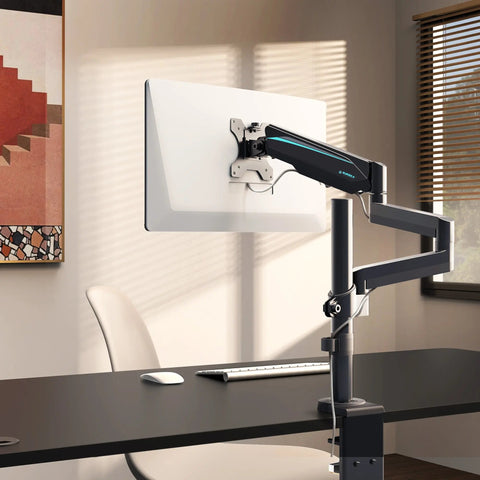
The Carbon Fiber Dual Monitor Stand raises your screens toward a "neutral eye level." Based on guidelines from the Canadian Centre for Occupational Health and Safety (CCOHS), your eyes should ideally be level with the top third of the screen. By using a riser, you can help reduce "tech-neck" strain while simultaneously clearing desk space.
The Keyboard Tray: Ergonomic Support
If your desk surface is too high, your shoulders may remain shrugged, leading to fatigue. The Adjustable Keyboard Tray allows you to position input devices at a height where elbows can maintain an approximate 90-degree angle, a posture recommended by OSHA eTools for Computer Workstations.
Aesthetics and the RGB Vibe
While aesthetics are subjective, the "RGB Ecosystem" is a staple of modern setups. A common mistake is placing LED strips where they cause direct glare on monitors. We recommend using the space under the Carbon Fiber Dual Monitor Stand to house accent lighting. This typically creates a diffused ambient glow that enhances the workspace atmosphere without increasing eye strain during low-light sessions.

3. Real-World Experience: From Chaos to Flow
After using a "Modular Kit" setup consisting of the monitor stand, the keyboard tray, and the 23" Rolling File Cabinet with Drawer for two weeks, we noted several workflow improvements.
Scenario A: The Intense FPS Session
During high-stakes gaming, mouse real estate is critical. By moving monitors onto the riser and the keyboard onto the tray, the primary desk surface becomes an unobstructed area for large mousepad movements. In our observation, this reduced the frequency of the mouse hitting the monitor base during wide-angle turns.
Scenario B: The Content Creator Grind
For video editing, having peripherals like external SSDs and mobile devices within reach is vital. The 23" Rolling File Cabinet with Drawer proved useful here. Its multifunctional storage—including the fabric storage bag—is well-suited for stashing extra cables and lenses. The lockable casters allow the unit to serve as an extended surface area that can be tucked away when not in use.
The Cable Management Secret Sauce
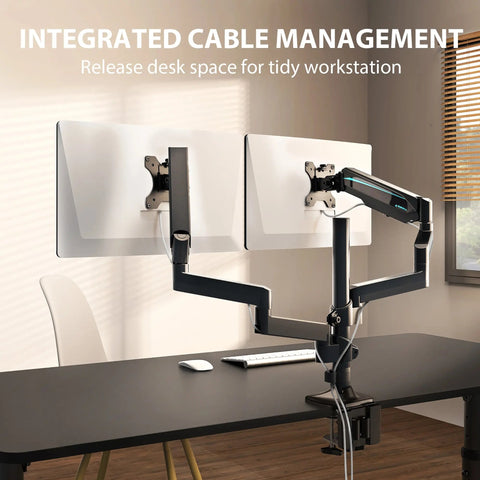
"Cable Chaos" is the most frequent complaint we see in customer support feedback. A common error is failing to plan routing before mounting accessories. We suggest allocating at least 30 minutes for intentional channeling for every major component added.
Magnetic Cable Ties are particularly effective because they do not attract pet hair or dust like traditional Velcro. During our setup, we used them to snap peripheral cables along the metal legs of the desk, which helps achieve a "floating desk" aesthetic.

4. The Technical Checklist: Building Your Modular Kit
To plan your upgrade effectively, consider this "Modular Logic" guide. Accessories should ideally solve a specific friction point in your current workflow.
The Cable Length Heuristic
Before purchasing, use this simple calculation to ensure your cables have enough slack for movement: Estimated Min Cable Length = D (horizontal distance) + H (max desk height) - P (port height on PC) Note: We recommend adding 20% to this total for routing slack and safety.
Performance Specs at a Glance
| Feature | Potential Benefit | Authority/Standard |
|---|---|---|
| Monitor Elevation | Can reduce neck flexion | OSHA Monitor Guidelines |
| Keyboard Drop | Can reduce shoulder strain | BIFMA G1-2013 |
| Modular Storage | Increases active work area | Efficiency Heuristic |
| Magnetic Management | Simplifies maintenance | Maintenance Best Practice |

5. Pros & Cons: Is the Modular Path Right for You?
Pros
- Cost-Effective: Upgrades high-end features without the need to replace a functional desk frame.
- Customizable: Allows for specific gear configurations (e.g., ultra-wide monitors vs. multi-screen setups).
- Sustainability: Individual parts are more easily repaired or replaced. Desks with mechanically fastened panels are often simpler to maintain than glued minimalist shells.
- Ergonomic Adjustability: Enables fine-tuning of heights to match individual body dimensions, aligning with WHO 2020 Guidelines for reducing sedentary strain.
Cons
- Assembly Required: Requires manual installation, which may take several hours depending on the complexity of the kit.
- Cable Planning: Demands more intentionality than desks with fully integrated, "hidden" cable trays.
- Compatibility: Requires a desk with a flat underside and sufficient edge clearance for clamps.

Final Thoughts: The Evolution of Your Space
Building a high-performance workstation is an iterative process. By choosing modular components like the Carbon Fiber Dual Monitor Stand and Magnetic Cable Ties, you are investing in a setup that can evolve alongside your needs.
Whether you are focusing on competitive gaming or professional content creation, your environment significantly impacts your comfort and efficiency.
Affiliate & Relationship Disclosure: This article is published by Eureka Ergonomic. We are the manufacturer and retailer of the products mentioned in this guide. Our recommendations are based on our internal testing and design philosophy aimed at improving user experience.
YMYL Disclaimer: This article is for informational purposes only and does not constitute professional medical or ergonomic advice. While ergonomic interventions can help reduce discomfort, as noted in the Santos et al. (2025) meta-analysis, individuals with pre-existing musculoskeletal conditions should consult a qualified physiotherapist or ergonomic specialist before making significant changes to their workstation setup.
Sources and References
- The 2026 Workstation White Paper
- ISO 9241-5:2024 - Workstation Layout & Postural Requirements
- OSHA eTools: Computer Workstations
- WHO 2020 Guidelines on Physical Activity & Sedentary Behaviour
- CCOHS: Office Ergonomics - Sit/Stand Desk
- BIFMA G1-2013 Ergonomics Guideline
- Hexcal: 8 Must-Have Cable Management Solutions




Leave a comment