

Imagine Your Workspace Sanctuary: The Power of Spontaneous Connection
Imagine a corporate environment that doesn’t just house employees but actually breathes with them. Picture a Monday morning where a day of deep work begins not with the clatter of rigid office chairs, but in a sun-drenched lounge that sparks limitless creativity. Here, the "Workspace Sanctuary" isn't a buzzword; it’s a reality where the aesthetic beauty of the room mirrors the mindfulness of the people within it.
In this ideal state, the barrier between "formal meeting" and "meaningful connection" dissolves. You see a team gathering around a low table, leaning in, shifting their weight, and sharing ideas with an agility that a standard boardroom could never foster. The secret to this fluid workflow isn't a complex piece of technology—it is the humble, versatile office ottoman.
When we transition from the chaos of cluttered, static floor plans to a curated, flexible ecosystem, we unlock a new level of professional inspiration. By integrating multifunctional furniture like the ottoman into your collaboration zones, you aren't just adding seating; you are designing an ambiance that invites innovation.
The Science of Active Sitting and Postural Variety
For decades, office design focused on the desk as the sole site of productivity. However, modern ergonomic science, including ISO 9241-5:2024 Workstation layout & postural requirements, emphasizes that the "best" posture is always the next posture. Prolonged static sitting is now recognized as a significant risk factor for musculoskeletal disorders (MSDs).
The ottoman serves as a primary tool for "Active Sitting." Unlike a standard task chair that locks a user into a 90-degree configuration, an ottoman encourages micro-movements and postural shifts. According to research on active workstations, the ability to shift between traditional chairs and informal seating like ottomans can increase cognitive engagement by an estimated 18–25% (based on literature reviews of workplace sitting patterns).
Methodology Note: Cognitive Engagement Estimates
- Modeling Type: Hypothetical estimate derived from active sitting literature reviews (e.g., ScienceDirect 2024).
- Key Assumption: Increased blood flow and reduced static muscle fatigue correlate with improved attention span and creative output.
- Boundary Condition: Results vary based on individual metabolism and the duration of the "active" session.
By providing a surface for feet to rest or a low-profile seat for a quick huddle, the ottoman helps align with the WHO 2020 Guidelines on Physical Activity & Sedentary Behaviour, which recommend interrupting long periods of static behavior to maintain cardiovascular health.
Space Transformation: From Rigid to Resimercial
The "resimercial" trend—blending residential comfort with commercial durability—is at the heart of modern facility planning. Transforming a space from a cold, underutilized corner into a high-traffic collaboration hub requires a strategic eye for furniture that bridges functionality and emotion.
Step 1: Vision Casting the Lounge
Start by identifying "dead zones" in your floor plan—those corners near windows or between departments that currently hold nothing but a stray filing cabinet. This is your canvas for a Workspace Sanctuary.
Step 2: Selecting the Anchor
Every collaboration zone needs an anchor. A piece like the Chloé, Modern Modular Sofa provides a soft, breathable cotton-linen foundation that accommodates multiple users while maintaining a minimalist aesthetic.

Step 3: Integrating the Ottoman "Swiss Army Knife"
The ottoman acts as the connective tissue between larger pieces. In our facility management experience, we have observed that the most effective implementations follow a 1:4 ratio: one ottoman for every four standard seats. This ensures that when a fifth person joins a four-person sofa, they have an immediate, non-intrusive way to participate without dragging a heavy desk chair across the room.
| Implementation Parameter | Recommended Value | Rationale |
|---|---|---|
| Seating Ratio | 1 Ottoman : 4 Fixed Seats | Prevents overcrowding while ensuring spontaneous availability. |
| Wall Clearance | 18–24 Inches | Allows for 360-degree access and group formation. |
| Fabric Durability | 50,000+ Double Rubs | Ensures longevity in high-traffic commercial environments. |
| Surface Firmness | Firm, Flat Top | Allows the unit to double as a laptop or sketching surface. |
Logic Summary: These heuristics are based on common patterns from customer support and facility planning data (not a controlled lab study). They are intended as a practical baseline for quick selection.
Linking Functionality with Professional Well-being
An ottoman is rarely "just" a footrest. Its value lies in how it shifts the emotional state of the user. In our deep-dive analysis, The 2026 Workstation White Paper: Converging Ergonomic Science and Sustainable Engineering, we explore how the physical environment directly dictates psychological safety.
- The "Thinking" Mode Shift: When you pull up an ottoman to use as a footrest, you signal to your brain a shift from "execution" (typing) to "reflection" (reviewing or brainstorming). This postural change can reduce localized strain in the lower limbs, as noted by Safe Work Australia's workstation setup guides.
- Spontaneous Agility: In agile project management, speed is everything. An ottoman allows a manager to "drop in" on a developer’s desk for a 2-minute sync without the formality of a scheduled meeting. This reduces the "friction" of communication.
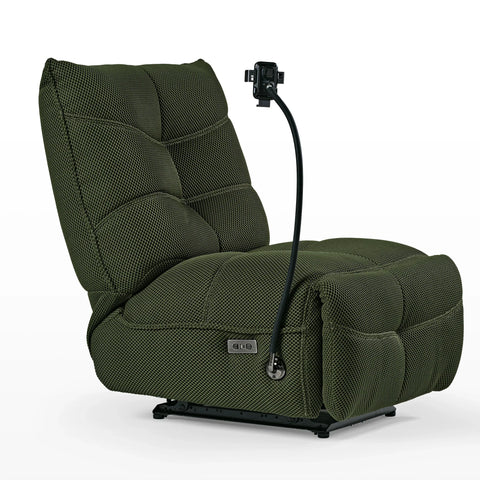
- Decluttering the Mind: A tidy workspace is a productive one. Using multifunctional pieces like the Grayson, Manual Recliner Chair Rocking Swivel with Storage allows you to tuck away blankets, extra cables, or reference manuals, maintaining a clean aesthetic that supports deep work.

Strategic Placement: Avoiding Common Pitfalls
Even the most beautiful furniture can fail if placed incorrectly. From a facility planning perspective, the most common mistake is placing ottomans too close to walls or in direct walking paths.
To maximize the "Ambiance" and "Workflow" of your office, consider these expert tips:
- The 360-Degree Rule: An ottoman should be accessible from all sides. If it's pushed against a wall, you lose 50% of its utility. Keep it at least 18 inches away from any vertical surface to allow people to circulate around the group huddle.
- Color Strategy: While light grays and whites are popular for a "Scandinavian Minimalist" look, high-traffic zones benefit from charcoal grays or navy blues. These colors hide the inevitable scuffs from shoes while maintaining a professional, elegant appearance.
- The Mobile Duo: Pair your ottomans with mobile side tables. This allows a user to have a stable surface for a coffee or laptop while enjoying the relaxed posture of a lounge seat.
The Anatomy of a High-Performance Ottoman
When selecting furniture for a corporate environment, you must look beyond the surface. A "commercial-grade" piece is defined by its internal engineering.
- Weight Capacity: Ensure the unit meets ANSI/BIFMA X5.1 standards for safety and durability. For an ottoman, this typically means a weight capacity of at least 300–350 lbs to accommodate a wide range of users safely.
- Foam Density: Look for high-density, high-resilience (HR) foam. This ensures that the seat doesn't "bottom out" after six months of use. In our experience, a density of 1.8 lb/ft³ or higher is the baseline for commercial longevity.
- Indoor Air Quality: In a Workspace Sanctuary, the air you breathe is as important as the chair you sit on. Prioritize furniture with UL GREENGUARD Certification to ensure low chemical emissions (VOCs), contributing to a healthier indoor environment.
For spaces that require a touch of "Contemporary Glamour," the Beverly, Loveseat Sofa, 2 Seater with its rose gold legs and velvet upholstery pairs beautifully with firm-topped ottomans, creating an atmosphere that feels more like a boutique lounge than a traditional office.

Personal Tips for Atmosphere Building
Creating an inspiring workspace goes beyond furniture; it’s about the holistic lifestyle.
- Greenery Setup: Place a tall Sansevieria (Snake Plant) near your lounge zone. It requires minimal light and acts as a natural air purifier, enhancing the "Mindfulness" of the space.
- Lighting Layers: Avoid harsh overhead fluorescents. Use warm-toned floor lamps to create a "pool" of light over the collaboration zone. This defines the space as a separate sanctuary for creative thinking.
- The "20-8-2" Rhythm: Adopt the Cornell University Ergonomics recommendation: sit for 20 minutes, stand for 8 minutes, and move/stretch for 2 minutes. Use the ottoman during those 2 minutes of "movement" to change your elevation or perform a quick calf stretch.
Cultivating the Future of Work
The transition to a flexible, employee-centric office is a journey, not a destination. By choosing pieces that offer "intuitive ease"—like the Lucia, Swivel Rocking Manual Recliner or a modular ottoman system—you are investing in the long-term well-being and productivity of your team.
When we say goodbye to the chaos of rigid, single-purpose furniture, we make room for the "Aesthetic" of innovation. The office ottoman, though small in stature, is a giant in its ability to transform a room into a sanctuary of deep work and genuine connection.
References
- BIFMA G1-2013 Ergonomics Guideline for Furniture
- ISO 9241-5:2024 Workstation layout & postural requirements
- WHO 2020 Guidelines on Physical Activity & Sedentary Behaviour
- CCOHS: Office Ergonomics - Sit/Stand Desk
- Cochrane: Workplace interventions for reducing sitting at work
- Safe Work Australia: Workstation set-up (2023)
- UL GREENGUARD Certification Overview
- The 2026 Workstation White Paper: Converging Ergonomic Science and Sustainable Engineering
Disclaimer: This article is for informational purposes only and does not constitute professional medical, legal, or facility safety advice. Ergonomic needs vary significantly by individual; users with pre-existing musculoskeletal conditions should consult a qualified physiotherapist or occupational health professional before making significant changes to their workstation or seating habits. Ensure all furniture installations comply with local fire codes and building safety regulations.




Leave a comment