

Portable Productivity: Essential Ergonomic Gear for the Hybrid Bag
Quick Take: To maintain health while working remotely, prioritize three actions: keep your total bag weight under 10% of your body weight, elevate your laptop screen to eye level using a stand, and use a separate keyboard to keep wrists neutral. This guide provides a step-by-step sequence to transform any cafe or shared desk into a musculoskeletal-safe zone.
The transition to hybrid work models has introduced a new physiological challenge: the "commuter’s paradox." While professionals enjoy the flexibility of alternating between home offices and third places like coffee shops, the lack of a consistent, ergonomically optimized workstation often leads to increased physical strain. Many hybrid workers find their discomfort increases specifically in the afternoon—a phenomenon frequently associated with the cumulative load of improper posture and the physical weight of carrying portable gear.
Maintaining musculoskeletal health in a mobile environment requires a systematic approach. This strategy should align with ergonomic principles, such as those discussed in the 2026 Workstation White Paper: Converging Ergonomic Science and Sustainable Engineering (Eureka Ergonomic Manufacturer White Paper). This article examines the physiological principles of portable work, identifies common pitfalls, and provides a guide to selecting gear that protects your health without compromising mobility.
The Physiology of the Mobile Workday: Understanding Static Load
The primary health risk in hybrid work is the development of Work-related Musculoskeletal Disorders (WMSDs). According to the U.S. National Institute for Occupational Safety and Health (NIOSH), these disorders are frequently influenced by excessive force, repetitive tasks, and prolonged static postures.
When working from a laptop on a standard dining table, users often adopt a "hunched" posture. This position forces the cervical spine into flexion, increasing the weight the neck muscles must support. Based on biomechanical modeling (e.g., Hansraj, 2014), for every inch the head moves forward from a neutral position, the effective load on the spine can increase significantly—often estimated at approximately 10 additional pounds of pressure per inch of forward tilt.
The Impact on Blood Circulation and Musculoskeletal Health
Static load—the effort required to maintain a posture without movement—can restrict blood flow to the muscles, potentially leading to localized fatigue. The World Health Organization (WHO) 2020 Guidelines on Physical Activity and Sedentary Behaviour emphasize that interrupting long periods of static behavior is important for metabolic health.
In a mobile setting, the lack of adjustable furniture may lock the user into a single position. This can cause "postural fixity," where the lack of movement prevents the "muscle pump" action that aids venous return, which may lead to lower limb discomfort over time.
Illustrative Model: Mobile Workstation Strain Estimates Note: Values are theoretical estimates for a standard adult head (~10–12 lbs) based on common ergonomic tilt-load ratios.
Parameter Estimated Range Unit Rationale/Source Head Forward Tilt 15–30 Degrees Typical laptop usage on standard tables Estimated Cervical Load 27–40 lbs Based on Hansraj (2014) biomechanical model Static Posture Duration 90–120 Minutes Observed interval between self-initiated breaks Suggested Recovery 10–15 Minutes Movement required to help restore baseline circulation
The "Bag Tax": Why Your Commute May Impact Your Health
A common mistake in hybrid work patterns is the use of bags that are either too heavy or poorly organized. This creates a "bag tax"—physical strain incurred before the workday begins. Physics dictates that bags optimized for organization often place heavy items further from the wearer’s center of gravity, creating an outward-pulling force that the core and shoulders must counteract.
Asset: The 10% Heuristic Self-Check
As a practical rule of thumb used by ergonomic practitioners, aim to keep your total "hybrid bag" weight within a safe threshold.
-
The Formula:
Your Body Weight × 0.10 = Maximum Recommended Bag Weight - Example: A 175-lb professional should ideally aim for a kit under 17.5 lbs.
- Boundaries & Exceptions: This heuristic is for healthy adults. If you have pre-existing shoulder/back injuries or are pregnant, a lower threshold (e.g., 5-8%) or a rolling bag is recommended.

Building the Portable Ergonomic System
True ergonomic fit is a coupled system of viewing geometry, input performance, and task cycles. To achieve a "neutral position"—where joints are naturally aligned—hybrid workers should focus on three core components.
1. The Foundation: Anchoring Posture with a Footrest
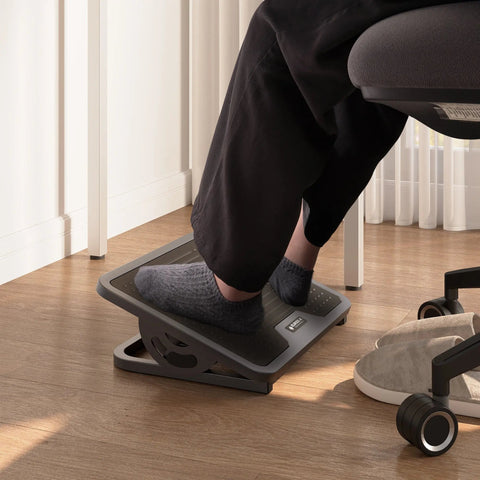
Poor posture often starts at the feet. If a chair is too high and the feet do not rest firmly on the floor, the user typically slides forward, losing lumbar support.
The Adjustable Ergonomic Footrest (Product Solution) is a tool for the hybrid worker encountering inconsistent chair heights. By providing a stable base, it allows the user to sit back into their chair, engaging the lumbar support. This aligns with the BIFMA G1-2013 Ergonomics Guideline, which suggests furniture should accommodate a wide range of users to ensure proper circulation.
2. Elevating the Display: Shelves and Stands
The most effective way to address neck strain is to separate the laptop screen from the keyboard. Using a stand to bring the top third of the monitor to eye level is highly recommended. For those in semi-permanent hybrid spots, the Convertible Desktop Shelves (Product Solution) offer a modular solution to improve viewing angles.
OSHA eTools for Computer Workstations recommends a viewing distance of 20 to 40 inches to minimize eye strain.

3. Decoupling Input: The Keyboard Tray Advantage
Once the screen is elevated, an external keyboard and mouse are required. The goal is to keep the elbows at approximately a 90-degree angle and the wrists in a neutral, flat position.
In a dedicated home office, an Adjustable Keyboard Tray (Product Solution) provides the flexibility to position input devices below the desk surface. This helps prevent the "shrugging" of shoulders often seen when typing on a high table.
The Hybrid Hub: The Role of the Adjustable Desk
For the "home" portion of the hybrid model, the desk serves as the hub. A height-adjustable desk allows the user to follow the "20-8-2" rhythm recommended by the Cornell University Ergonomics Web: 20 minutes of sitting, 8 minutes of standing, and 2 minutes of moving.
The Faux Saddle Leather Adjustable Standing Desk (Product Solution) combines these functional requirements with tactile materials that can reduce "contact stress" on the forearms compared to hard-edged desks.
Efficiency Note: The Setup Friction Model Based on internal manufacturer observations of user behavior.
Factor Estimated Impact Rationale High Friction Setup ~12 Minutes Manual cable management; discourages use of ergonomic gear Optimized Setup <4 Minutes Modular shelves + magnetic ties; increases compliance Annual Time Delta ~26 Hours Based on 200 workdays; lower friction saves over a full day of time
Practical Recommendations: The Setup Sequence
To ensure a consistent environment across all locations, follow this sequence:
- Anchor the Feet: Establish a stable foot position. Use a portable footrest if your feet don't reach the floor.
- Adjust the Seat: Set hip height slightly higher than knees to maintain the natural lower back curve.
- Elevate the Display: Position the top of the screen at eye level.
- Position Input: Place keyboard/mouse so wrists are straight and shoulders are relaxed.
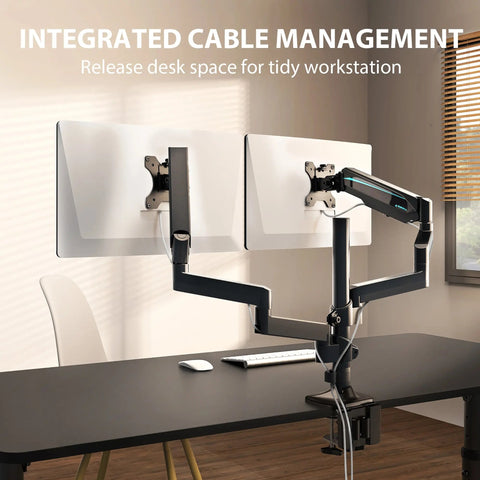
- Manage Cables: Use magnetic ties for rapid reconfiguration to reduce "setup friction."
The Ideal Sit-Stand Ratio
While standing desks are effective for reducing sedentary time, the Cochrane Library’s 2018 review notes that standing for too long can also lead to discomfort. The key is frequent alternation, ideally switching positions every 30 to 60 minutes.

Long-Term ROI: Ergonomics as Risk Mitigation
Investing in a portable ergonomic kit is a professional necessity. A well-designed portable setup acts as a risk mitigation strategy, potentially reducing the likelihood of chronic strain. By prioritizing functionality and ergonomic science, hybrid professionals can help ensure their productivity remains sustainable. Whether through the support of an Adjustable Ergonomic Footrest or the versatility of Convertible Desktop Shelves, the right gear transforms any space into a health-conscious workstation.
YMYL Disclaimer: This article is for informational purposes only and does not constitute professional medical advice, diagnosis, or treatment. The ergonomic recommendations provided are general heuristics and may not be suitable for all individuals, especially those with pre-existing conditions. Always seek the advice of a qualified healthcare provider or professional ergonomist before making significant changes to your workstation or physical routine.
References
- BIFMA G1-2013 Ergonomics Guideline for Furniture. Link
- WHO 2020 Guidelines on Physical Activity & Sedentary Behaviour. Link
- Cornell University Ergonomics Web — Workstation Guides. Link
- Cochrane: Workplace interventions for reducing sitting at work (2018). Link
- OSHA eTools: Computer Workstations - Neutral Working Postures. Link
- ISO 11226:2000 Evaluation of static working postures. Link
- The 2026 Workstation White Paper: Converging Ergonomic Science and Sustainable Engineering. (Eureka Ergonomic Manufacturer Research) Link




Leave a comment