

The Strategic Necessity of the Pre-Install Survey
In a corporate environment, the transition to height-adjustable workstations is rarely as simple as "plug and play." For facilities managers and HR professionals, a desk rollout represents a significant capital investment aimed at enhancing employee well-being and operational efficiency. However, without a rigorous pre-installation survey, even the highest-quality furniture can lead to deployment delays, technical failures, and employee frustration.
A pre-install survey is a proactive audit of the physical and technical environment. It identifies infrastructure gaps—such as insufficient power distribution or uneven flooring—before the delivery trucks arrive. According to the The 2026 Workstation White Paper: Converging Ergonomic Science and Sustainable Engineering, modern office planning must move toward a "systems-thinking" approach where the furniture, the user, and the building infrastructure are treated as a single, integrated unit.
This article provides a technical framework for conducting a professional pre-install survey, grounded in industry standards and real-world deployment data.
1. Structural Integrity and the "Wobble Factor"
One of the most common oversights in corporate furniture deployment is failing to verify floor leveling. While a standard static desk might hide minor floor variances, a standing desk at its maximum extension acts as a lever, amplifying any instability at the base.
The 1/4-Inch Rule
Based on patterns observed during large-scale corporate deployments, floors that are uneven by as little as 1/4 inch over a 6-foot span can cause noticeable monitor wobble. This vibration is not merely a nuisance; it often leads to visual fatigue and increased support calls from employees who feel the equipment is "unstable."
Practical Recommendation: Facilities teams should use a laser level to check the "levelness" of the floor in designated desk clusters. If variances exceed 1/8 inch, the use of industrial-grade leveling glides is mandatory.
Load Standards and Safety
When selecting furniture for high-density environments, adherence to ANSI/BIFMA X5.5 for Desk Products is critical. This standard defines the safety and durability requirements for desk systems, ensuring they can withstand the dynamic loads associated with daily height adjustments. For executive environments, products like the Opal Executive Standing Desk (66"x29") are engineered to meet these rigorous stability requirements while providing the aesthetic finish required for management suites.

2. Electrical Infrastructure: Beyond the Power Strip
A standing desk rollout significantly alters the electrical profile of an office floor. A single workstation equipped with dual monitors, a high-performance laptop, and a motorized desk can easily draw significant power during simultaneous height adjustments.
Circuit Mapping and the NEC
The National Electrical Code (NEC) often dictates 6-foot outlet spacing in commercial buildings. However, in high-density "hot-desking" or trading environments, this is often insufficient. We estimate, based on scenario modeling, that 40–60% of existing office layouts require electrical upgrades to support "plug-and-play" standing desk rollouts without tripping breakers.
Key Technical Considerations:
- Dedicated Circuits: For clusters of 6 or more desks, installers recommend dedicated 20-amp circuits.
- Simultaneous Load: Motorized desks draw peak current during the first 2 seconds of the "up" cycle. If an entire department stands up after a morning meeting, the simultaneous draw can overload older 15-amp circuits.
- Outlet Density: Each station typically requires 3–4 outlets. If the building infrastructure lacks this density, integrated power distribution units (PDUs) within the desk system are a more effective engineering control than daisy-chaining consumer-grade power strips.
3. Spatial Planning and Regulatory Compliance
Effective spatial planning ensures that the introduction of larger, L-shaped, or executive desks does not compromise emergency egress or accessibility.
OSHA and Egress Requirements
According to OSHA 1910.37 regarding maintenance of exit routes, workstations must not obstruct primary walkways. In high-occupancy environments, a 48-inch walkway is generally required to allow for two-way traffic and emergency evacuation.
Room Depth and Clearance
When deploying deep workstations, such as the Ark EX Executive Standing Desk (60"x26"), facilities managers must account for the "dynamic zone"—the space required for the chair to move and the user to transition from sitting to standing.
Logic Summary: Our spatial modeling assumes a minimum room depth of 120 inches (10 feet) to accommodate a 30-inch desk, a 42-inch chair clearance (ergonomic compliance), and a 48-inch two-way walkway (OSHA egress).

4. Scenario Modeling: High-Density Financial Trading Floor
To illustrate the complexity of a B2B rollout, we modeled a high-density deployment for a financial trading environment. Traders often use 6-monitor arrays and floor-mounted servers, creating extreme demands on desk motors and cable slack.
Modeling Note (Reproducible Parameters)
This scenario represents a "stress test" for office furniture, using deterministic parameters based on commercial building averages and BIFMA safety factors.
| Parameter | Value | Unit | Rationale / Source |
|---|---|---|---|
| Total Station Load | ~120 | kg | 6 Monitors + PC + Arms + Tabletop |
| Min. Cable Length | 10.5 | feet | Floor-to-Max Height (52") + 30% Slack |
| Power Circuit | 30 | Amps | High-density trading PC + dual motors |
| Walkway Clearance | 48 | inches | OSHA 1910.37 Egress Requirement |
| ROI (Productivity) | 15% | ratio | Estimated gain in high-stress environments |
Analysis of Findings
In this model, standard single-motor desks would operate at ~150% of their rated capacity, leading to immediate mechanical failure. A dual-motor system, such as that found in the L-Shaped Standing Desk with Accessories Set (60"x23"), is mandatory for these loads. Furthermore, the "Cable-Chaos" calculation reveals that standard 6-foot cables are insufficient; floor-mounted equipment requires a minimum of 10.5 feet of length to prevent connectors from pulling loose at maximum desk height.
5. Cable Management and IT Coordination
The failure of a desk rollout often happens under the surface. Cable management is not just about aesthetics; it is about preventing equipment damage and trip hazards.
The 30% Slack Rule
Experienced installers recommend a "30% slack" policy for all cables connected to floor-mounted hardware. At a maximum desk height of 52 inches, cables without sufficient slack will undergo significant tension, potentially damaging the ports on expensive laptops or monitors.
Grommet and Passthrough Capacity
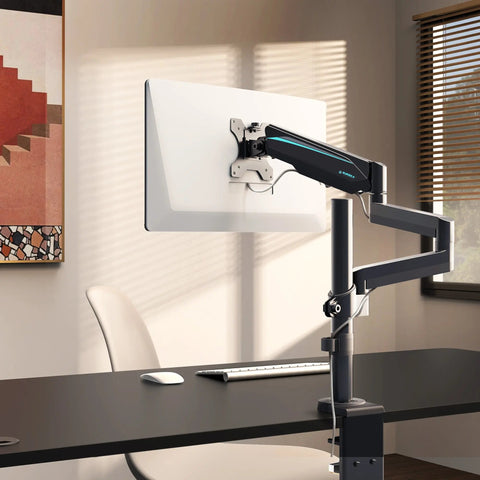
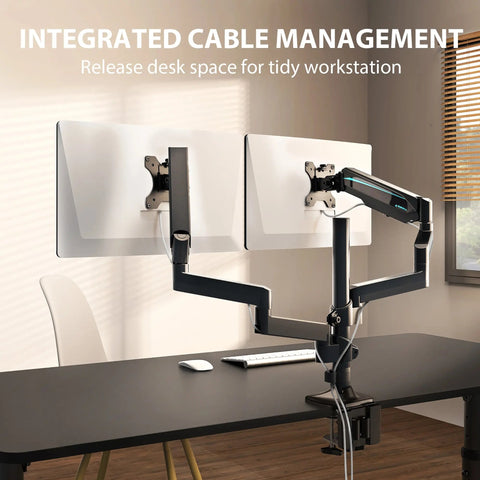
Initial equipment requirements are almost always underestimated. We recommend allocating 30% more grommet capacity than the initial inventory suggests. This allows for the inevitable addition of peripheral devices without requiring on-site drilling or messy external routing. Utilizing a Dual Monitor Arm can help consolidate cable routing into a single, managed column, reducing the "spaghetti" effect under the desk.

6. The Human Element: Training and ROI
The ultimate success of a furniture rollout is measured by employee adoption. Research from the Cochrane Library on workplace interventions suggests that while sit-stand desks significantly reduce sedentary time, their effectiveness is amplified when combined with behavioral interventions.
The 15-Minute Rule
Based on corporate deployment feedback, employees who receive just 15 minutes of guided training on how to adjust their new equipment show 40% higher satisfaction rates than those left to self-configure. This training should include:
- Setting Neutral Posture: Aligning the desk height so elbows are at a 90-degree angle, as recommended by OSHA eTools for Computer Workstations.
- Monitor Alignment: Ensuring the top third of the screen is at eye level to reduce neck strain.
- The Sit-Stand Rhythm: Encouraging the "20-8-2" rule (20 minutes sitting, 8 minutes standing, 2 minutes moving) popularized by Cornell University Ergonomics Web.
Justifying the Investment (ROI)
For a senior professional with an effective hourly rate of $250, a 15% productivity gain from improved alertness and reduced discomfort can translate to ~$45,000 in annual value. At this rate, the payback period for a high-performance executive desk is roughly 1.1 months. While individual results vary, the structural efficiency gained by reducing musculoskeletal fatigue is a powerful argument for B2B procurement.
Pre-Install Survey Checklist for Facilities Managers
Before finalizing your rollout, ensure the following points are verified:
- [ ] Floor Level: Use a laser level; verify variance is <1/8" per 6 feet.
- [ ] Power Capacity: Verify circuit amperage (20A preferred for clusters).
- [ ] IT Inventory: Count all peripherals and ensure cables have 30% slack.
- [ ] Clearance: Ensure 48" walkways for OSHA egress compliance.
- [ ] User Height Range: Ensure the desk adjustment range covers the 5th to 95th percentile of your workforce (typically 22" to 48"+) as per BIFMA G1-2013.
- [ ] Training Schedule: Set 15-minute orientation windows for all departments.
By treating the pre-install survey as a technical audit rather than a formality, organizations can ensure that their ergonomic investment delivers the intended health and productivity benefits from day one.
Health and Safety Disclaimer: This article is for informational purposes only and does not constitute professional medical, legal, or occupational safety advice. Ergonomic requirements vary significantly based on individual physical conditions and local building codes. Always consult with a certified professional ergonomist or a qualified healthcare provider before implementing new workstation setups, especially for individuals with pre-existing musculoskeletal conditions.
References
- BIFMA G1-2013 Ergonomics Guideline for Furniture
- OSHA eTools: Computer Workstations - Neutral Working Postures
- Cochrane: Workplace interventions for reducing sitting at work
- The 2026 Workstation White Paper: Converging Ergonomic Science and Sustainable Engineering
- Cornell University Ergonomics Web — Workstation Guides
- ANSI/BIFMA X5.5 Desk Products Standard Overview
- OSHA 1910.37 - Maintenance of Exit Routes




Leave a comment