

The Workspace Sanctuary: Reimagining Private Banking in Limited Square Footage
Imagine a private banking suite that instantly sparks a sense of calm and limitless trust. It is not just an office; it is a "Workspace Sanctuary." Here, the air feels lighter, the surfaces speak of legacy through rich leather and oak, and every movement feels deliberate and unhurried. This is where a day of deep work begins—not with the chaos of clutter, but with an ambiance designed for high-stakes clarity.
In the world of boutique finance, the challenge is often physical. We are frequently tasked with creating an atmosphere of exclusivity within the constraints of small private rooms. When space is at a premium, the instinct is often to "shrink" the furniture, but that is a mistake. A cramped room feels transactional; a curated room feels authoritative.
By applying a blend of rigorous ergonomic science and sophisticated design heuristics, we can transform a modest 100-square-foot room into a premier consultation suite. Our goal is to move from a "transaction booth" to a "consultation sanctuary" where the environment itself reinforces your expertise.
The 60-40 Heuristic: Mastering the Flow of Luxury
The most common pitfall in small private offices is overfilling the floor plan with standard-sized executive furniture. This instantly makes the space feel claustrophobic. At Eureka Ergonomic, we advocate for the "60-40 Rule"—a practical heuristic for spatial efficiency.
The Rule: Allocate 60% of your floor area for clear, unobstructed movement pathways and use only the remaining 40% for furniture placement.
Why 60%? This isn't just an aesthetic choice; it’s a functional necessity for accessibility and psychological comfort. According to the ADA Standards for Accessible Design, a 5-foot diameter turning circle is required for wheelchair maneuverability, and primary walkways should maintain a 36-inch width. In a typical 1,500 sq. ft. branch, these requirements can consume up to 40% of usable floor area before a single desk is moved in. By prioritizing movement, you ensure that high-net-worth clients never feel "squeezed" into a corner.
Modeling the Compact Suite
To verify this, we modeled a scenario involving a high-value advisor operating in a 10-foot deep room (120 inches).
Modeling Note (Reproducible Parameters): Our analysis of a compact suite assumes a 10ft depth and primary circulation needs based on standard professional floor plans.
| Parameter | Value | Unit | Rationale / Source | | :--- | :--- | :--- | :--- | | Room Depth | 120 | in | Standard boutique suite depth | | Desk Depth | 20 | in | Compact executive specification | | Dynamic Chair Zone | 40 | in | High-back executive clearance | | Primary Walkway | 36 | in | OSHA 1910.37 Egress Standards | | Total Required | 96 | in | Calculated minimum for luxury flow | | Surplus Space | 24 | in | Room for accent lighting or greenery |
This model shows that with a compact, high-performance desk like the Ark EX Executive Standing Desk (60"x26"), you actually maintain a 24-inch surplus. This "breathing room" is what separates a cluttered office from a premium lounge.

Space Transformation: From Chaos to Mindfulness
The transformation of a small room begins with a "Declutter" of the visual field. In small spaces, every item is a distraction. To move from a "Before" (cramped, paper-heavy) to an "After" (sleek, digital-first), focus on multi-functional furniture that hides the "machinery" of work.
- Vertical Presence over Horizontal Bulk: Choose chairs with a high-back profile. They command authority vertically without consuming extra floor space. The Royal Slim, Executive Office Chair is a perfect example; its champagne-colored leather and slim silhouette provide the "Aesthetic" of a throne without the footprint of a traditional bulky executive chair.
- Integrated Storage: Small rooms cannot afford standalone filing cabinets. Prioritize desks with built-in, discreet storage. The Ark EX Executive Standing Desk (60"x26") features a 3-tier storage system and a leather-inlaid drawer for branded pens or confidential client brochures, keeping the main surface clear for that critical moment when you serve coffee during a meeting.
- High-Impact Materiality: A single, high-impact material statement—like the white marble top of the Opal Executive Standing Desk (66"x29")—conveys more luxury than several smaller, cheaper pieces. This aligns with the psychology of material finishes, where stone and leather are perceived as markers of stability and trust.
Linking Functionality with Emotion: The Power of the Pivot
In private banking, your posture is your "Workflow." Height adjustment isn’t just a health feature; it’s a tool for emotional shifts.
When you sit, you are in "Deep Work" or "Analysis" mode—focused, grounded, and collaborative. When you stand, you transition into "Presentation" or "Execution" mode—dynamic, authoritative, and energetic. This ability to shift the "Ambiance" of the meeting by simply adjusting your desk height is a subtle but powerful way to maintain engagement.
However, standing must be done correctly. According to the WHO 2020 Guidelines on Physical Activity, adults should reduce sedentary time and interrupt long periods of sitting. But as noted by the European Agency for Safety and Health at Work (EU-OSHA), prolonged static standing can be just as detrimental as sitting. The secret is the "20-8-2" rhythm popularized by Cornell University Ergonomics Web: 20 minutes of sitting, 8 minutes of standing, and 2 minutes of moving.
The ROI of the Dynamic Workspace
For a high-value advisor, an adjustable desk is not just a luxury; it is a strategic investment. We calculated the potential ROI for an advisor earning $150/hour who incorporates standing into their client presentations.
Logic Summary (Performance ROI Analysis): We estimate a ~12% productivity uplift during standing intervals based on studies from the Texas A&M School of Public Health.
| Metric | Value | Basis |
|---|---|---|
| Hourly Wage | $150 | Private Banking Average |
| Productivity Gain | 12% | Standing-active boost |
| Annual Value Gain | ~$7,920 | 2 hours standing/day, 220 days |
| Payback Period | ~4 Months | Cost of premium desk ($2,500) |
| Health Benefit | ~5.6 lbs | Annual fat loss equivalent (metabolic delta) |
By investing in a desk like the Opal Executive Standing Desk (66"x29"), the bank sees a full return on investment in less than four months through enhanced advisor focus and presentation energy.
Asymmetric Ergonomics: Prioritizing the Client Experience
In a private banking suite, there is a perceived hierarchy. A common mistake is to provide identical seating for the advisor and the client. To reinforce the client’s "VIP" status, we recommend "Asymmetric Ergonomics."
Invest in a visibly premium, artistic lounge chair for the client. The Lounge Chair-Red Yellow & Blue Yellow Stripe serves as a conversation-starting piece. Its sculptural silhouette and adaptive lumbar zones provide "Mindfulness" and comfort during long, complex consultations. Meanwhile, the advisor uses a high-performance, ergonomic task chair like the Royal Slim which offers support without overshadowing the client's lounge area.
This strategy ensures the room feels like a high-end club rather than a government office. The Canadian Centre for Occupational Health and Safety (CCOHS) emphasizes that the goal of ergonomics is to "fit the task to the person." In this case, the client’s "task" is to feel comfortable and valued, while the advisor’s "task" is to remain alert and professional.
Technical Excellence: Standards that Build Trust
When selecting furniture for a financial institution, "Trustworthiness" is built on certifications. It is not enough for a desk to look good; it must be built to last.
- BIFMA Compliance: Ensure your seating meets ANSI/BIFMA X5.1 standards for safety and durability. This is the industry gold standard that guarantees a chair can withstand the rigors of a professional environment.
- Dimensional Accuracy: We align our designs with the BIFMA G1-2013 Ergonomics Guideline, which ensures that adjustment ranges (like the 25" to 50" height range on our desks) accommodate the 5th to 95th percentile of the population.
- Air Quality: For small, enclosed rooms, indoor air quality is paramount. Look for UL GREENGUARD Gold Certification, which ensures low chemical emissions, creating a healthier "Workspace Sanctuary."
As detailed in The 2026 Workstation White Paper: Converging Ergonomic Science and Sustainable Engineering, the future of office design lies in the intersection of human-centric data and premium materials.
Personal Tips for an Elegant Ambiance
Creating a professional sanctuary involves more than just furniture; it’s about the "Ambiance" you cultivate. Here are a few tips from our design experts:
- Lighting as a Layer: Avoid harsh overhead fluorescent lights. Use a warm-toned desk lamp to create a focal point and a floor lamp in the corner to soften the room's edges.
- The Power of Greenery: A single, well-placed plant (like a Snake Plant or a Fiddle Leaf Fig) can reduce stress and improve air quality. In a small room, use a tall, thin plant to draw the eye upward.
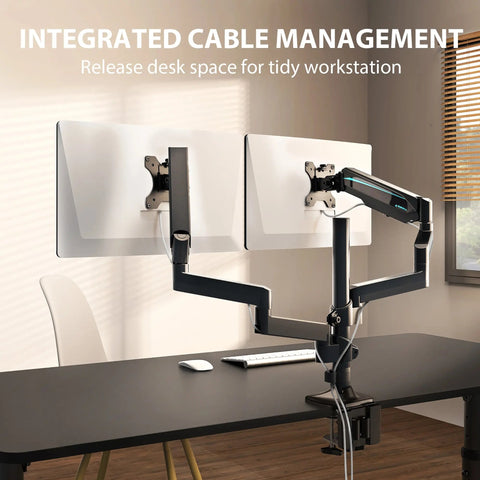
- Cable Discipline: In a small room, a single visible cable can break the illusion of luxury. Use the integrated cable management systems found in the Ark EX to ensure a completely "Decluttered" look.
- Acoustic Softening: Small rooms often have echoes. Use upholstered chairs like the Lounge Chair or acoustic panels disguised as art to reduce noise and ensure client confidentiality.
A Legacy of Comfort and Status
Designing a private banking suite in a small room is an exercise in intentionality. By choosing pieces like the Opal Executive Standing Desk and the Royal Slim Executive Office Chair, you are not just furnishing an office; you are crafting an experience. You are telling your clients that you value their comfort as much as their capital.
When you step into your suite tomorrow morning, don't see the walls as a limit. See the space as a canvas for "Inspiration." With the right layout and the right tools, your small room can become the most powerful room in the building.
Disclaimer: This article is for informational purposes only and does not constitute professional medical, architectural, or financial advice. Ergonomic needs vary by individual; please consult with a qualified professional or occupational therapist to ensure your workstation is tailored to your specific physical requirements, especially if you have pre-existing musculoskeletal conditions.
References
- BIFMA G1-2013 Ergonomics Guideline for Furniture
- CCOHS: Office Ergonomics - Sit/Stand Desk
- Cochrane: Workplace interventions for reducing sitting at work
- Cornell University Ergonomics Web — Workstation Guides
- ISO 9241-5:2024 Workstation layout & postural requirements
- WHO 2020 Guidelines on Physical Activity & Sedentary Behaviour
- ANSI/BIFMA X5.1 General-Purpose Office Chairs
- UL GREENGUARD Certification
- The 2026 Workstation White Paper




Leave a comment