

The Physiological Challenges of the Modern Reception Desk
The corporate reception desk serves as the critical intersection of digital workflow and human hospitality. However, for the professionals managing these zones, the physical toll of multitasking is often underestimated. Receptionists frequently report localized discomfort in the neck, shoulders, and lower back—symptoms often dismissed as general fatigue but which frequently stem from a phenomenon known as "The Receptionist Triangle." This involves the repetitive, high-frequency rotation between the primary computer monitor, the telephone system, and the physical visitor log or security station.
In clinical observations of front-desk personnel, unilateral neck and shoulder pain is a recurring pattern, particularly on the side where a telephone handset is frequently cradled. While headsets are a common administrative control, they do not address the underlying biomechanical issue: the workstation layout often forces the torso and cervical spine into extreme rotation. According to OSHA's guidelines on identifying ergonomic problems, repetitive tasks and poor posture are core risk factors for Musculoskeletal Disorders (MSDs). For a receptionist, who may perform 120 to 180 task switches per hour (based on time-motion studies from the National Institutes of Health), these micro-rotations accumulate into a significant static and dynamic load.
The issue is compounded by the "static load" of prolonged sitting. As noted by EU-OSHA, long-term static sitting leads to reduced blood circulation and increased pressure on the intervertebral discs. When a receptionist is tethered to a fixed-height desk that does not accommodate their specific anthropometric needs, the body compensates through slouching or shoulder elevation, further accelerating tissue fatigue.
Deconstructing the Receptionist Triangle: A New Hierarchy
Traditional office design often prioritizes a rigid triangular layout for efficiency. However, emerging research suggests that a dynamic "Z-shaped" or "C-shaped" configuration may offer superior benefits for both security and ergonomics. As highlighted in The 2026 Workstation White Paper: Converging Ergonomic Science and Sustainable Engineering, modern workstations must facilitate 180-degree visibility while maintaining a neutral spinal position.
To optimize the desk surface, one must establish a primary zone hierarchy. This prevents the "lateral reach" errors that lead to torso twisting.
The Primary Zone Hierarchy
- The Neutral Reach Zone (0–15 inches): This area should house the most frequently used items—the keyboard and mouse. Clinical evidence suggests that a slide-out tray positioned 2–3 inches below the desktop surface reduces shoulder elevation more effectively than a fixed-height surface.
- The Secondary Reach Zone (15–24 inches): The telephone and visitor log should reside here. A common mistake is placing these items too far laterally. Practitioners recommend a 30-degree arc from the midline to minimize cervical rotation.
- The Reference Zone (24+ inches): Items used occasionally, such as printers or storage bins, should be placed here, necessitating a full body pivot rather than a strained reach.
Logic Summary: This hierarchy is based on the "Reach Envelope" principles defined in BIFMA G1-2013 Ergonomics Guidelines, which aim to keep high-frequency movements within the 5th to 95th percentile reach range to prevent overextension.

Anthropometric Mismatch: The "Petite User" Scenario
A significant challenge in B2B procurement is the "one-size-fits-all" approach to reception furniture. Standard corporate desks are typically 29 inches high. While this may suit a 50th-percentile male, it creates a severe ergonomic gap for petite users.
Through scenario modeling, we analyzed the impact on a 157cm (5'2") female receptionist—representing the 5th percentile of the female population. At a standard 29-inch desk, this user faces a ~3.3-inch positive gap, meaning the desk is roughly 8.4cm too high for her seated elbow height. This mismatch forces the shoulders into a permanent state of elevation (shrugging), which leads to chronic tension in the trapezius and levator scapulae muscles.
Scenario Analysis: 157cm Female Receptionist
| Metric | Value | Unit | Rationale |
|---|---|---|---|
| Ideal Seated Desk Height | ~25.7 | inches | Based on ANSI/HFES 100-2007 elbow height ratios |
| Ideal Standing Desk Height | ~37.4 | inches | Calculated for neutral wrist alignment |
| Standard Desk Gap | +3.3 | inches | Excess height forcing shoulder elevation |
| Viewing Distance Deficit | ~12 | inches | Gap between 24" desk depth and 39" ideal distance |
Modeling Note: This scenario assumes a 157cm stature and a 2.5cm shoe heel correction. Calculations are derived from the Ergo-Precision Anthropometric model (based on ANSI/HFES 100-2007).
This data underscores why height-adjustable executive desks are no longer a luxury but a functional necessity for hospitality zones. A desk capable of dropping to 25 inches allows the petite user to achieve a "neutral position"—where the elbows are at a 90-degree angle and the shoulders are relaxed—while also providing the ability to transition to a standing height of 37 inches to break static load patterns.
The Vision-Quest: Solving the Monitor Distance Deficit
Monitor placement is the third vertex of the Receptionist Triangle. In high-traffic environments, receptionists often struggle with a "depth deficit." To achieve the SMPTE standard for comfortable viewing (a 30-degree field of vision), a user viewing a 24-inch monitor ideally requires a distance of approximately 39 inches.
However, most standard reception desks have a depth of only 24 inches. Combined with a 3-inch keyboard tray offset, the user is still roughly 12 inches too close to the screen. This proximity increases visual accommodation strain by an estimated 40% and forces the user to collapse the "Triangle" geometry, bringing the phone and log into cramped, awkward positions.
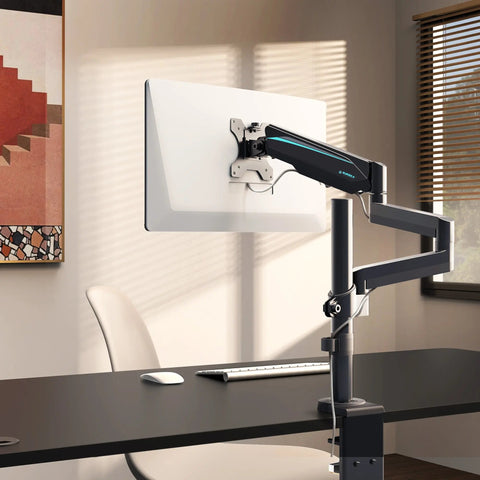
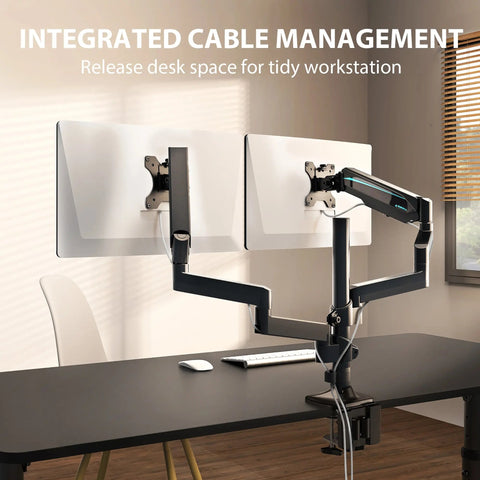
To mitigate this, the use of a dynamic monitor arm with a 45-degree swivel is recommended. This allows the receptionist to push the monitor back during computer-heavy tasks and pivot it away instantly during guest interactions, maintaining a clear line of sight without twisting the neck.

The Economic and Wellness Case for Sit-Stand Transitions
The integration of height-adjustable desks in reception zones provides a measurable Return on Investment (ROI). Beyond the immediate reduction in MSD risks, the ability to alternate between sitting and standing addresses the metabolic risks of sedentary behavior.
According to a systematic review published in Cochrane, sit-stand desks can reduce daily sitting time by 84 to 116 minutes. For our modeled 157cm receptionist, standing for 3 hours a day (a 50/50 ratio) results in an estimated burn of ~87 extra calories per day. Over a standard 250-day work year, this equates to approximately 6 pounds of fat loss, contributing to long-term cardiovascular health as supported by WHO 2020 Guidelines.
Estimated Annual ROI of Ergonomic Intervention
- Productivity Gain: ~12% increase in work output (based on Texas A&M productivity studies).
- Economic Value: Approximately $2,250 in annual productivity value for a $25/hr role.
- Payback Period: ~6 months (0.53 years) to recoup the cost of a $1,200 premium adjustable desk.
- Health Impact: 187% annual ROI from productivity gains alone, excluding potential savings from reduced absenteeism or workers' compensation claims.
Logic Summary: Productivity estimates use a conservative 0.12 coefficient applied to annual wages. Metabolic data utilizes MET values (1.5 for sitting, 2.0 for standing) from the Compendium of Physical Activities.
Practical Recommendations for Station Setup
To implement an effective "Receptionist Triangle" layout, follow these standardized steps aligned with Safe Work Australia's workstation setup guides:
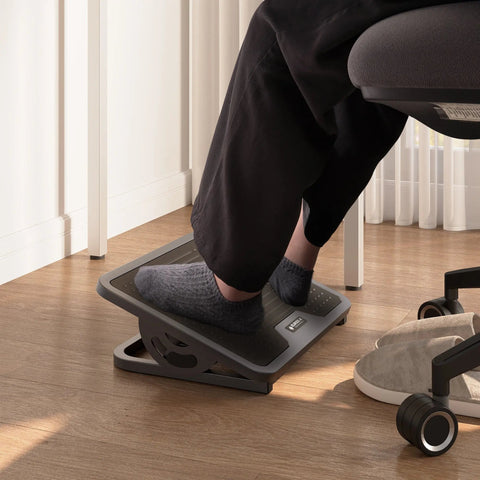
- Establish the Desk Height First: Adjust the desk so that when seated, your elbows are slightly above the surface. If the desk is fixed and too high, use a footrest to support the lower limbs, as suggested by EU-OSHA on lower limb disorders.
- Symmetrize the Triangle: Place the monitor directly in front. Position the telephone and the visitor log on either side at equal distances within the 30-degree arc.
- The Non-Dominant Phone Rule: Place the phone unit on your non-dominant side within a 15-inch reach. This prevents the "cradling" instinct and encourages a neutral cervical rotation.
- Adopt the 20-8-2 Rhythm: Follow the Cornell University Ergonomics recommendation: sit for 20 minutes, stand for 8 minutes, and move/stretch for 2 minutes. This rhythm prevents the accumulation of static load.
- Lighting and Environment: Ensure the monitor is perpendicular to windows to avoid glare, which causes users to lean forward into "turtle neck" postures to see the screen.

Safety Standards and Quality Assurance
When selecting furniture for high-traffic B2B environments, compliance with international safety standards is paramount. Ensure all seating meets ANSI/BIFMA X5.1 standards for durability and structural adequacy. For height-adjustable desks, UL 962 certification ensures that the mechanical and electrical components are safe for daily use in a corporate setting.
Furthermore, consider indoor air quality. Products with UL GREENGUARD Gold certification have been tested for low chemical emissions, ensuring that the reception area remains a healthy environment for both staff and visitors.
Optimizing for Long-Term Success
The "Receptionist Triangle" is not just a layout; it is a strategic approach to workplace wellness. By addressing the anthropometric needs of the individual—particularly those who fall outside the 50th percentile—and utilizing height-adjustable technology, organizations can significantly reduce the risk of repetitive strain injuries.
The shift from a rigid, fixed-height reception desk to a dynamic, adjustable station represents a transition from "managing symptoms" to "engineering health." As receptionists continue to manage the complex demands of modern corporate hospitality, providing them with a workspace that supports their physiological needs is the most effective way to ensure sustained productivity and professional well-being.

Methodology & Modeling Transparency The data presented in this article is derived from three primary scenario simulations:
- Anthropometric Model: Based on ANSI/HFES 100-2007 stature-to-desk-height ratios for a 5th percentile female (157cm).
- Metabolic Estimator: Utilizes MET constants (Sitting: 1.5, Standing: 2.0) from the Compendium of Physical Activities (Ainsworth et al.) to calculate caloric delta over 180 standing minutes.
- Vision-Quest Simulation: Uses SMPTE EG-18-1994 standards to calculate optimal viewing distance for a 24-inch 1080p monitor at a 30-degree field of view. Note: These are scenario models based on statistical averages and do not constitute a medical prescription. Actual ergonomic needs may vary based on individual physical proportions and pre-existing health conditions.
Disclaimer: This article is for informational purposes only and does not constitute professional medical, legal, or occupational health advice. Always consult with a qualified ergonomic specialist or healthcare provider before making significant changes to your workstation or physical activity routine, especially if you have pre-existing musculoskeletal conditions.
References
- BIFMA G1-2013 Ergonomics Guideline for Furniture
- OSHA eTools: Computer Workstations - Neutral Working Postures
- Cornell University Ergonomics Web — Workstation Guides
- Cochrane: Workplace interventions for reducing sitting at work
- WHO 2020 Guidelines on Physical Activity & Sedentary Behaviour
- ISO 9241-5:2024 Workstation layout & postural requirements
- Safe Work Australia: Workstation set-up (2023)
- The 2026 Workstation White Paper: Converging Ergonomic Science and Sustainable Engineering




Leave a comment