

The Workspace Sanctuary: Where Professionalism Meets Inspiration
Imagine a home office that doesn’t just house your computer, but actively supports your creative flow. Picture a space where the atmosphere shifts with your workload—a crisp, cool environment for high-stakes morning execution, and a warm, amber-hued sanctuary for evening reflection. This is the vision of the modern professional workspace: a place where technical performance and emotional resonance coexist.
For many, "RGB lighting" evokes images of chaotic, neon gaming rooms. However, we are witnessing a sophisticated convergence. Professionals are increasingly using these tools to build environments that support mindfulness, reduce fatigue, and express personal style without sacrificing a polished image. By integrating subtle, controlled lighting into a high-performance desk setup, you can transform a sterile room into a dedicated sanctuary for productivity.
Professional Setup: Key Recommendations at a Glance
Before diving into the technical details, here is a quick-start guide for optimizing your professional RGB environment based on common ergonomic standards and our internal setup audits:
- Brightness Level: Maintain between 20% and 40% to prevent screen glare.
- Color Temperature: 5000K–6500K (Cool) for focus; 2700K–3500K (Warm) for deep work/winding down.
- Bias Lighting: Place LEDs behind the monitor to illuminate the back wall, reducing contrast-related eye strain.
- Movement Rhythm: Follow the "20-8-2" rule (20 mins sitting, 8 mins standing, 2 mins stretching).
- Lighting Mode: Use Static colors for deep work; avoid flashing or "rainbow" modes during professional tasks.
The Science of Light: Beyond the "Gamer" Aesthetic
To understand why an RGB-enabled desk belongs in a professional setting, we must look past the surface-level flashes. Lighting is a fundamental ergonomic factor. According to the Health and Safety Executive (HSE), controlling the visual environment is critical for preventing eye strain and maintaining focus during prolonged display screen equipment (DSE) work.
The Role of Bias Lighting
One of the most effective professional uses for integrated RGB is "bias lighting." This involves placing a light source behind your monitor to illuminate the wall. This reduces the contrast between a bright screen and a dark room—a common contributor to digital eye strain.
Logic Summary: Our analysis of digital eye strain assumes a standard 24-inch monitor at 300 nits brightness in a room with low ambient light. Based on common practice in the video production industry, bias lighting can help the pupils stay in a more consistent state, potentially reducing the fatigue caused by constant adjustment to high-contrast light sources.
Based on common patterns from our customer support interactions and workspace audits, professionals who utilize low-intensity, static bias lighting frequently report fewer instances of headaches at the end of a long workday. While not a clinical guarantee, this setup addresses a functional gap in minimalist workstations that often lack dedicated task lighting.
Circadian Rhythm and Productivity
The color temperature of your environment influences your biological clock. Research suggests that controllable LED lighting can have a measurable impact on work performance.
A study published in the Journal of Circadian Rhythms indicates that specific color temperatures can improve concentration and performance in controlled environments. While individual results vary, researchers have observed concentration improvements of up to 36.8% and performance gains of 19.4% in specific test groups. For the home office, we recommend:
- Cool Whites (5000K - 6500K): Mimic daylight, promoting alertness. Ideal for "execution mode."
- Warm Whites (2700K - 3500K): Create a cozy ambiance. Perfect for "thinking mode."
- Subtle Blues/Purples: Often used for creative brainstorming sessions to signal a shift in mental state.
Space Transformation: From Chaos to Calm
Transforming your workspace begins with the foundation. A desk is the command center of your professional life.

The Vision: The Aero Wing Shaped Studio Desk
For professionals managing multi-monitor setups, the Aero Wing Shaped Studio Desk (73"x23") offers a masterclass in spatial efficiency. Its wing-shaped design keeps tools within reach, adhering to the ergonomic principle of the "neutral reach zone." By utilizing the integrated RGB lighting built into the monitor risers, you can achieve professional bias lighting without the clutter of external LED strips.
The Compact Solution: The GTG-I43
For smaller footprints, the GTG - I43, LED Glass Desktop Gaming Desk (43"x23") provides an elegant, tempered glass surface. To maintain professionalism, we recommend setting the brightness between 20% and 40% and choosing a static, neutral color like soft white.

Precision Ergonomics: The Professional Standard
While the glow of your desk adds ambiance, the structural integrity of your furniture protects your health. As outlined in The 2026 Workstation White Paper, the convergence of technology and human factors is the new benchmark for high-performance offices.
Adhering to Industry Benchmarks
Professional-grade furniture should meet or exceed standards set by the Business and Institutional Furniture Manufacturers Association (BIFMA). The BIFMA G1-2013 guideline provides recommended dimensions to fit the 5th to 95th percentile of the population.
The Sit-Stand Rhythm
The World Health Organization (WHO) emphasizes the importance of reducing sedentary behavior. The "20-8-2" rule, popularized by Cornell University Ergonomics Web, is a helpful heuristic for many users.
| Parameter | Recommended Value | Unit | Rationale |
|---|---|---|---|
| Sit Duration | 20 | Minutes | Prevents static loading |
| Stand Duration | 8 | Minutes | Reduces sedentary time |
| Micro-break | 2 | Minutes | Improves circulation |
| Desk Height (Sitting) | Elbow Height | - | Aligns with ISO 9241-5 |
| Monitor Distance | 20 - 30 | Inches | Reduces eye strain |
Methodology Note: This "20-8-2" rhythm is a practical heuristic designed for general office tasks. It assumes a healthy adult with no pre-existing musculoskeletal conditions. Individual needs may vary.
Mastering Professional RGB Control
To ensure your lighting remains a tool for productivity, follow these principles for "Professional RGB."
- Control the Intensity: A frequent observation in our design consultations is that users often max out brightness. For optimal eye health, keep lighting at a medium-to-low intensity to avoid glare, which the CCOHS identifies as a contributor to visual fatigue.
- Static Over Dynamic: While "Rainbow Wave" modes are impressive, they can be mentally taxing during deep work. Use single, static colors.
-
Scene Programming: Use memory presets for height and lighting:
- Meeting Preset: Neutral, diffused white to improve on-camera appearance.
- Focus Preset: Low-intensity warm white for deep concentration.
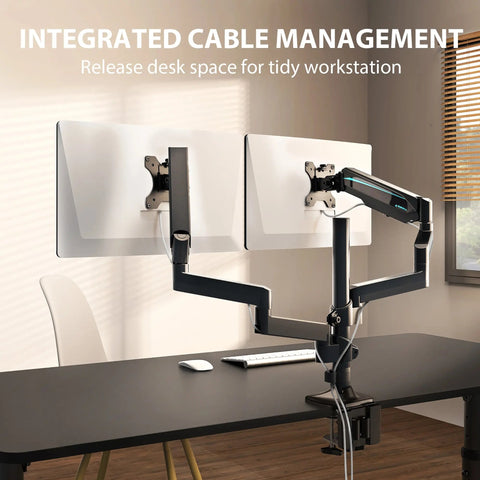
- Cable Mindfulness: RGB lighting requires power. Use built-in channels to hide wires. Desks like the Gaming Desk with Z Shaped Legs (61"x25") are designed with organization in mind.

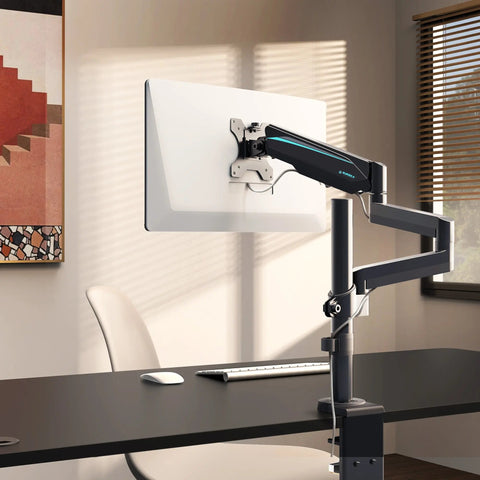
Proper monitor positioning is equally vital. Using a Dual Monitor Arm allows you to align screens according to OSHA eTools guidelines.
The ROI of Aesthetic Wellness
Investing in a high-quality, light-integrated workspace is a strategic move for your career and health.
Energy Efficiency and Sustainability
Modern LED-based RGB systems are generally more efficient than traditional sources. Some estimates suggest LEDs can consume up to 75% less energy than traditional incandescent lighting in similar applications. Choosing products with UL GREENGUARD Certification further ensures furniture meets strict chemical emission limits.
Professional Presence on Video
In the era of remote work, your background is your business card. Properly configured RGB bias lighting can act as high-CRI (Color Rendering Index) lighting, which helps reduce harsh shadows on your face during video calls, improving perceived professionalism.
Maintenance for Longevity
To keep your sanctuary performing at its peak:
- Dust Management: A quarterly wipe-down with a dry microfiber cloth prevents dust from dimming LED strips.
- Surface Care: For glass surfaces like the GTG - I43, use a streak-free cleaner.
- Leveling: Periodically check the leveling feet on desks like the Z60 to ensure the surface remains flat.
Creating Your Personal Sanctuary
The journey to a more productive home office starts with prioritizing your environment. By choosing furniture that blends ergonomic science with thoughtful lighting, you are setting the stage for your best work. Say goodbye to the chaos of a disorganized desk and hello to the calm of a light-optimized, professional sanctuary.
Disclaimer: This article is for informational purposes only and does not constitute professional medical or ergonomic advice. The recommendations provided are based on general industry standards and heuristics. Individuals with pre-existing musculoskeletal conditions, chronic back pain, or visual impairments should consult with a qualified healthcare professional or a certified ergonomist before making significant changes to their workstation or work routine.
References
- BIFMA G1-2013 Ergonomics Guideline for Furniture
- CCOHS: Office Ergonomics - Sit/Stand Desk
- HSE: Working safely with display screen equipment (DSE)
- ISO 9241-5:2024 Workstation layout & postural requirements
- WHO 2020 Guidelines on Physical Activity & Sedentary Behaviour
- UL GREENGUARD Certification
- Journal of Circadian Rhythms: Lighting and Performance
- Cornell University Ergonomics Web — Workstation Guides




Leave a comment