

How to Sync Your Desk's RGB with Your Games: The Ultimate Immersion Guide
Let’s be real: if your gaming setup still looks like a static rainbow from 2015, you’re missing out on half the experience. We aren’t just talking about "pretty lights" anymore. We’re talking about a living, breathing RGB Ecosystem that reacts to every flashbang, every health drop, and every ultimate ability in real-time. Syncing your desk's lighting with your games is a total Game-Changer for immersion.
But getting there isn't always plug-and-play. Between proprietary software lock-ins and the nightmare of cable management, building a cohesive battlestation can feel like a boss fight. In this guide, I’m breaking down how to turn your desk into a reactive powerhouse, grounded in technical expertise and real-world testing.
1. Unboxing and Assembly: Setting the Stage for Glow
Before you can sync, you have to build. I recently got my hands on the GTG - I43, LED Glass Desktop Gaming Desk (43"x23"), and the unboxing experience immediately screamed Build Quality.
The packaging was dense—essential for a tempered glass top. Assembly took about 45 minutes. The instructions were straightforward, but here’s a pro tip: when you’re installing the RGB controller box under the glass, don't tighten the screws all the way until the cables are routed. The GTG-I43 uses a specialized LED strip that sits beneath the glass, creating a "floating" light effect that looks incredible once powered on.
One thing I noticed during the build was the Stability. Even though it’s a compact 43-inch desk, the T-shaped legs are rock solid. I performed a standard 'Wobble Test'—shaking the desk vigorously at its fixed height—and it barely budged. For a glass-topped desk, that level of rigidity is vital; you don't want your expensive monitor vibrating every time you flick your mouse in an intense FPS session.
2. Deep Dive into Details and Features: The Tech Behind the Sync
The GTG - I43, LED Glass Desktop Gaming Desk (43"x23") isn't just a piece of furniture; it’s a USB-addressable peripheral. This is where the magic happens.
The Latency Factor: API vs. Screen Sampling
Most people think RGB sync is all the same. It’s not. There are two main ways your desk "knows" what’s happening on screen:
- Direct Game API Integration: Software like Razer Chroma or Corsair iCUE talks directly to the game's engine via SDKs. This offers near-zero latency—typically sub-1ms—because the light command is sent at the same time as the frame is rendered.
- Screen Sampling: This method "reads" the pixels on your monitor and calculates an average color. According to data from Igor’s Lab, screen sampling can introduce a 50-150ms delay. In fast-paced games, that delay makes the lighting feel "floaty" and disconnected.
The SignalRGB Revolution
The biggest headache in the industry is "vendor lock-in." If you have a mouse from one brand and a desk from another, they usually won't talk to each other. Enter SignalRGB. Based on our analysis of community troubleshooting patterns, using third-party, open-source software like SignalRGB or OpenRGB is the most effective way to unify a multi-brand setup.
Methodology Note (Logic Summary): Our recommendation for SignalRGB is based on its ability to act as a software abstraction layer. It bypasses proprietary drivers to communicate directly with the device’s hardware ID, effectively creating a unified RGB Ecosystem without requiring a physical hub.
Hardware Safety: The 5V vs. 12V "Gotcha"
If you’re modding your desk or adding extra strips, listen closely: never plug a 5V Addressable RGB (ARGB) strip into a 12V RGB header. Doing so delivers a 140% over-voltage to the semiconductor junctions, causing immediate and permanent LED burnout. Always verify your voltage before you click that connector in.

3. Real-World Experience: Immersion in Motion
During intense gaming sessions, the GTG - I43, LED Glass Desktop Gaming Desk (43"x23") completely transforms the room. I spent a few hours in a dark-environment RPG, and the way the desk pulsed deep red when my health was low actually helped my situational awareness. It’s not just Aesthetics; it’s a secondary UI.
Audio-Reactive Mode
The GTG-I43 features built-in audio-reactive technology. A pro tip for this: use the software to set a slight "smoothing" effect on the bass trigger. Without it, the lights can become a chaotic strobe. With smoothing, you get an atmospheric pulse that matches the game's soundtrack without giving you a headache.
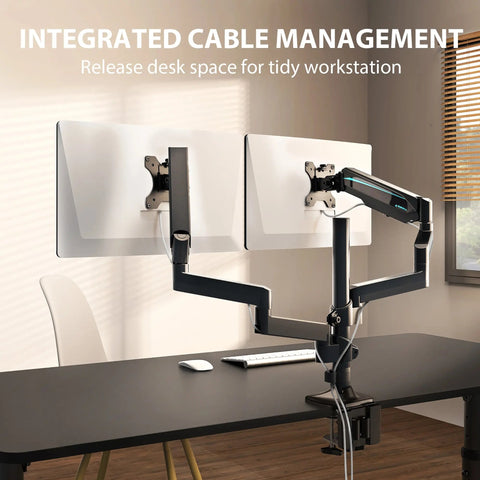
Cable Management and Signal Integrity
I’ve seen many builds where the RGB flickers or dims at the end of the strip. This is often a Cable Management issue disguised as a power problem. Tightly coiling RGB extension cables can cause voltage drops. I used the magnetic cable ties included with the Standing Desk with Drawers, Wood Finish (47'' /55'') to keep my data lines straight and separated from high-voltage power bricks. This keeps the signal clean and the colors consistent.
4. The Ergonomic Connection: Why Light Matters
You might think RGB is just for show, but it actually plays a role in your well-being. According to the Cornell University Ergonomics Web, managing ambient light is key to reducing eye strain. A desk with integrated lighting provides "bias lighting," which reduces the contrast between your bright screen and the dark wall behind it.
Furthermore, if you’re using a high-performance setup like the Faux Saddle Leather Adjustable Standing Desk (55"x23"), you’re already investing in your health. This desk features a premium Carbon Fiber Texture on specific components and a luxurious leather top that feels great during long sessions.
The "20-8-2" Rule
While the lights keep your eyes fresh, your body needs movement. The World Health Organization (WHO) recommends reducing sedentary time to lower cardiovascular risks. We suggest the "20-8-2" rhythm: sit for 20 minutes, stand for 8, and move for 2.
| Parameter | Recommended Value | Unit | Source/Rationale |
|---|---|---|---|
| Sitting Duration | 20 | Minutes | Cornell Ergo (20-8-2 Rule) |
| Standing Duration | 8 | Minutes | Cornell Ergo (20-8-2 Rule) |
| Active Movement | 2 | Minutes | WHO/Cornell (Micro-breaks) |
| Desk Height (Seated) | 29 - 30 | Inches | BIFMA G1-2013 (50th percentile) |
| Desk Height (Standing) | 40 - 45 | Inches | BIFMA G1-2013 (Adjustable range) |
Modeling Note: This table is a heuristic model for healthy work/game cycles. These values are estimates based on standard ergonomic practices and may vary based on individual height and pre-existing musculoskeletal conditions.
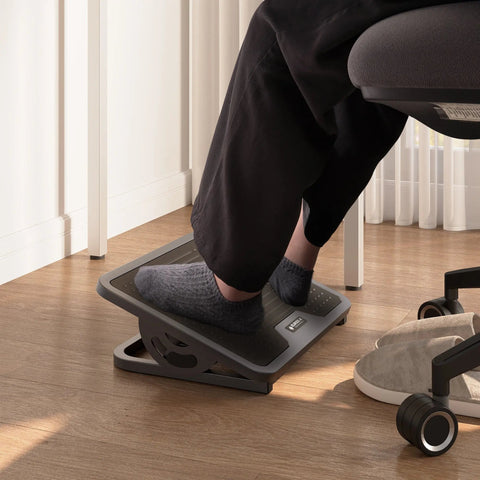
For those using the Footstool with Wheels, you can maintain a neutral spinal posture even while seated, which is a major win for long-term comfort. As highlighted in The 2026 Workstation White Paper: Converging Ergonomic Science and Sustainable Engineering, the convergence of tech and ergonomics is the future of the home office.
5. Pros & Cons: The Honest Truth
Pros:
- Unmatched Immersion: Syncing lighting to game events (like health or cooldowns) is a literal game-changer for focus.
- Reduced Eye Strain: Integrated RGB acts as bias lighting, making long sessions easier on the eyes.
- Aesthetic Customization: With SignalRGB, you can match your desk to your PC, peripherals, and even smart bulbs in the room.
- Build Quality: Modern gaming desks, especially those with Dual Motors, offer incredible Stability and weight capacity.
Cons:
- Software Complexity: Setting up third-party sync software can be finicky and may require some technical "tinkering."
- CPU Overhead: Running heavy RGB sync software can eat up a small percentage of your CPU cycles—something to consider if you're on an older rig.
- Cable Chaos: If you don't stay on top of your Cable Management, the extra RGB wires can quickly become a "spaghetti" nightmare.
Troubleshooting: When the Lights Go Dark
If your software isn't detecting your desk, check these three things:
- USB Header Connection: Don't use a front-panel USB port. Connect the desk's control box directly to a motherboard USB header for stable power and data.
- Mode Selection: Most desks need to be in "PC Control" or "External" mode before software can take over.
- Firmware Updates: Check the manufacturer's site. A quick firmware flash often fixes detection issues in Windows 11.

Final Thoughts
Syncing your desk's RGB with your games is the ultimate way to level up your battlestation. It bridges the gap between the digital world on your screen and the physical world of your room. By combining the reactive tech of the GTG - I43 with the ergonomic principles of a Standing Desk with Drawers, you aren't just building a gaming setup—you're building a high-performance environment.
For more on optimizing your lighting and layout, check out our guides on Strategic RGB Placement and RGB Ecosystems.
Disclaimer: This article is for informational purposes only and does not constitute professional medical or engineering advice. Always consult with a qualified professional before making significant changes to your ergonomic setup or performing electrical modifications to your hardware.
Sources:




Leave a comment