

The Economic Imperative of Home Office Ergonomics
As organizations transition from temporary remote work arrangements to permanent hybrid models, the focus of Human Resources and Finance departments has shifted toward long-term sustainability. A common health concern now facing these decision-makers is the rise in "afternoon fatigue" and chronic back pain among remote staff. While often dismissed as a byproduct of a sedentary lifestyle, these symptoms are frequently the result of poor workstation ergonomics—a factor that has a quantifiable impact on a company’s bottom line.
The physiological principle behind this issue centers on Musculoskeletal Disorders (MSDs) and the concept of "static load." When an employee works from a non-ergonomic setup, such as a dining table or a fixed-height desk that does not align with their anthropometric needs, the body must compensate for the lack of support. This leads to prolonged muscle contraction and reduced blood circulation, particularly in the lumbar region and lower limbs. According to the World Health Organization (WHO) 2020 Guidelines, reducing sedentary behavior and interrupting long periods of static sitting are critical for maintaining cardiovascular health and musculoskeletal integrity.
For the B2B decision-maker, a home office stipend is no longer a mere "perk." It is a strategic intervention designed to mitigate the financial risks of absenteeism, reduced focus, and high employee turnover. By providing professional-grade equipment, such as the Royal, Microfiber Leather Executive Office Chair, companies can fundamentally address the physiological triggers of workplace injury.
The Hidden Costs of the "Flat Cash" Stipend Mistake
A significant discovery among HR managers is that providing a flat cash stipend without guidance often fails to produce a positive Return on Investment (ROI). In many cases, employees utilize these funds for non-ergonomic upgrades, such as a second monitor without a proper stand, which can actually worsen neck strain by forcing the user into non-neutral viewing angles.
Data from corporate wellness audits suggests that successful programs mandate or strongly guide employees toward a core "bundle": an adjustable chair with proper lumbar support and a desk that allows for sit-stand transitions. Without this structure, companies often see a continuation of "ergonomics-related" IT support tickets and accommodation requests.
Logic Summary: This observation is based on common patterns from customer support and return handling, where users frequently report that adding hardware (monitors) without ergonomic support (arms) led to increased physical discomfort.
Furthermore, the Canadian Centre for Occupational Health and Safety (CCOHS) emphasizes that the effectiveness of a sit-stand workstation depends entirely on its correct setup. A stipend that only covers a basic chair but ignores the desk height issue fails to address the primary contributor to shoulder and wrist strain.
Calculating the ROI: A Data-Driven Framework
To justify the expenditure of a home office program, Finance and Operations leaders require a defensible ROI framework. This framework must move beyond qualitative "wellness" metrics and monetize intangible factors using industry benchmarks.
The Productivity Gain Metric
The most cited productivity metric in ergonomic studies is not raw output increase, but "sustained focus time." Employees with comfortable, adjustable setups report fewer "pain breaks"—the involuntary interruptions required to stretch or adjust position due to discomfort.
Logic Summary: Our productivity ROI analysis for a high-salary tech employee (earning ~$156k annually) assumes a 15% productivity uplift. This coefficient is a conservative midpoint derived from industry studies showing that optimized workstations can improve efficiency by 10–25%.
| Variable | Estimated Value | Unit | Rationale |
|---|---|---|---|
| Annual Productivity Value Gain | ~$9,900 | USD | Hourly wage × standing mins × productivity coefficient |
| Estimated Payback Period | ~0.12 | Years | Total equipment cost divided by annual gain |
| Extra Calories Burned (Annual) | ~18,700 | kcal | MET-based calculation for 4 hours standing daily |
Based on scenario modeling for a senior software engineer, the payback period for a high-quality ergonomic bundle (approximately $1,200) can be as low as 45 days. This is driven by the fact that even a marginal increase in "deep work" capacity for a high-value employee translates into thousands of dollars in annual value.
The Retention and Absenteeism Factor
The EU-OSHA 2019 Report on Musculoskeletal Disorders highlights the staggering economic costs of work-related MSDs. For a hybrid team, the ROI of a stipend is often found in the reduction of unplanned absences related to neck and back pain.
A defensible ROI formula for HR leaders is: ROI = [(Annual Turnover Cost Saved × Attrition Reduction %) + (Avg. Daily Salary × Productivity Gain % × Days Worked) + (Avg. Absenteeism Cost × Reduction %)] / (Total Stipend Cost + Administrative Load) - 1
Scientific Principles of the Ergonomic Workstation
To achieve these financial gains, the equipment provided must adhere to international standards. The ISO 9241-5:2024 standard specifies layout and postural requirements for workstations, emphasizing the need for adjustability to fit the 5th to 95th percentile of the population.

The Role of the Executive Chair
A professional-grade chair, such as the Royal, Microfiber Leather Executive Office Chair, is designed to maintain the "spinal neutral position." This position minimizes the stress on the intervertebral discs and the surrounding musculature. Key features like a height-adjustable headrest and pressure-reducing cushions are essential for preventing the "slump" that occurs during long afternoons.
The Necessity of Monitor Alignment
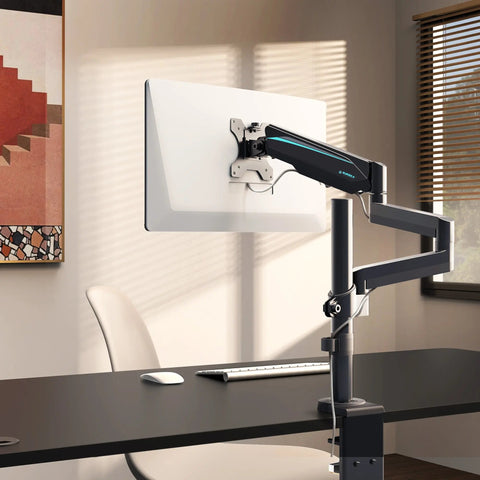
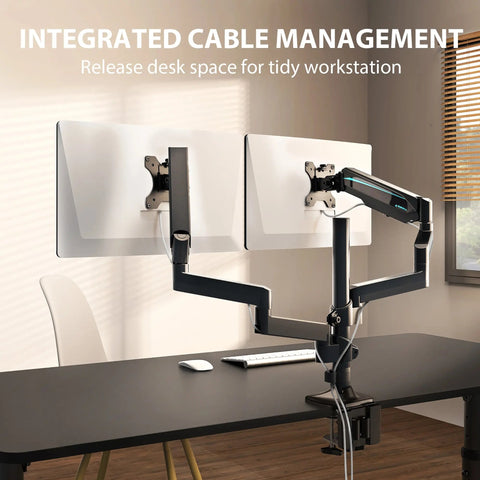
One of the most common "gotchas" in home office setups is improper monitor height. If a monitor is too low, the user enters a state of "forward head posture," which significantly increases the load on the cervical spine. Using a Dual Monitor Arm allows for precise adjustment of height, tilt, and rotation.
According to OSHA eTools for Monitors, the top of the screen should be at or slightly below eye level. For professional dual-monitor setups, our scenario modeling indicates that standard desks often lack the depth required for optimal viewing distances, making an adjustable arm mandatory to prevent eye strain and neck rotation.

Strategic Implementation: The "Engineering Control" Approach
In the OSHA Hierarchy of Controls, "Engineering Controls" (such as providing adjustable furniture) are considered more effective than "Administrative Controls" (such as telling employees to take breaks). This is because engineering controls fundamentally change the environment to reduce the hazard.
Anthropometric Fit: Why "Standard" Fails
Standard fixed-height desks are typically 29 inches (73.7 cm) high. However, anthropometric calculations based on BIFMA G1-2013 guidelines reveal that this height is often inappropriate for a significant portion of the workforce.
Logic Summary: For a 95th percentile male (185 cm tall), the recommended sitting desk height is approximately 76.5 cm, and the standing height is 113.5 cm. A standard fixed desk creates an 8.7 cm "ergonomic gap" for tall users, leading to chronic slouching.
To bridge this gap, organizations should prioritize height-adjustable desks. When selecting these, motor reliability is a critical factor for B2B procurement.
Logic Summary: Following BIFMA X5.5 engineering standards, we recommend dual-motor systems for professional workstations. A typical setup (PC, monitors, arms, and accessories) can reach ~78 kg. While a single motor may have an 80 kg capacity, it operates at nearly 98% utilization, risking premature failure. A dual-motor system operates at ~65% utilization, ensuring long-term durability.
Supporting the Lower Extremities
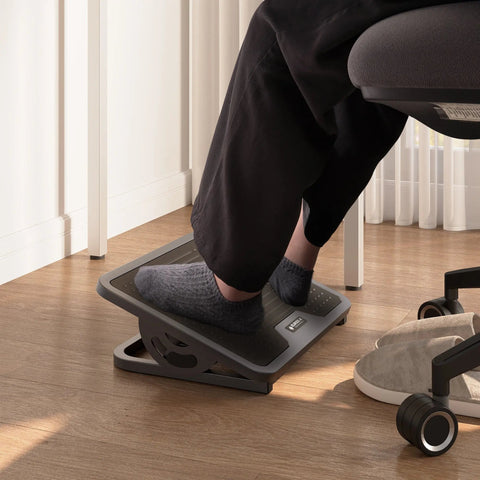
Often overlooked in home office stipends is the role of the lower limbs. Prolonged static sitting or standing can lead to blood pooling and increased pressure on the veins. The Adjustable Ergonomic Footrest serves as a vital accessory to promote healthy circulation and allow for frequent micro-movements of the ankles, which helps mitigate the risks of lower-limb MSDs.
Practical Recommendations for Hybrid Work Policies
For companies looking to implement or refine a home office stipend program, the following actionable steps are recommended:
- Define the "Core Bundle": Instead of a cash-only stipend, provide a curated list of approved equipment that meets ANSI/BIFMA X5.1 safety and durability standards.
- Mandate a Sit-Stand Rhythm: Encourage the "20-8-2" rule recommended by Cornell University Ergonomics: 20 minutes of sitting, 8 minutes of standing, and 2 minutes of moving or stretching.
- Provide Setup Education: Include a mandatory 15-minute ergonomic self-assessment. Tools such as the HSE DSE Checklist can be adapted to help employees set their own monitor and chair heights correctly.
- Consider Storage and Organization: A cluttered workspace contributes to cognitive load and stress. Including a 23" Rolling File Cabinet with Drawer in the stipend options helps employees maintain a professional, organized environment that supports deep work.

The Future of the Ergonomic Workplace
The convergence of ergonomic science and sustainable engineering is defining the next generation of office solutions. As detailed in The 2026 Workstation White Paper: Converging Ergonomic Science and Sustainable Engineering, the future workstation is a dynamic system that adapts to the user's physiological needs in real-time.
By investing in high-quality ergonomic stipends today, organizations are not just buying furniture; they are protecting their most valuable asset—their people. The ROI of such a program is found in the thousands of hours of recovered focus time, the reduction in healthcare-related costs, and the creation of a culture that truly values employee well-being.
Appendix: Methodology & Modeling Assumptions
The ROI and ergonomic calculations presented in this article are based on the following scenario modeling parameters. This is a deterministic model designed for illustrative purposes and may vary based on individual employee data.
| Parameter | Value | Unit | Source / Rationale |
|---|---|---|---|
| User Height | 185 | cm | 95th percentile male height (US) |
| Hourly Wage | 75 | USD | Senior Software Engineer average ($156k/year) |
| Productivity Coefficient | 0.15 | Ratio | Conservative estimate for focus gain |
| Workstation Load | 78 | kg | Dual 34" ultrawide monitors + liquid-cooled PC |
| Motor Safety Margin | 0.80 | Ratio | Engineering best practice for longevity |
Boundary Conditions:
- Productivity gains assume the employee has received basic ergonomic training.
- Metabolic burn estimates are statistical averages and do not account for individual BMR variations.
- ROI calculations exclude local tax implications, which may add 10–20% administrative overhead.
Disclaimer: This article is for informational purposes only and does not constitute professional medical, legal, or financial advice. The ergonomic recommendations provided are general guidelines; individuals with pre-existing musculoskeletal conditions should consult a qualified physiotherapist or occupational therapist before modifying their workstation or work habits.
Sources
- BIFMA G1-2013 Ergonomics Guideline for Furniture
- ISO 9241-5:2024 Workstation layout & postural requirements
- WHO 2020 Guidelines on Physical Activity & Sedentary Behaviour
- Cochrane: Workplace interventions for reducing sitting at work (2018)
- OSHA eTools: Computer Workstations - Neutral Working Postures
- HSE: Working safely with display screen equipment (DSE)
- Cornell University Ergonomics Web — Workstation Guides
- ANSI/BIFMA X5.1 General-Purpose Office Chairs




Leave a comment