

Standing desk fit for short users is less about the advertised minimum number and more about whether the full setup keeps your shoulders relaxed, wrists neutral, and feet supported. For many people under 5'4", a standing desk for short users can look low enough online but still feel too tall once you add the desktop thickness, your chair height, and your monitor setup. OSHA's workstation guidance makes the basic goal clear: the desk should support neutral wrist and elbow posture, not force you to reach upward or shrug while typing.

Why Short Users Outgrow Most Desks
The most common short-user problem is not that a desk will not lower at all. It is that the lowest setting still lands above the user's comfortable working height. That can push the shoulders up, bend the wrists back, or leave the feet dangling when seated. In real use, that is where a desk that looks flexible on paper starts to feel awkward.
A standing desk for short users has to fit the person, the chair, and the desktop together. A setup that looks fine during a quick test can still become uncomfortable after an hour if the keyboard surface is too high or the monitor forces a neck angle that does not match your body. The practical goal is not the lowest spec-sheet number. It is a workstation that lets you work without obvious strain.
How to Judge Minimum Height Fit
The safest way to compare options is to start with your working posture, then check the desk against it. A good standing desk fit usually keeps the elbows near a natural bend, the shoulders down, and the wrists close to straight while typing. BIFMA-style guidance is often summarized as a broad ergonomic desk-height range, but that range is only a benchmark. It is not a universal guarantee for every short user.

Use this order when you compare desks:
- Check seated height first. If you sit for part of the day, see whether your chair can put your elbows in a comfortable position before you even look at the desk.
- Check standing height second. The lowest desk setting should let your arms rest naturally instead of reaching up.
- Check the effective height, not just the frame. A thick desktop can make the real working surface higher than the frame spec suggests.
- Check foot placement. If your feet do not rest comfortably, the desk may be too high for your body even if it is technically adjustable.
That is why browsing a standing desk for short users should start with the lowest usable height, not the tallest range or the headline feature list. If the low end barely clears your posture target, treat it as a borderline option, not an automatic win.
| Fit band | What it usually means for short users | Watch for |
|---|---|---|
| More likely to work | The desk lowers close to your natural elbow height and still leaves room for normal typing posture | Monitor height and desktop thickness still matter |
| Borderline | The desk is close, but a small adjustment or foot support may be needed | Shoulder lift, wrist bend, or dangling feet |
| Likely too tall | The lowest setting still forces you to reach upward or sit/stand awkwardly | Do not rely on tiny tweaks to fix it |
This is the point where compare standing desk options by the low end of the range, not by a single marketing phrase. If a desk only looks workable after you ignore desktop thickness, it is probably not a clean fit.
When a Footrest Makes the Desk Work
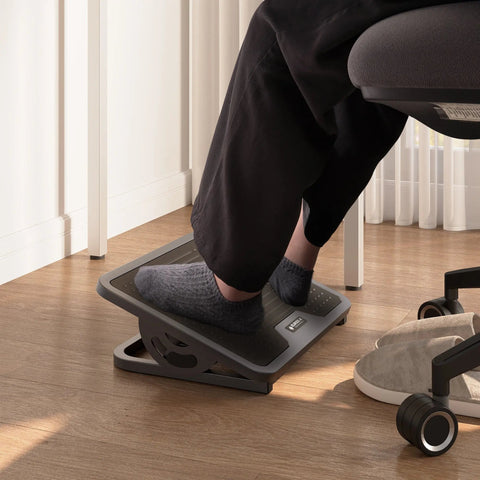
A footrest can help when the desk is only slightly too high for a short user. It is most useful when the arms are close to a comfortable height, but the feet need support so the body does not feel suspended. In that case, a footrest can bridge a small height gap and make the workstation feel much more stable. Ergonomic guidance for petite users commonly treats foot support as the practical fix for that kind of gap.
Use a footrest when the issue is modest, not structural. Good signs include feet that do not rest flat, pressure at the front of the thighs, or a standing position that feels close but not quite settled. In that situation, a footrest is a setup tool. It is not a cure-all for a desk that is clearly too tall.
A footrest is also useful in shared workspaces where the same desk needs to work for different body sizes. If the person using the desk changes often, the best choice is usually the setup that is easiest to repeat without strain. That is why foot support can matter even when the desk itself is technically adjustable.
What Desk Heights Tend to Fit Under 5'4"
There is no single universal cutoff for short users, because body proportions and footwear change the result. Still, low-height bands can help with pre-purchase filtering.
| Lowest adjustable height band | What it suggests | Typical short-user read |
|---|---|---|
| Lower range with room to spare | More likely to fit shorter users without extra help | Usually the safest starting point |
| Middle-low range | Can work for some short users, but needs a closer check | Borderline if you sit low or wear thicker footwear |
| Mid-range or higher | Often feels tall for shorter users | More likely to need a footrest or a different setup |
The broad industry benchmark around ergonomic desk-height range is useful here because it reminds you that adjustability matters. But the best fit for a shorter user is usually the desk that reaches low enough for your real posture, not the one with the widest promotional range.
A frame-only spec can also mislead. The finished desktop height is what you actually type on, and that can sit higher than the frame number makes it seem. If the difference between the spec and the real surface is enough to change your elbow angle, treat that as part of the fit decision.
A 5'2" Example and Other Short-User Scenarios
For a user around 5'2", Ergotron's fit calculator is a helpful reminder that the comfortable seated target may land around 24 to 25 inches depending on body proportions and footwear. Around 5'2" seated desk height That is not a universal rule, but it is a practical starting point when you are comparing desks online.
Here is how the scenario often changes by height band:
- Around 5'0" to 5'1": Minimum height matters a lot. A desk that seems close may still feel too tall unless the workstation is carefully tuned.
- Around 5'2": Many users land in the borderline zone. A desk may work if the low end is truly low and the rest of the setup is adjusted well.
- Around 5'3" to 5'4": More desks become possible, but body proportions still matter. Do not assume being near 5'4" eliminates fit issues.
The same desk can feel different from one person to the next because one user may have longer legs, another longer arms, and another a different seated preference. So when you are shopping for an ergonomic desk for petite professionals, think in terms of fit signals, not just height labels.
Your Final Short-User Fit Checklist
Before you buy, check the setup in this order:
- Lowest height first: Does the desk get low enough for your real seated or standing posture?
- Desktop thickness next: Will the finished work surface sit higher than the frame spec suggests?
- Elbow position: Can your elbows stay near a natural bend without shrugging?
- Foot support: Do your feet rest flat, or would you need a footrest?
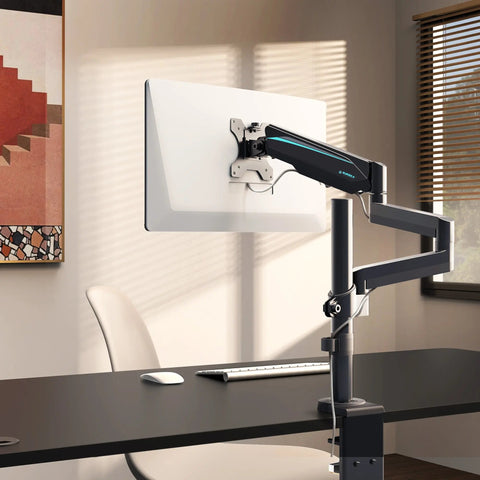
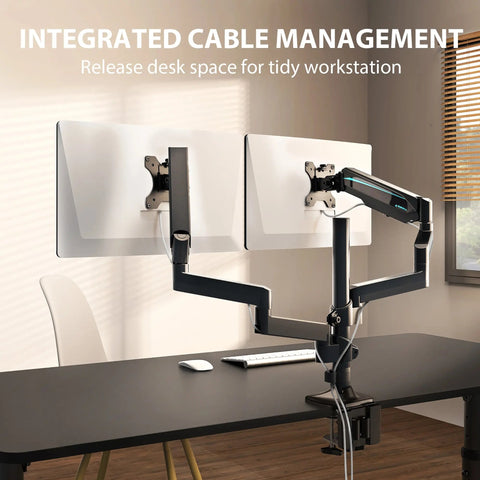
- Monitor height: Can the screen sit comfortably without neck strain?
- Transition ease: Can you move between sitting and standing without redoing everything?
- Borderline test: If it only works after several workarounds, keep shopping.
That final rule matters. A small mismatch can be fixed with a footrest or a better chair setting, but a large mismatch usually means the desk is the wrong fit. If you are still comparing options, use the standing desks collection as a browsing starting point and verify the low end against your own body before checkout.
Standing desk fit for short users comes down to one question: does the full workstation let you work in a relaxed position, or are you constantly compensating? If the desk is close, a footrest or another small adjustment may help. If it is clearly too tall, keep comparing. The best choice is the one that feels repeatable in real daily use, not just impressive on a product page.
FAQs
What Standing Desk Height Is Best for Someone Under 5'4"?
The best height is the lowest setting that lets you keep your shoulders relaxed and wrists neutral while typing. There is no single number that works for every short user, because body proportions, footwear, and chair height all change the result.
What Is the Minimum Height for a Standing Desk for Short People?
There is no universal minimum height for all short users. What matters is whether the desk lowers enough to support your posture at the keyboard and still leaves your feet comfortably supported. A lower spec is helpful, but only if the finished setup actually fits you.
Do I Need a Footrest With a Standing Desk If I'm Short?
Not always. A footrest is most helpful when the desk is only a little too high and you need extra support for comfort. If the desk is dramatically too tall, a footrest usually is not enough on its own.
How Can I Tell If a Standing Desk Fits My Height Before I Buy It?
Compare the desk's lowest usable height with your elbow position, then check whether your feet, monitor, and chair still work together. If the setup only looks good after several compromises, it is safer to keep shopping.
Can a Short Person Use a Standard Standing Desk Comfortably?
Sometimes. A standard desk can work if it lowers enough and the rest of the workstation is adjusted well. But many short users need a closer look at the low end of the range, desktop thickness, and whether a footrest will be part of the setup.




Leave a comment