

Tall buyers usually need a standing desk for tall users that reaches elbow height without forcing the frame to live at its weakest point. The safest way to shop is to check your standing elbow position first, then compare the desk's usable top range and stability at that height. A desk can look adjustable on paper and still feel too short or too shaky in daily use.

Why Tall Users Outgrow Standard Desk Heights
A lot of sit-stand desks work fine for average-height users but stop short for people over 6'2". The BIFMA G1 ergonomics guideline gives a useful baseline for office work surfaces, and many standard desks still land below what taller users need at the top end. The main issue is not whether the desk moves up and down. It is whether the top setting actually meets your body's standing posture.
That is why a tall person ergonomic desk elbow height check matters more than the marketing number. If the desk tops out below your relaxed standing elbow position, you will likely shrug your shoulders, bend your wrists, or settle for a compromise that gets annoying fast. For readers who are still narrowing category options, browse standing desks after you know your height target.
The other problem is stability. A desk that reaches high enough but wobbles at that setting can be a worse buy than a slightly shorter desk that feels planted. For tall users, height sufficiency and steadiness are part of the same decision.
What Tall Users Should Check First
For most shoppers, three checks decide whether a standing desk for tall users will actually work: usable height, desktop depth, and frame stability. If any one of those fails, the desk can look attractive and still disappoint in practice.

Maximum Height Range
Start with your standing elbow height, not the product page's max-height headline. A practical benchmark for very tall users is often near the high-40s in inches, and a 6'5" user may need roughly 49 to 50 inches to stay near a natural 90-degree elbow angle. That is only a planning reference, not a universal rule, because arm length, footwear, and monitor setup all change the feel.
In real shopping terms, a desk that stops in the mid-40s may be fine for some people over 6'2", but it can fall short for others. If you know you stand high in the range, treat any desk with a low top end as a likely mismatch unless you have a very specific setup that closes the gap.
Desk Depth and Reach
Height is only half the fit. Taller users often need enough desktop depth to keep the monitor at a comfortable distance and avoid reaching too far forward. A deeper surface usually makes it easier to keep your shoulders relaxed, especially if you use larger monitors or more than one screen.
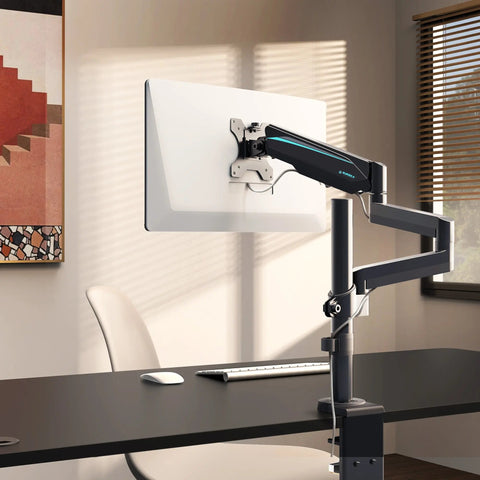
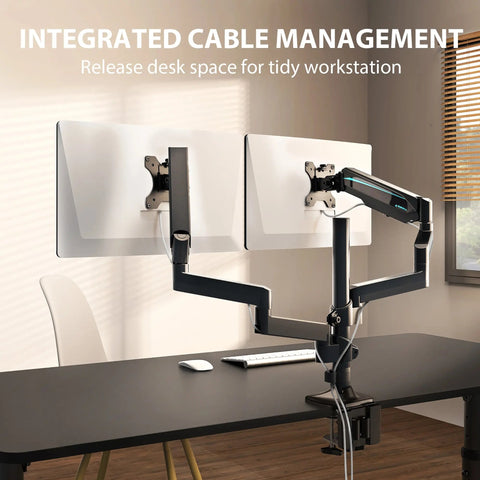
A good self-check is simple: if the desk would force your keyboard, mouse, and monitor to crowd one another, the setup may feel cramped even if the height is right. That is why desk depth should be judged alongside your monitor arm, laptop stand, and accessory layout.
Frame and Load Stability
Once a desk rises higher, wobble becomes easier to notice. That is because stability at maximum height depends partly on lift-column overlap, and less overlap near full extension tends to increase movement. In plain language, the taller the desk gets, the more the frame design matters.
This is where a lot of buyers make the wrong trade-off. A desk with a bigger height number is not automatically better if your monitor shakes whenever you type. If your setup includes dual monitors, a heavy arm, or a large desktop load, put more weight on the frame and lifting-column design than on the spec sheet alone. The BIFMA ergonomics baseline helps explain why many standard desks top out where they do, while the frame design determines how usable that range feels.
Height Range Versus Stability at Max Lift
The best choice for a tall buyer is not always the tallest desk. What matters is the balance between usable height and steadiness at the height you actually plan to use.
| Comparison Point | Why It Matters for Tall Users | What To Look For |
|---|---|---|
| Usable standing height | This tells you whether the desk can reach your elbow posture without forcing bad shoulder or wrist position. | Compare your standing elbow height to the desk's real top setting, not just the ad copy. |
| Stability at taller settings | Tall users often live near the upper range, where motion becomes easier to feel. | Look for a frame designed to stay steady near full extension, especially with heavier monitor setups. |
| Monitor and keyboard fit | A desk can be tall enough and still feel wrong if the surface is too cramped or the reach is too long. | Check whether the desktop depth leaves room for a natural monitor distance and relaxed arm reach. |
| Cable and accessory strain | Cables, arms, and shelves can become more annoying as the desk rises and lowers daily. | Make sure accessories do not pull tight or add extra shake at the top end. |
| Best use case | Tall users need different compromises depending on whether the setup is light, heavy, or multi-monitor. | Choose more height margin if you stand often, and more stability if the desk carries a lot of gear. |
For very tall buyers, a slightly shorter desk with better steadiness is often the smarter buy. If the taller option only works when the frame is near its least stable position, the extra inches may not be worth it. That is the main reason the best standing desk for tall users 6'5" is usually the one that balances height and rigidity, not the one with the biggest headline number.
How to Match Desk Height to Your Body
Use your own body to test fit before you buy. The goal is simple: the desk should support relaxed shoulders, neutral wrists, and a monitor layout that does not force awkward reaching. The standing elbow-height fit test is the cleanest place to start.
- Measure your standing elbow height while wearing the shoes you usually work in.
- Compare that number to the desk's actual maximum height, not just the marketing title.
- Check whether the keyboard and mouse can sit at a height that keeps your shoulders relaxed.
- Confirm the monitor does not sit so close that you have to lean forward to read it.
- Test the desk at its top setting and see whether typing or light leaning makes the frame feel loose.
If the desk only feels good at the midpoint but not near the top, it is not really a tall-user fit. The best setup is the one that still feels natural when fully raised, because that is where your daily standing posture has to live.
Tall-User Buying Checks Before Checkout
Before you add a desk to cart, verify the details that most often create regret for tall shoppers. Use this quick check:
- The top height can actually reach your standing elbow position.
- The frame still feels steady at that height with your real monitor load.
- The desktop depth leaves enough room for your keyboard, mouse, and screen distance.
- Shipping, return window, and warranty terms are clear enough that you can buy with confidence.
- Assembly and delivery fit your space, especially if the desk ships by freight or needs help moving into place.
If you want a category starting point, tall standing desks are easier to compare once you know your height target and stability threshold. For a roomier work surface, the 72-inch standing desk is worth checking if you need more desktop space and want to confirm that the 29.5-inch to 48-inch range fits your posture. It includes a 72" x 23" surface, a dual-motor lift, 220-lb capacity, a 30-day return window, and a 1-year parts / 5-year frame warranty, so it works best as a fit check for buyers who already know they need a larger layout.
If your sitting setup also needs work, a better chair can help keep the standing-desk transition comfortable. We also cover tall chair setup for readers building the full workstation.
Final Takeaway
A good standing desk for tall users is the one that reaches your standing elbow height, stays steady near full lift, and leaves enough room for a comfortable workspace. If any of those three fails, keep looking. Tall buyers do not need the tallest number on the page; they need the best fit at the height they will actually use. Compare the top range, the frame, and the desk depth before you check out, and you will avoid the most common regret points.




Leave a comment