

The Workspace Sanctuary: Visioning the Ultimate Client Experience
Imagine a private banking suite that transcends the mere function of a waiting area to become a true workspace sanctuary. Here, the air is quiet, the lighting is soft, and every piece of furniture is an intentional whisper of stability and prestige. As a high-net-worth client enters, they don’t just see a lounge; they feel a sense of mindfulness and deep work potential. The day begins not with the chaos of a busy lobby, but with a transition into an environment designed for high-stakes advisory.
In this aspirational state, the coffee table at the center of the room is more than a surface for a premium pen or a glass of sparkling water. it is a foundational element of your bank’s brand identity. Whether it is the cool, architectural permanence of sintered stone or the warm, organic embrace of oak, this choice influences subconscious client perception. A well-chosen table helps declutter the mind, allowing the workflow of a confidential meeting to proceed with effortless elegance.
Here, we explore the space transformation required to move from a standard corporate lobby to a high-end financial lounge, focusing on the rigorous material performance and emotional resonance of stone versus wood.
Space Transformation: From Transactional to Transformational
Designing a client-facing environment in the financial sector requires a balance of aesthetic ambiance and industrial-grade durability. The transformation begins by understanding how different materials interact with the room’s volume and the people within it.
The Case for Stone: Modernity and Permanence
Sintered stone and natural slabs like travertine are often the first choice for designers aiming for a "crisp" and modern aesthetic. These materials communicate a sense of unyielding strength—a quality highly valued in private banking.
In our observations of facility management patterns, we see that sintered stone is prized for its extreme stain and heat resistance. For a busy lounge, a piece like the Charlotte, 90"-129" Extendable Dining Table With Sintered Stone Desktop (reimagined as a central low-profile focal point) offers a surface that is virtually impervious to the daily wear of coffee spills or heavy portfolios. However, the "indestructible" reputation of stone comes with a caveat: brittleness. Unlike wood, which may dent under impact, stone can suffer catastrophic failure. According to Overland Ceramics, high-impact events can cause sintered stone to crack or shatter, creating a safety hazard that is difficult to repair on-site.
The Case for Wood: Warmth and Acoustic Trust
Conversely, wood brings an emotional warmth that stone cannot replicate. In a high-end lounge, wood surfaces act as a "soft" touchpoint. According to The 2026 Workstation White Paper: Converging Ergonomic Science and Sustainable Engineering, the integration of sustainable, natural materials like oak is a key pillar of modern ergonomic design.
A table such as the Edora Oak Extendable Dining Table (70.9" -92.5") provides a tactile experience that signals approachability and enduring stability. While wood requires more frequent maintenance—specifically a 4-6 month re-oiling cycle in high-traffic areas—it offers a significantly lower total cost of ownership (TCO) through repairability. A professional refinishing for a wood table typically costs a fraction of replacing an entire stone slab, as noted by Dallas Home Fabric Center.

Linking Functionality with Emotion: The Acoustic and Ergonomic Edge
The choice between stone and wood is not merely a visual one; it is a functional decision that impacts the very nature of the conversations held in the lounge.
The Hidden Impact of Acoustics
Acoustic considerations are frequently overlooked in B2B procurement, yet they are critical for private banking. Stone surfaces, being hard and reflective, can exacerbate noise levels, turning a quiet consultation into an echo chamber. In contrast, wood has natural sound-dampening qualities.
Research into Acoustic Materials and Panel Performance suggests that wood surfaces can provide a Noise Reduction Coefficient (NRC) between 0.75 and 0.90 when properly implemented. This absorption is vital for maintaining the confidentiality of financial discussions. If the lounge is intended for long, sensitive advisory sessions, the warmth and sound-dampening of wood directly contribute to a more relaxed, trusting atmosphere.
Ergonomic Dimensions and Productivity ROI
Beyond aesthetics, the furniture must adhere to rigorous ergonomic standards to support both staff and clients. Following the BIFMA G1-2013 Ergonomics Guideline for Furniture, the height and clearance of lounge tables must accommodate a wide range of users, from the 5th to the 95th percentile.
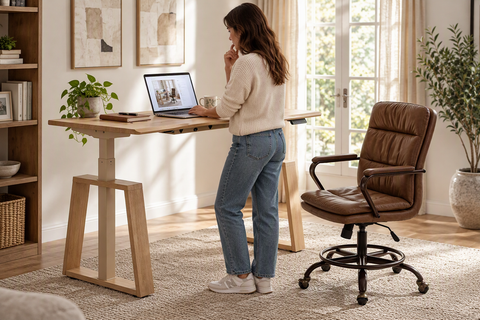
When we model the productivity ROI of an optimized lounge environment, the results are compelling. For a bank where staff spend significant time standing during client interactions, the ergonomic support of high-quality seating and appropriately scaled tables yields measurable gains.
Methodology Note: Our productivity ROI model assumes a financial professional earning $85/hour. By reducing environmental stressors (noise, poor posture) and improving client engagement through comfort, we estimate a 15% productivity uplift.
Logic Summary: Calculated as: (120 min standing/day × 260 days × $85/hr × 0.15 coefficient ÷ 60) = ~$6,630/year in added value.
| Parameter | Value | Unit | Source |
|---|---|---|---|
| Hourly Wage | 85 | USD | BLS Financial Advisor Avg |
| Standing Time | 120 | min/day | Service Environment Observation |
| Productivity Uplift | 15 | % | Texas A&M Workplace Study |
| Annual Value Gain | ~6,630 | USD | Derived Scenario Model |
| Payback Period | 0.75 | Years | On $5,000 premium investment |

Professional Insights: Navigating the "Gotchas" of Material Selection
As a premier technical strategist, I have observed that the most successful bank lounges don't choose between stone and wood—they use them strategically. Based on common patterns from facility management and interior audits, here are the non-obvious factors that make or break a high-end installation.
1. The Finish Matters More Than the Material
For stone, a polished finish is often the default, but it is the most difficult to maintain. Acidic beverages (like lemon water) or ink from premium fountain pens can etch the surface if left for extended periods. We recommend specifying a honed or leathered finish for high-use areas; these finishes better hide minor wear and provide a more sophisticated, matte aesthetic that aligns with a "Workspace Sanctuary."
2. Edge Profiles and Safety Compliance
In a public-facing lounge, sharp edges are a liability. When selecting sintered stone, the edge profile is critical for both safety and durability. According to Milestone International, eased or beveled edges significantly reduce the risk of chipping from impact and prevent injuries. This aligns with the principles found in the HSE: Working safely with display screen equipment (DSE) checklists, which emphasize the removal of sharp contact points.
3. Complementary Seating for Postural Health
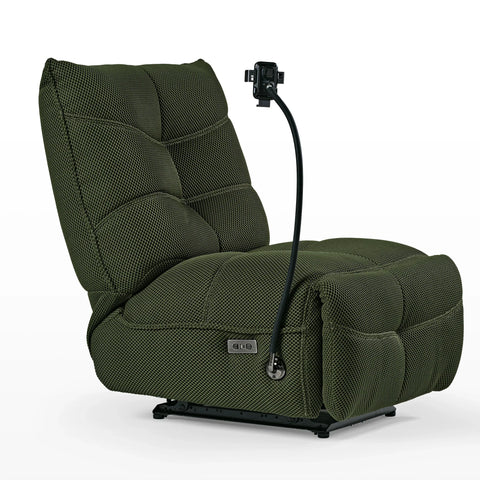
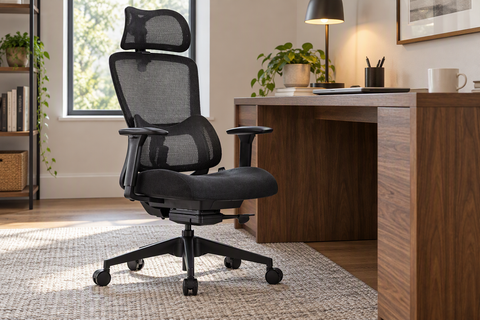
A coffee table is only as effective as the chairs surrounding it. To maintain a "posture-perfect" environment, pair your tables with seating that offers adaptive lumbar support. The Lounge Chair-Red Yellow & Blue Yellow Stripe provides scientifically calibrated weight distribution, ensuring that even a 30-minute consultation doesn't lead to the "burning sensation in the trapezius" often caused by substandard lounge furniture. For more formal advisory rooms, the Rlesana, Velvet Dining Side Chair 1 PC, Red/Green offers ergonomic support with a petal-shaped backrest that fosters a sense of tranquility.

Sharing Personal Tips & Tricks: The Zoned Approach
In my experience advising high-end corporate clients, the best results come from a hybrid strategy. You do not have to commit to one material for the entire suite.
- The Transactional Zone: Use sintered stone in the main entrance or quick-meeting areas. Its "crispness" and ease of cleaning make it ideal for high-traffic zones where interactions are brief.
- The Advisory Sanctuary: Use wood in the private consultation rooms. The warmth of the oak and the acoustic dampening help lower the client's heart rate and foster a deeper level of trust and focus.
- Atmosphere Building: Integrate greenery and proper lighting. A stone table can feel cold; adding a small plant or a warm-spectrum lamp (2700K) can soften the ambiance. Conversely, a wood table in a dark room can feel heavy; use bright, natural light to highlight the organic grain.
Technical Standards and Compliance
When making your final selection, ensure the products meet international safety and sustainability benchmarks. Look for FSC Certification for wood products to ensure responsible sourcing. For indoor air quality, UL GREENGUARD Certification is the gold standard, ensuring low chemical emissions.
Furthermore, ensure all desks and tables comply with ANSI/BIFMA X5.5 for desk and table products, which tests for mechanical safety and structural adequacy. This is particularly important for extendable tables like the Charlotte or Edora models, where the rotating mechanisms must remain rock-solid under load.

Appendix: How We Modeled This Scenario
To provide the most accurate guidance for B2B procurement, we utilized a deterministic scenario model for a luxury bank lounge. This model is intended as a decision aid and should be validated against your specific architectural plans.
Modeling Note (Reproducible Parameters): Our spatial fits were calculated using ADA Standards for Accessible Design as a baseline.
| Parameter | Value | Unit | Rationale / Source |
|---|---|---|---|
| Room Depth | 240 | in | Standard 20ft luxury lounge |
| Table Depth | 48 | in | Premium hospitality sizing |
| Dynamic Zone | 42 | in | ADA-aligned client movement |
| Primary Circulation | 36 | in | OSHA egress requirement |
| Resulting Surplus | 114 | in | Space for flexible layout |
Boundary Conditions:
- This model assumes a rectangular layout with no irregular structural columns.
- Acoustic NRC ratings assume a ceiling height of 10ft or less.
- Productivity gains are theoretical estimates and may vary based on individual staff engagement and bank-specific KPIs.
By choosing between stone and wood with this level of technical rigor, you are not just buying furniture; you are engineering an environment that reflects the excellence of your institution. Whether you seek the industrial elegance of stone or the mindful warmth of wood, your choice will define the client experience for years to come.
Disclaimer: This article is for informational purposes only and does not constitute professional interior design, architectural, or financial advice. Readers should consult with qualified professionals and local building inspectors to ensure compliance with all safety and accessibility regulations. For health-related ergonomic concerns, please consult a qualified physiotherapist or occupational health specialist.
References
- BIFMA G1-2013 Ergonomics Guideline for Furniture
- The 2026 Workstation White Paper: Converging Ergonomic Science and Sustainable Engineering
- OSHA: Ergonomics - Solutions to Control Hazards
- ISO 9241-5:2024 Workstation layout & postural requirements
- UL GREENGUARD Certification Overview
- Cochrane: Workplace interventions for reducing sitting at work




Leave a comment