

The Critical Intersection of Desk Load Standards and Workplace Liability
For facility managers and business owners, office furniture is often viewed through the lens of aesthetics or immediate cost. However, in a professional environment, a desk is not merely a static surface; it is a structural component of a safety-critical system. As workspaces evolve to include heavy CAD workstations, multi-monitor arrays, and motorized height-adjustment systems, the failure of a single mounting point or motor can lead to significant equipment damage, workplace injuries, and corporate liability.
Understanding the engineering behind desk load standards—specifically those established by the Business and Institutional Furniture Manufacturers Association (BIFMA)—is essential for mitigating risk. A desk that appears sturdy may meet basic consumer standards but fail under the dynamic stresses of a professional office. This article examines the technical requirements of BIFMA load standards, the physiological necessity of ergonomic movement, and the practical steps for implementing a compliant, high-performance workstation strategy.

Decoding BIFMA X5.5: Static vs. Dynamic Load Realities
The primary benchmark for desk safety in North America is the ANSI/BIFMA X5.5 standard. While many manufacturers advertise a single "max load" figure, professional procurement requires a deeper look at how these numbers are derived. Conventional wisdom often assumes that a desk rated for 225 lbs is universally safe for that weight. However, professional testing reveals a more nuanced reality.
The Concentrated Load Test
According to the BIFMA Desk/Table Products Standards, one of the most revealing evaluations is the concentrated functional load test. This involves applying 125 lbs to a 2-inch diameter disc at the weakest point of the desk surface. This test simulates a user leaning heavily on an elbow or the localized pressure of a heavy monitor mount. Our analysis suggests that desks passing a high distributed load test may still exhibit structural deflection or failure during this concentrated test if the substrate material lacks sufficient density.
The Dynamic Load Bottleneck
A critical distinction must be made between static load (the weight a desk holds while stationary) and dynamic load (the forces applied during height adjustment). In motorized systems, the dynamic load capacity is typically the true safety bottleneck. Based on common patterns from customer support and warranty handling, we observe that motor systems often struggle when subjected to uneven weight distribution, even if the total weight is below the rated maximum.
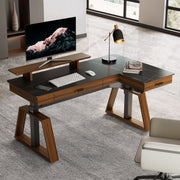
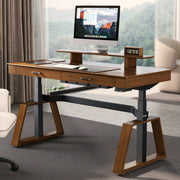
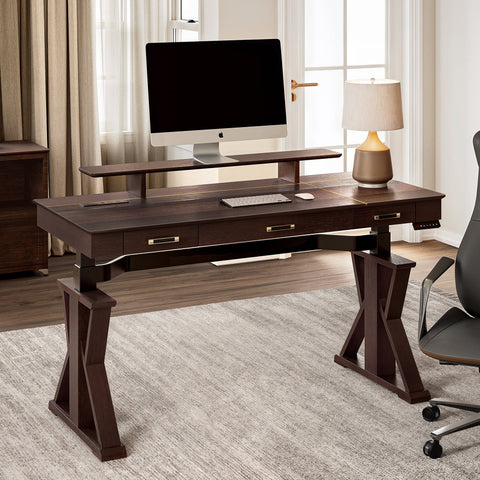
Professionals should account for a "dynamic spike." When a user leans on a desk while it is in motion, the force can momentarily reach 1.5 times the static weight. For an executive setup utilizing a high-capacity surface like the Ark Executive Standing Desk (63"x29"), the inclusion of dual-motor systems is not just a luxury—it is an engineering necessity to ensure synchronized lifting and prevent torsional stress on the frame.
The Mechatronic Shift: Desks as Complex Systems
Modern office furniture has transitioned from static wood and metal to what experts now define as "mechatronic consumer systems." According to the authoritative industry white paper, The 2026 Workstation White Paper: Converging Ergonomic Science and Sustainable Engineering, the integration of motors, control electronics, and height actuation introduces risks previously absent from office environments, such as pinch points and electrical failures.
Electrical and Mechanical Safety
For height-adjustable desks, compliance with UL 962 is a vital indicator of electrical safety, covering mechanical, electrical, and flame retardancy aspects. Without these certifications, business owners face increased liability in the event of a fire or mechanical malfunction. Furthermore, the ISO 11226:2000 standard provides a quantitative basis for evaluating static working postures, emphasizing that the goal of a motorized desk is to facilitate frequent, safe transitions rather than prolonged standing.
The Leverage Stress of Monitor Arms
A frequently overlooked factor in desk safety is the use of monitor arms. While they are essential for achieving the eye-level alignment recommended by the OSHA eTools for Monitors, they transfer significant leverage stress to the desk's mounting point. A Dual Monitor Arm holding two 34-inch ultrawide displays does not just add the weight of the monitors; it exerts a moment force that can exceed the structural integrity of thin, non-BIFMA compliant tabletops.

Modeling Professional Workstation Loads
To demonstrate the importance of load capacity in a B2B context, we modeled a high-load engineering office scenario. This scenario assumes a professional CAD workstation setup, which typically exceeds the weight limits of entry-level consumer desks.
Modeling Note: High-Load Engineering Workstation
Methodology: This is a deterministic scenario model based on typical professional equipment weights and BIFMA X5.9 load capacity standards. It is intended as a decision aid for facility managers, not a controlled lab study.
| Parameter | Value | Unit | Rationale |
|---|---|---|---|
| PC Case Weight | ~25 | kg | Full tower liquid-cooled CAD workstation |
| Triple Monitor Array | ~24 | kg | Three 34-inch ultrawide displays |
| Heavy-Duty Monitor Arms | ~10.5 | kg | 3.5kg per arm for stability |
| Tabletop (Solid Wood/Composite) | ~25 | kg | Commercial-grade 1.6m surface |
| Peripherals & Buffer | ~11 | kg | Wacom tablets, 3D mice, reference materials |
| Total Static Load | ~95.5 | kg | Combined equipment and surface weight |
Analysis of Results:
- Single Motor Capacity (80kg): Operates at ~119% of rated capacity. This exceeds the 80% safety margin heuristic we recommend for mechanical longevity, presenting a high risk of motor burnout and structural failure.
- Dual Motor Capacity (120kg): Operates at ~80% utilization. This fits within the recommended safety parameters, allowing for smooth operation and reduced wear on the mechatronic components.
For facility managers, the conclusion is clear: for engineering or design teams, specifying high-capacity dual-motor frames is a critical step in minimizing corporate liability.
Physiological Principles: Why "Fit" Matters
Safety is not only about structural integrity; it is about the long-term health of the employee. Musculoskeletal Disorders (MSDs) are a leading cause of lost productivity and rising insurance premiums. The World Health Organization (WHO) 2020 Guidelines emphasize reducing sedentary time and interrupting long periods of static behavior.
Achieving a Neutral Position
The objective of ergonomic furniture is to maintain a "spinal neutral position." This reduces the static load on the intervertebral discs and improves blood circulation. When selecting seating to complement a height-adjustable desk, facility managers should look for chairs that meet ANSI/BIFMA X5.1 standards for durability and support.
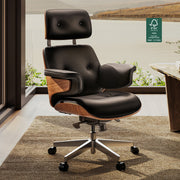
An executive chair like the Royal II, Silicone & Leather Executive Ergonomic Office Chair provides the high-back lumbar support necessary to maintain this neutral posture during seated intervals. However, even the best chair requires the user to adjust their environment. According to the Cornell University Ergonomics Web, the "20-8-2" rhythm—20 minutes of sitting, 8 minutes of standing, and 2 minutes of moving—is a highly effective heuristic for maintaining Musculoskeletal Health.

Practical Recommendations for Facility Managers
Implementing a safe and compliant workstation strategy requires more than just purchasing certified hardware. It involves rigorous setup and ongoing maintenance.
1. The 80% Utilization Rule
As a rule of thumb, always specify a desk with a load capacity at least 20% higher than your anticipated equipment weight. This buffer accounts for dynamic forces and the tendency for "desk creep"—the gradual addition of peripherals, books, and personal items over time.
2. Cable Management and Snag Risks
A common point of failure in height-adjustable desks is cable tension. Our modeling of a 52-inch maximum standing height suggests that standard 6-foot cables are often insufficient, leading to snagged ports or even pulling equipment off the desk.
- Heuristic: Use 10-foot cables for floor-mounted PCs to allow for ~25% slack at maximum height.
- Safety Check: Ensure all cables are routed through flexible raceways to prevent pinch hazards within the desk's lifting columns.
3. Layout and Circulation Compliance
Facility managers must ensure that desks do not impede emergency egress or violate accessibility standards. Based on ADA Standards for Accessible Design, a minimum of 42 inches of clearance is required behind a desk for chair movement, while OSHA 1910.37 requires 48 inches for two-way circulation in primary aisles.
4. Auxiliary Support
To further reduce the risk of lower-limb MSDs, consider providing auxiliary support like a Footstool with Wheels. This allows users to shift their weight and change leg positions frequently, which is a key recommendation for preventing lower limb disorders.

Long-Term Investment and Maintenance
Choosing BIFMA-certified furniture is a smart investment that pays dividends in reduced turnover and lower workers' compensation claims. However, structural integrity requires periodic verification.
- Fastener Check: Vibration from dual motors and daily transitions can gradually loosen frame bolts. We recommend a maintenance check every 6 to 12 months to tighten all structural fasteners.
- Weight Distribution: Instruct employees to keep the heaviest items, such as liquid-cooled PCs, centered near the desk's support columns rather than at the extreme edges of the tabletop to minimize leverage stress.
- Self-Assessment: Provide employees with a workstation setup checklist to ensure they are utilizing their equipment correctly.
By prioritizing safety standards and engineering logic over marketing claims, facility managers can create a workspace that is not only productive but also structurally sound and legally compliant.
Disclaimer: This article is for informational purposes only and does not constitute professional legal, medical, or facility safety advice. Workplace requirements vary by jurisdiction and specific industry regulations. Always consult with a certified ergonomist or safety professional before implementing large-scale office changes.
Sources
- BIFMA G1-2013 Ergonomics Guideline for Furniture
- OSHA eTools: Computer Workstations - Evaluation Checklist
- Canadian Centre for Occupational Health and Safety (CCOHS): Sit/Stand Desk
- ISO 9241-5:2024 Workstation layout & postural requirements
- WHO 2020 Guidelines on Physical Activity & Sedentary Behaviour

Leave a comment