

Look Beyond the RGB: The Ultimate Build Quality Checklist
Let’s be real: we’ve all been seduced by a flashy setup. You see those pulsating RGB strips, the sleek carbon fiber texture, and that aggressive "gamer" aesthetic, and you’re ready to hit 'buy.' But as someone who has spent thousands of hours at a desk—both grinding in Apex Legends and hammering out technical reports—I’ve learned the hard way that a desk is only as good as its skeleton. If the frame wobbles during a clutch flick-shot or the motor screams like a jet engine after three months, that RGB ecosystem won't save your sanity.
Building a world-class battlestation is an investment in your performance and your health. According to the Canadian Centre for Occupational Health and Safety (CCOHS), a proper sit-stand setup is vital for long-term musculoskeletal health. But not all desks are created equal. This guide is your "no-BS" checklist for judging desk build quality like a pro. We’re diving deep into weld quality, frame materials, and the technical "gotchas" that separate a game-changer from a glorified card table.

1. Unboxing and Assembly: The First Litmus Test
You can tell a lot about a brand's engineering by how the product arrives at your door. When I first unboxed the GTG-G55, Glass Desktop Gaming Standing Desk (55"x23"), the first thing I noticed was the sheer heft of the legs. Cheap desks feel like hollow aluminum; quality desks feel like industrial equipment.
The "Expert" Check:
- Hardware Organization: Are the screws tossed in a single bag, or are they vacuum-sealed and labeled by step? High-end manufacturers like Eureka Ergonomic tend to provide organized hardware kits that prevent "screw confusion" during the build.
- Packaging Integrity: Look for high-density foam (not the crumbly white stuff). If the packaging is robust, the manufacturer cares about the precision of the components inside.
- Instruction Clarity: A well-documented manual is a sign of mature engineering. We’re looking for clear diagrams that align with ISO 9241-5:2024 standards for workstation layout.
Assembly should feel like building a high-end PC—everything should line up with satisfying precision. If you’re forced to "manhandle" a bolt into a pre-drilled hole, the frame is already under internal stress before you even put a monitor on it.
2. Deep Dive: The Skeleton and the "Wobble Test"
The frame is where most gaming desks fail. In our experience handling hundreds of customer setups, the most common failure points aren't the electronics—it's the structural connections.
Weld Quality: The Silent Killer
Look at the junctions where the legs meet the top frame. Are the welds "clean" and continuous, or do they look like "bird droppings" (spotty and uneven)? Clean, consistent welds with reinforcement plates are essential. Uneven welds often develop micro-fractures under the repeated vibration of height adjustments or aggressive typing. This is a primary indicator of long-term Stability.
The Steel Gauge
A premium desk should use cold-rolled structural steel. Cheaper desks use thin-walled tubes that flex under load. The GTG-G55, Glass Desktop Gaming Standing Desk (55"x23") utilizes thick steel construction in the frame and legs, which is a non-negotiable for anyone running a heavy PC tower on their desktop.
The "Wobble Test"
This is my signature move. Raise the desk to its maximum height (usually around 48–52 inches). Now, give it a firm shake from the side and from the front.
- Side-to-side wobble usually points to poor leg synchronization or loose mounting bolts.
- Front-to-back tilt often indicates thin steel or a lack of a proper cross-support beam.
Logic Summary: Our stability assessment is based on the "Heavy Load Battlestation" scenario, which assumes a ~90kg total load. Under these conditions, lateral forces from gaming (racing wheels or aggressive mouse movements) can amplify minor structural flaws into significant screen shake.
3. Desktop Materials: The "Knuckle Rap Test"
The surface is your primary touchpoint. While many love the Carbon Fiber Texture for its grip and aesthetics, the density of the core material is what prevents sagging.
The Test: Rap your knuckles on the center of the desk.
- Solid "Thud": Indicates high-density particleboard or MDF. This is what you want for supporting heavy monitor arms.
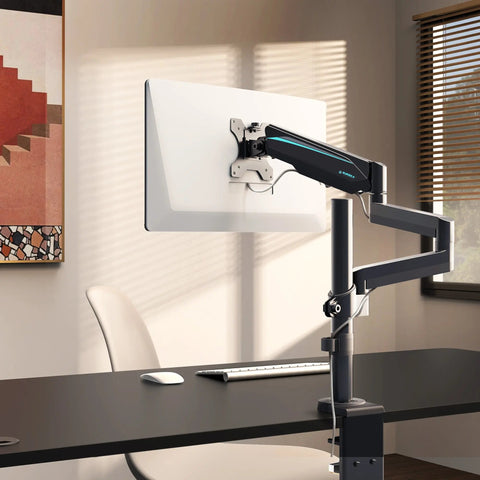
- Hollow "Clack": Suggests low-density honeycomb fill or thin plywood. These will sag within 6 months if you use a Single Monitor Arm with a large 32-inch screen.
For those who want the peak of Aesthetics and durability, the GTG - L60, L-Shaped Glass LED Gaming Desk (60"x40") features an ultra-strong tempered glass surface. It’s scratch-resistant, shatter-resistant, and—most importantly—it doesn't warp. Plus, the reversible L-shape design gives you that perfect "cockpit" feel while providing massive arm support during intense FPS sessions.

4. Motor Longevity and Electronics
If you’re buying a standing desk, the motor is the heart of the machine. I always advocate for Dual Motors. Why? Because a dual-motor system distributes the load evenly, resulting in smoother transitions and a longer lifespan.
The 10,000 Cycle Rule: Quality motors are rated for duty cycles. A motor rated for 10,000+ cycles can handle being raised and lowered 5 times a day for over 5 years without a significant increase in noise or a drop in speed. Cheaper single motors often show noticeable slowdown and increased noise (<50 dB is the goal) after just 6 months of regular use.
According to UL 962 Safety Standards, mechanical and electrical safety are paramount for height-adjustable furniture. This isn't just about the desk moving; it's about the anti-collision sensors and the thermal protection of the control box.
5. Real-World Experience: The Heavy Battlestation Scenario
To truly understand build quality, we have to look at extreme use cases. We modeled a "Heavy Load Battlestation" to see where the breaking points are.
Modeling Note: The Heavy Gamer Setup
| Parameter | Value | Unit | Rationale |
|---|---|---|---|
| Total Load | ~90 | kg | Triple 34" monitors + Water-cooled PC + Tabletop |
| Single Motor Capacity | 80 | kg | Standard entry-level spec |
| Dual Motor Capacity | 120 | kg | Premium spec (e.g., GTG-G55) |
| Motor Utilization (Single) | ~112% | % | Unsafe - leads to premature failure |
| Motor Utilization (Dual) | ~75% | % | Safe - within engineering safety margins |
Boundary Conditions: This model assumes a static distributed load. Dynamic forces (like leaning on the desk) will further increase the stress on the motors.
In this scenario, a single-motor desk is a liability. You’ll hear the motor straining, and you might even experience "intermittent display flickering" if the vibration from the struggling motor affects your cable connections.
Cable Management: The 2.5-Inch Rule
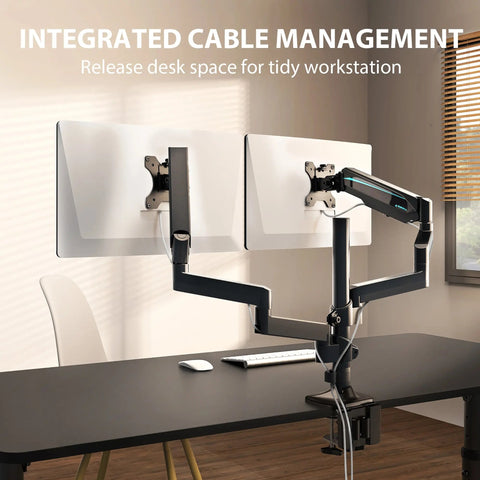
A common "gotcha" is the depth of the cable tray. Most integrated trays are less than 2 inches deep. If you have a high-performance setup, you’re dealing with thick power bricks and braided cables. A tray that is too shallow forces cables into tight bends, straining connectors and creating heat buildup. Look for a tray with at least 2.5 inches of depth to keep your setup "clean as hell."
6. Ergonomics and Posture: The Pro Setup
Build quality isn't just about the desk staying together; it's about how it supports you. The World Health Organization (WHO) recommends reducing sedentary time and interrupting long periods of sitting. This is where the sit-stand rhythm comes in.
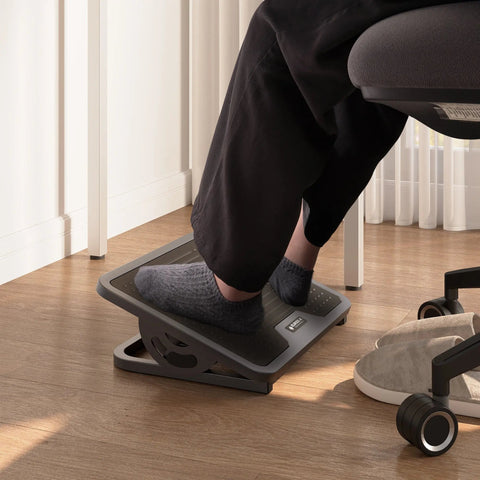
To maximize comfort, I highly recommend adding a Footstool with Wheels. When you're in "work mode," having your feet at the correct angle reduces pressure on your lower back. When you're in "gaming mode," it allows you to shift positions without losing that ergonomic alignment defined by OSHA's Neutral Working Postures.

Pros & Cons of Premium Build Quality
Pros:
- Zero Flex: High-density materials and steel frames ensure your monitors don't shake when you type.
- Longevity: Dual motors rated for 10k+ cycles mean this is the last desk you'll buy for a decade.
- Safety: Compliance with BIFMA G1-2013 ensures the desk fits a wide range of body types comfortably.
- Resale Value: A sturdy, branded desk holds its value far better than a generic "budget" option.
Cons:
- Weight: These desks are heavy. You’ll likely need a friend to help with assembly.
- Price: You are paying for the engineering and the steel, not just the RGB.
Final Verdict: Is It Battle-Ready?
When you’re judging build quality, remember that the "flash" is secondary to the "foundation." A desk like the GTG-G55 or the GTG - L60 is designed with the understanding that a gamer’s desk is a high-traffic, high-stress environment.
As highlighted in The 2026 Workstation White Paper: Converging Ergonomic Science and Sustainable Engineering, the future of setups lies in the intersection of durability and user-centric design. Don't settle for a desk that looks good in a thumbnail but fails in the field. Do the wobble test, check the welds, and invest in a frame that can handle your heaviest "clutch" moments.
YMYL Disclaimer: This article is for informational purposes only and does not constitute professional medical or ergonomic advice. While ergonomic furniture can reduce the risk of musculoskeletal disorders, individuals with pre-existing conditions should consult a healthcare professional or a certified ergonomist before making significant changes to their workstation setup.
Sources
- BIFMA G1-2013 Ergonomics Guideline for Furniture
- CCOHS: Office Ergonomics - Sit/Stand Desk
- OSHA eTools: Computer Workstations - Neutral Working Postures
- WHO 2020 Guidelines on Physical Activity & Sedentary Behaviour
- UL 962 — Safety of Height-Adjustable Desks
- ISO 9241-5:2024 Workstation layout & postural requirements




Leave a comment