

Mentorship Layouts: Using L-Desks for Collaborative Reviews
In the high-pressure environment of architectural firms and design studios, the "afternoon slump" is often more than a lack of caffeine. For many professionals, it manifests as a persistent ache between the shoulder blades or tension in the neck following a collaborative redlining session. While mentorship is the lifeblood of professional growth, the physical environment is frequently overlooked. Conventional office layouts can force a mentor and mentee into asymmetrical postures—one person "hovering" over a shoulder while the other remains tethered to a fixed monitor.
Quick Summary: The Collaborative Blueprint To optimize mentorship without physical strain, studios are shifting toward L-shaped desk configurations. By placing the primary monitor at the corner junction, both participants can achieve a comfortable viewing angle (ideally 15–30 degrees below eye level) while maintaining a "neutral spine" position. Integrating sit-stand rhythms and adjustable monitor arms allows the workspace to transition from a solo "deep work" station to a shared "cockpit" for reviews.
The Physiology of Collaborative Strain
When two designers collaborate at a standard rectangular desk, they often inadvertently violate principles of ergonomic alignment. According to the U.S. Occupational Safety and Health Administration (OSHA), repetitive tasks and poor posture are recognized risk factors that can contribute to Musculoskeletal Disorders (MSDs). In a mentorship context, a common issue is excessive neck rotation combined with static loading.
Musculoskeletal Risks and Static Load
Static loading occurs when muscles are held in one position for an extended period. During a design review, a mentor may stand or sit at an awkward angle to the primary workstation. This can lead to "asymmetrical loading," where muscles on one side of the spine contract while the other side overstretches.
The ISO 11226:2000 standard provides guidelines for static working postures, emphasizing that the duration of a held position is as critical as the angle itself. When a senior architect leans over a junior’s desk to correct a Revit model, they may exceed comfortable physiological limits within minutes. This can decrease blood circulation to affected muscle groups, potentially leading to localized fatigue.
Heuristic Observation: The Mentorship Strain Model Based on our observations of typical studio "desk crits," a 15-minute review session often involves participants maintaining a static neck rotation exceeding 20 degrees for roughly 80% of the time. We categorize this as a "high-strain" scenario that warrants ergonomic intervention.
The Spinal Neutral Position
The goal of ergonomic setup is to maintain the "neutral position"—keeping joints aligned to minimize stress on surrounding tissues. For the cervical spine (neck), this means the head is balanced over the shoulders, not tilted forward or rotated. Collaborative sessions at inadequate desks almost always force users out of these neutral zones.
The L-Desk Solution: Spatial Efficiency and Collaborative Symmetry
Transitioning to an L-shaped configuration fundamentally alters the geometry of the design review. By utilizing the corner junction as the focal point, firms can create a "shared cockpit" environment.

The 45-Degree Corner Advantage
In professional mentorship, an effective layout involves placing the primary monitor at the corner junction of the L-desk. This allows both the mentor and mentee to view the screen at a shared angle. This configuration can reduce the need for extreme neck torsion and allows both individuals to maintain a more neutral alignment.
Furthermore, the "return" side of the desk provides a dedicated surface for document review. As noted in The 2026 Workstation White Paper (produced by Eureka Ergonomic), professional studios often select matte-finish surfaces to mitigate eye strain. Note: The following products are examples from our professional catalog designed to meet these studio standards. For instance, the Ark Pro L-Shaped Standing Desk (Sintered Stone) uses a Lauren Black Gold top that provides a professional aesthetic while reducing reflected glare from overhead lighting—a frequent cause of visual fatigue during detailed blueprint reviews.
Proxemics and Workspace Flow
Research in proxemics—the study of human use of space—suggests that distances of 48 to 60 inches fall within the "social zone." For the intimate, detailed communication required in mentorship, a closer "consultative" distance is often preferred.
To facilitate this, we recommend maintaining at least 42 inches of clear floor space behind the chairs. This ensures that when a mentor moves in for a review, they are not obstructed by storage units. Using a mobile pedestal instead of fixed under-desk storage allows the mentee to "open up" the desk return, facilitating a fluid transition between independent work and collaboration.
| Parameter | Recommended Value | Unit | Rationale |
|---|---|---|---|
| Clear Floor Space | 42 - 48 | Inches | Facilitates mentor movement and chair rotation |
| Monitor Viewing Angle | 15 - 30 | Degrees | Minimizes neck extension (per ISO 9241-5) |
| Desk Surface Finish | < 45 | Gloss Units* | Reduces glare-induced eye strain for CAD work |
| Sit-Stand Ratio | 1:1 to 1:3 | Ratio | Helps mitigate static load (based on Cornell 20-8-2 model) |
| Interpersonal Distance | 30 - 36 | Inches | Optimal for "Intimate-Consultative" mentorship |
*Gloss units are measured via a glossmeter; qualitatively, this means a surface should not produce sharp, mirror-like reflections of overhead lamps.
Technical Standards for Professional Studio Layouts
Dimensional Compliance
The BIFMA G1-2013 Ergonomics Guideline provides dimensions to fit the 5th to 95th percentile of the population. For an L-desk to be effective in a collaborative setting, it should offer height adjustability to accommodate different users.
The L-Shaped Standing Desk with Accessories Set (60"x23") addresses this through a dual-motor system. According to the Canadian Centre for Occupational Health and Safety (CCOHS), adjustable desk height is a key factor in preventing the accumulation of static load. In a mentorship scenario, the desk can be raised for a quick "redline" session, allowing the mentor to stand while the mentee sits, or both to stand to encourage movement.
Monitor Positioning and Sightlines
CAD work typically requires the top of the screen to be at or slightly below eye level to minimize neck strain, as suggested by the HSE (Health and Safety Executive). However, when reviewing physical documents, the monitor should be pushed back to maintain clear sightlines.
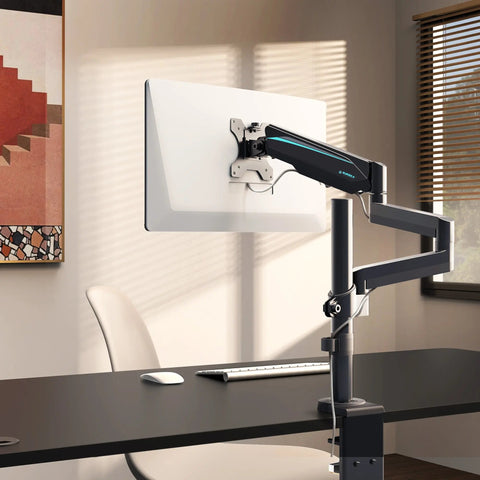
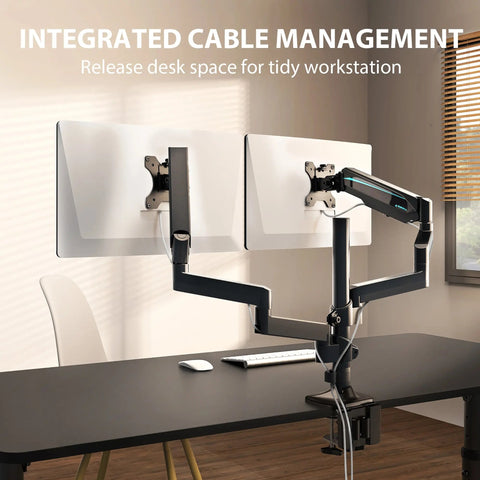
The integration of a Single Monitor Arm is a high-value addition. Unlike fixed stands, a gas-spring arm allows for "full motion rotation," enabling the screen to be shared instantly with a colleague at the desk return. This flexibility is essential for "collaborative redlining," where the screen must be angled dynamically.

Practical Guide: Self-Checking Your Setup
To ensure your studio layout is functioning optimally, perform these three simple self-tests:
- The 45-Degree Neck Check: Have a colleague take a photo of you during a review. If your chin is pointed more than 20 degrees away from your chest's center for more than 10 minutes, reposition the monitor to the corner junction to bring your focal point forward.
- The Mirror Test for Glare: Place a small mirror flat on your desk surface. If you can see the clear, bright shape of an overhead light bulb in the mirror from your sitting position, your desk surface may have high "Gloss Units." Consider a matte desk mat or a sintered stone top to diffuse this light.
- The "Shared Cockpit" Reach Test: While sitting at the main desk, extend your arm toward the return. If you can't reach a shared tablet or blueprint without leaning your entire torso over, the "return" is too deep or the interpersonal distance is too high (exceeding 36 inches).
The 20-8-2 Rhythm
Cornell University’s Ergonomics Web suggests a "Sit-Stand-Move" rhythm. In mentorship, this can be synchronized with the review cycle:
- 20 Minutes (Sitting): Deep-focus drafting.
- 8 Minutes (Standing): Mentor arrives for a "desk-crit." Raise the desk to standing height.
- 2 Minutes (Moving): Both participants step away to discuss broader goals or fetch reference materials.
Methodology Note: Visual Parallax Correction We suggest setting the standing height approximately 1-2 cm lower than your calculated "elbow height." This accounts for visual parallax—the tendency to lean forward slightly when viewing high-resolution architectural details.

Sustaining Long-Term Studio Health
The shift toward ergonomic L-shaped configurations is a strategic investment in a firm's human capital. As noted by Cochrane (2018), while sit-stand desks can reduce sedentary time, their effectiveness is often amplified when combined with behavioral changes, such as scheduled mentorship reviews that trigger posture shifts.
By aligning studio furniture with ISO 9241-5:2024 requirements, managers can help mitigate the risks of chronic strain. Ultimately, a well-designed mentorship layout removes physical friction from the creative process, allowing designers to focus on the technical exchange that defines great architecture.
Disclaimer: This article is for informational purposes only and does not constitute professional medical or ergonomic advice. While ergonomic furniture can reduce the risk of musculoskeletal strain, it is not a "guaranteed" cure for medical conditions. Individuals with chronic pain should consult a qualified healthcare professional or certified ergonomist.
Sources
- BIFMA G1-2013 Ergonomics Guideline
- CCOHS: Office Ergonomics - Sit/Stand Desk
- ISO 9241-5:2024 Workstation layout & postural requirements
- Cornell University Ergonomics Web — Workstation Guides
- OSHA eTools: Computer Workstations - Neutral Working Postures
- Cochrane: Workplace interventions for reducing sitting at work (2018)
- ISO 11226:2000 Evaluation of static working postures




Leave a comment