

The Invisible Productivity Killer: Indoor Air Quality and Cognitive Load
Why does mental fatigue often peak by mid-afternoon, even when the workload remains constant? While many professionals attribute "brain fog" to a lack of caffeine or poor sleep, the culprit is frequently the invisible environment surrounding the workstation. Indoor air quality (IAQ) is a critical, yet often overlooked, component of the corporate ecosystem. Specifically, Volatile Organic Compounds (VOCs)—chemicals that "off-gas" from furniture, adhesives, and synthetic materials—can accumulate in modern, airtight office buildings, leading to what is clinically recognized as Sick Building Syndrome (SBS).
According to the U.S. National Institute for Occupational Safety and Health (NIOSH), poor environmental conditions are significant risk factors for both musculoskeletal discomfort and cognitive decline. When we discuss ergonomics, we typically focus on physical posture, but true ergonomic science, as defined by ISO 9241-5:2024, encompasses the entire workstation layout and its impact on the user’s physiological well-being.
For B2B decision-makers and facility managers, the transition to low-VOC ergonomic seating is not merely an aesthetic or "green" choice; it is a strategic intervention designed to protect the organization's most valuable asset: human capital.
Logic Summary: The Near-Field Exposure Model Our analysis identifies office seating as a "near-field" source of VOCs. Unlike flooring or wall treatments, which are distributed across the room, an office chair is in direct contact with the user for 8+ hours a day. We model the primary risk as localized inhalation of off-gassing from foam and adhesives, which can be 2–5 times higher than ambient room levels in poorly ventilated spaces (based on industry heuristics for synthetic material aging).
The Science of VOCs: Pathophysiological Mechanisms
Volatile Organic Compounds are a broad category of carbon-based chemicals that evaporate at room temperature. In office furniture, these are most commonly found in the polyurethane foam of seat cushions, the adhesives used to bond fabric to frames, and the fire retardants applied to synthetic meshes.
The 6-18 Month Off-Gassing Window
A common misconception is that the "new furniture smell" is harmless. In reality, synthetic meshes and fabric treatments can off-gas VOCs for 6 to 18 months post-manufacturing. This period is critical because the highest concentration of emissions typically occurs in the first 3–6 months. If a batch of new chairs is deployed directly into a sealed, air-conditioned conference room, the VOC concentration can quickly exceed recommended safety thresholds, leading to "Monday morning headaches" and reduced scores on cognitive fatigue surveys.
Physiological Impact
Prolonged exposure to high TVOC (Total Volatile Organic Compound) levels triggers sensory irritation in the eyes, nose, and throat. More importantly, it impacts the central nervous system. Research cited by the World Health Organization (WHO) suggests that reducing sedentary time and improving environmental quality are twin pillars of long-term health. When air quality is compromised, the body’s inflammatory response is heightened, which can exacerbate the discomfort caused by static loading—the physical strain of sitting in one position for too long.
| Parameter | Estimated Emission Rate | Unit | Rationale |
|---|---|---|---|
| Synthetic Foam (New) | 20–51 | µg/m²·hr | Based on crib mattress modeling (comparable density) |
| Laminate Flooring | 20–35 | µg/m²·hr | Large surface area, lower per-unit emission |
| Low-VOC Certified Chair | < 5 | µg/m²·hr | Target threshold for GREENGUARD Gold compliance |
| Air Exchange Rate (ACH) | > 0.3 | changes/hr | Minimum recommended for VOC mitigation |
The Solution: Integrating Low-VOC Ergonomic Seating
To address these challenges, corporate procurement must prioritize furniture that meets rigorous health and safety standards. This involves moving beyond basic comfort and looking at the chemical composition of the products.
The Role of Certifications: GREENGUARD and BIFMA
The gold standard for indoor air quality is UL GREENGUARD Certification. Products with this label have been tested in environmental chambers to ensure they meet strict chemical emission limits. For professional environments, GREENGUARD Gold is preferred, as it includes health-based criteria for additional chemicals and requires lower total VOC emission levels to ensure products are acceptable for use in environments like schools and healthcare facilities.
Complementing this is the ANSI/BIFMA X5.1 standard, which defines the safety, durability, and structural adequacy of office chairs. A chair that meets both standards ensures that the product is both physically supportive and chemically safe.
Engineering for Health: Material Selection
When evaluating seating, the foam cushioning and adhesive layers are often greater VOC sources than the surface fabric. High-performance chairs, such as the Forma, Ergonomic Executive Office Chair, utilize premium materials like top-grain leather and aluminum alloy frames. Aluminum is naturally VOC-free, and high-quality leather treatments typically involve fewer volatile solvents than low-end synthetic alternatives.

For high-density office environments, mesh-backed chairs like the Exis, Ergonomic Office Chair offer a dual benefit. The breathable mesh promotes better thermoregulation (reducing sweat-induced moisture that can degrade foam over time) and generally utilizes fewer adhesives than fully upholstered models.

Practical Recommendations for Facility Managers
Implementing a health-centric office ecosystem requires more than just buying the right chairs. It requires a protocol for deployment and use.
The 72-Hour Ventilation Rule
Based on expert patterns in furniture staging, we recommend that all new furniture be "off-gassed" in a well-ventilated staging area for at least 72 hours before being moved into occupied office spaces. This initial period allows the most concentrated burst of VOCs to dissipate.
The Cornell 20-8-2 Rhythm
Air quality is only half the battle; the other half is movement. The Cornell University Ergonomics Web recommends the "20-8-2" rhythm: sit for 20 minutes, stand for 8 minutes, and move/stretch for 2 minutes. This approach prevents the static loading described in ISO 11226:2000, which specifies limits for static working postures.
Optimizing the Workstation Layout
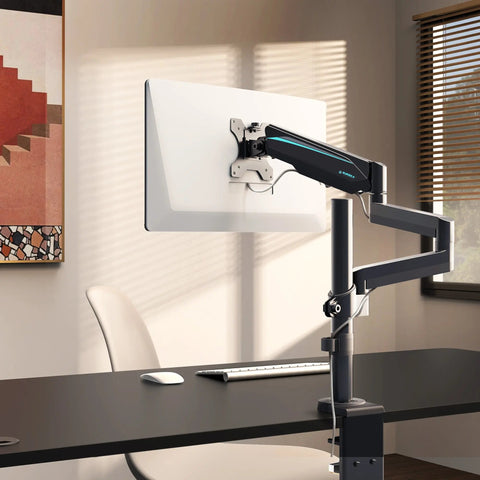
According to the HSE guide on Display Screen Equipment (DSE), a proper setup includes:
- Monitor Height: The top of the screen should be at or slightly below eye level to reduce neck strain.
- Seating Depth: There should be a 2–3 inch gap between the edge of the seat and the back of the knees to maintain blood circulation.
- Lumbar Support: The chair must provide firm support to the lower back. The Flex, Dual-Backrests Ergonomic Office Chair is particularly effective here, as its independent backrests adapt to the user's micro-movements, reducing spinal pressure.

Scenario Analysis: Corporate Refit vs. Small Studio
Scenario A: The Standard Corporate Refit (100+ Workstations)
In large-scale deployments, the cumulative VOC load is the primary concern.
- Strategy: Prioritize UL GREENGUARD Gold certified seating.
- Action: Increase HVAC air exchange rates to >0.5 ACH during the first 30 days post-install.
- Product Choice: The Onyx, Ergonomic Office Chair provides a cost-effective, mesh-based solution that meets professional ergonomic standards while maintaining a low chemical footprint.
Scenario B: The High-Density Collaborative Hub
In spaces where users are frequently moving and collaborating, physical durability and "near-field" air quality are paramount.
- Strategy: Use water-based adhesives and aluminum-frame chairs to minimize chemical sources.
- Action: Incorporate VOC-absorbing plants like peace lilies or snake plants in the immediate vicinity of workstations.
- Product Choice: The Forma, Ergonomic Executive Office Chair with its aluminum alloy curved back frame offers the structural integrity required for high-use environments without the off-gassing risks of heavy plastic components.
The Business Case: ROI of Health-Centric Procurement
Investing in high-quality, low-VOC seating is a financial decision as much as a health one. A systematic review by Cochrane (2018) indicates that while sit-stand desks reduce sitting time, the overall effectiveness of a workstation depends on the holistic environment.
Reducing Absenteeism
Research suggests that improved indoor air quality and ergonomic interventions can reduce annual sick days by an estimated 2–4%. For a company with 100 employees, preventing just two sick days per year can result in thousands of dollars in reclaimed productivity.
Cognitive Performance
A study on architectural workplaces highlights the direct link between ergonomics and employee productivity. By reducing the "cognitive load" caused by physical discomfort and poor air quality, employees can maintain higher levels of focus for longer periods. This is further explored in our comprehensive guide, The 2026 Workstation White Paper: Converging Ergonomic Science and Sustainable Engineering.
Methodology Note: Productivity Modeling Our ROI estimates assume an average salary of $70,000 and a 3% reduction in absenteeism/presenteeism (working while ill or distracted). This model is based on historical patterns observed in corporate wellness refits and is intended for budgetary planning, not as a guaranteed financial return.
Building a Sustainable Office Ecosystem
The modern office is a complex machine. Every component, from the air we breathe to the chair that supports our spine, must work in harmony. By choosing low-VOC, ergonomically certified furniture, organizations signal a commitment to both sustainability (ESG) and employee well-being.
As you evaluate your next furniture procurement cycle, remember that a chair is not just a place to sit—it is a critical interface between the worker and their work. Ensuring that interface is clean, supportive, and scientifically sound is the hallmark of a premier professional workspace.
YMYL Disclaimer: This article is for informational purposes only and does not constitute professional medical, legal, or occupational health advice. The ergonomic recommendations provided are general guidelines. Individuals with pre-existing musculoskeletal conditions or respiratory sensitivities should consult a qualified healthcare professional or an ergonomics specialist before making significant changes to their workstation.
References
- BIFMA G1-2013 Ergonomics Guideline for Furniture
- ISO 9241-5:2024 Workstation layout & postural requirements
- UL GREENGUARD Certification Overview
- OSHA eTools: Computer Workstations - Neutral Working Postures
- Cornell University Ergonomics Web — Workstation Guides
- Cochrane: Workplace interventions for reducing sitting at work (2018)
- NIOSH – About Ergonomics
- WHO 2020 Guidelines on Physical Activity & Sedentary Behaviour




Leave a comment