

Mesh vs fabric office chair shoppers usually end up choosing between cooler airflow, a softer feel, and a more polished look. If your home office runs warm, mesh is a smart starting point, but the chair still needs enough cushioning and support to feel good after a few hours.
Why Chair Material Changes Comfort
Chair material changes how much heat gets trapped against your body, especially during long desk sessions. OSHA’s breathable seat materials guidance for workstation chairs points to a simple rule: if the seat and backrest do not ventilate well, heat buildup is easier to notice.
That matters most in a warm home office, a room with limited airflow, or an afternoon workspace that gets stuffy by 2 or 3 p.m. In those situations, the question is not just which material feels nicest at first touch. It is which chair stays comfortable after the first hour, the third hour, and the end of the workday.
A good decision frame is simple. Choose the coolest-feeling material that still supports the way you sit. That usually means balancing temperature, cushion feel, and the rest of the chair design instead of treating upholstery as the only comfort factor.
For readers who already notice a sweaty back, sticky seat, or loss of focus in warm weather, signs your chair runs hot are often the signal that material choice needs more attention.
Mesh Chair Breathability and Feel
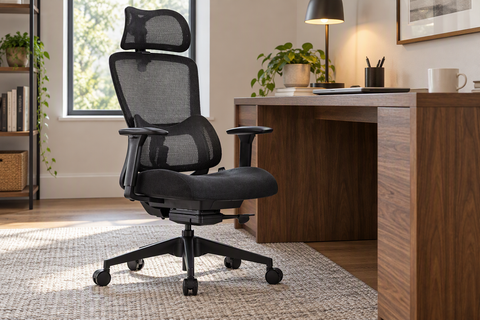
In a mesh vs fabric office chair comparison, mesh is often the strongest cooling default. In a peer-reviewed study, mesh chairs reduced perceived heat and discomfort by up to 35% compared with less breathable surfaces, which is why mesh can feel meaningfully cooler in long sessions. The MDPI study on thermal sensation does not mean every mesh chair feels identical, but it does show why this material is often the first pick in warmer rooms.
The airflow advantage is the main reason people like mesh. A more open structure lets air move around the back and seat area instead of holding that warm, trapped feeling against the body. For many remote workers, that is the difference between staying focused and constantly shifting in the chair.
The tradeoff is feel. Mesh often leans firmer and more supportive than plush upholstery, so some buyers love it and others find it a little bare. That is why seat padding, lumbar support, and backrest shape matter so much. A breathable chair with a thin seat can still feel tiring, while a mesh chair with good cushioning can handle much longer work sessions.
How Mesh Moves Air
Mesh is built to let more air pass through than dense upholstery. That can reduce the sticky, overheated feeling that builds up in a warm room, especially when you sit for several uninterrupted hours. If your office gets direct afternoon sun or the AC is weak, mesh usually deserves first look.
Where Mesh Can Feel Firm
Mesh often feels more structured than soft. Some buyers interpret that as better posture support, while others want a thicker, more padded seat. If you know you dislike a firmer chair, compare the seat cushion as carefully as the backrest material. Mesh solves heat well, but it does not automatically solve comfort.
Best Use Cases for Mesh
Mesh is usually the best fit for hot rooms, longer sitting stretches, and buyers who run warm even when the room is only moderately warm. It is also the easiest choice when breathability is the top priority and a plush finish is not. If cooling matters more than visual softness, mesh should be your first filter.
Fabric Versus Leather Comfort Tradeoffs
Fabric and leather-like chairs sit in the middle of the decision, but they solve different problems. Fabric usually feels softer and more casual, while leather-like upholstery usually looks more polished and executive. Neither one should be treated as a guaranteed cooling solution.
Here is the practical comparison for a warm home office:
| Material | Breathability | Heat Feel | Cushion Feel | Look | Best Fit |
|---|---|---|---|---|---|
| Fabric | Moderate | Usually moderate | Often softer | Casual to versatile | Moderate rooms and comfort-first buyers |
| Leather-like | Lower | Often warmer in some setups | Can feel supportive and structured | Premium, executive | Cooler rooms and style-led setups |
| Mesh | Highest | Usually coolest | Often firmer unless well-padded | Modern and airy | Warm rooms and long sitting days |
That pattern matches what reviewers often point out about premium materials: they can look great and still run warmer in some environments. Forbes’ premium look with more heat retention framing is useful here because it captures the real tradeoff without turning leather into a bad choice.
Fabric is the middle-ground option when you want a softer seat but do not need maximum airflow. It can be a smart compromise in climate-controlled rooms, shared workspaces, or homes where the office is not hot all day. The downside is that it may not solve heat buildup as well as mesh when summer afternoons hit.
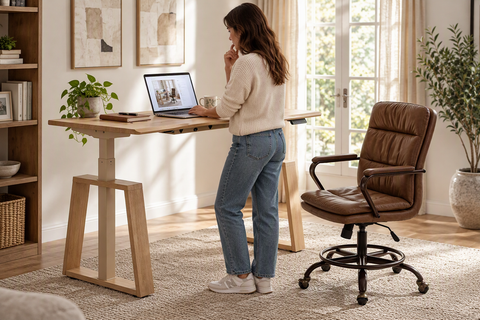
Leather-like chairs can still make sense in a home office if the room stays cool, the sessions are shorter, or the buyer cares a lot about visual polish. The right question is not “Is leather bad?” It is “Is the room warm enough that heat will bother me more than the premium look helps me?”
For style-first buyers, our luxury ergonomic executive chairs guide shows why executive materials often win on appearance and support-led feel, even when they are not the coolest choice.
Long-Hour Comfort Tradeoffs
Long-hour comfort depends on more than upholstery. Wirecutter’s material is only one part of comfort perspective lines up with what buyers feel in real use: a chair can breathe well and still be wrong if the seat is too thin, the lumbar support is weak, or the recline does not match how you work.
That is why heat should be your first filter, not your only one. If the room runs warm, mesh is usually the strongest starting point. If the room is moderate and you want a softer touch, fabric can be the better compromise. If the room stays cooler and you want a more premium look, leather-like chairs can be reasonable.
What changes the recommendation is the full comfort stack. Seat cushioning, lumbar support, armrest adjustment, and recline all affect whether the chair feels good after a long day. Wired’s focus on heat dissipation affects comfort is a good reminder that cooling is part of comfort, not a separate feature.
Support Versus Softness
A cooler chair can still be the wrong chair if it feels too firm after a few hours. Mesh and firmer builds usually emphasize support, while fabric and leather-like chairs often create a softer first impression. If you know you like a cushioned landing, do not choose material alone and ignore seat depth or padding.
How Room Conditions Change the Choice
Warm rooms, sun exposure, and weak airflow make heat retention more noticeable. In a small apartment office that gets stuffy, mesh becomes more appealing. In a well-cooled room, the gap between materials matters less, so your personal comfort preference can carry more weight.
Which Material Fits Different Workdays
If you sit most of the day, start with mesh and then check support details. If you split time between desk work and shorter sessions, fabric may give you enough comfort without feeling as airy as mesh. If your workspace is style-led and the room stays cooler, leather-like chairs can still be a strong fit, especially when support features are well designed.
The Nico mesh ergonomic office chair is a good example of why mesh is not just about airflow. It pairs high-elastic mesh with a high-density foam seat, adjustable back curve, and 300 lb capacity, so the cooling story still needs a support check.
How to Choose for Your Home Office
- Start with room heat. If the office gets warm, pick mesh first. If the room stays moderate, fabric can be a better middle ground. If the room is cool and you want a more executive look, leather-like chairs stay in the conversation.
- Match the chair to how long you sit. For all-day desk use, prioritize airflow plus lumbar support. For shorter sessions, you can afford to favor softness or style a little more.
- Check the comfort details before checkout. Seat depth, cushion thickness, armrests, recline, and lumbar support can change the result more than the upholstery label.
- Verify the fit and return path. Measure your desk height, compare the seat range, and make sure the return policy gives you room to test the chair in your own office.
If you want a broader browsing path, start with ergonomic chairs and then narrow by material, support features, and room temperature. That is usually the safest way to avoid buying a chair that looks right but runs too hot in daily use.
For readers who already know they want a mesh-first setup, the dynamic support chair path is worth checking because it combines adjustability and long-session comfort cues that matter once cooling is no longer the only concern.
Final Takeaway
For a warm home office, mesh is usually the best first choice, fabric is the comfort-first middle ground, and leather-like chairs make the most sense when style or executive feel matters more than breathability. The key is to match the material to your room, your sitting time, and the kind of comfort you notice most. If you are unsure, start with mesh, then verify the seat cushioning and support features before you buy.
FAQs
Is Mesh or Fabric Better for an Office Chair in a Warm Room?
Mesh is usually the better first choice when heat is the main problem. Fabric can still work if the room is only moderately warm and you care more about a softer seat feel, but it usually does less to reduce that stuffy feeling after long sessions.
Does Leather Feel Too Hot for Home Office Use?
Not always, but it can feel warmer in some setups. If your office stays cool, leather-like upholstery can be a reasonable choice, especially when you want a premium look. In a warm room, it is smarter to compare it against mesh first.
What Chair Material Is Best for Long Hours at a Desk?
For most people who sit all day, mesh is the safest starting point because it helps with airflow. Still, the better long-hour chair is the one that combines material choice with proper cushion depth, lumbar support, and recline.
Can a Fabric Chair Be Breathable Enough for Daily Use?
Yes, if the room is not overly warm and the chair has decent support. Fabric is often a good middle-ground choice for buyers who want a softer feel without going all the way to leather-like upholstery. It is just not the strongest pick for heat control.
How Do I Choose Between Comfort and a Premium Look?
Choose comfort first if the room runs hot or you sit for many hours. Choose premium styling first if the office is cooler and appearance matters more to you. If both matter, look for the material you prefer and then compare seat padding, lumbar support, and return policy before checkout.




Leave a comment