

The Hidden Cost of Peripheral Clutter in Media Post-Production
Professional video editors and content creators often face a recurring dilemma: as the complexity of a project grows, so does the number of specialized input devices on the desk. Between color grading panels, edit decks like the Loupedeck, Stream Decks, and traditional keyboards, the workspace quickly transitions from a creative hub to a source of physical and mental friction. Why does back pain often intensify during long color-grading sessions, and why does a cluttered desk feel more exhausting than the edit itself?
The answer lies in the intersection of musculoskeletal health and cognitive load. A disorganized workstation forces the body into awkward, static positions that violate the principles of a neutral spinal posture. Furthermore, the mental overhead required to navigate a chaotic layout depletes the working memory needed for high-level creative decisions. Understanding the physiological and physical principles behind workstation design is the first step toward building a high-performance environment that supports productivity without compromising well-being.
The Physiology of Musculoskeletal Disorders (MSDs) and Cognitive Load
In the professional editing suite, the primary health risks are categorized as Musculoskeletal Disorders (MSDs). According to the U.S. Occupational Safety and Health Administration (OSHA), these are injuries of the muscles, nerves, tendons, and joints often caused by repetitive tasks and poor posture. For an editor, this typically manifests as Repetitive Strain Injury (RSI) in the wrists or chronic tension in the trapezius and cervical spine.
Static Load and Blood Circulation
When an editor maintains a fixed position to reach a poorly placed edit deck, they experience "static load." Unlike dynamic movement, static load compresses blood vessels and restricts blood circulation to the muscles. The ISO 11226:2000 standard specifies limits for these static working postures, emphasizing that the duration and angle of the joint are critical factors in tissue adaptation and pain. If a Loupedeck is placed too far forward, the neck must flex to maintain visual contact, increasing the weight the cervical spine must support by up to 300% compared to a neutral position.
The Cognitive Overhead of Disorganization
Beyond physical strain, clutter imposes a measurable "cognitive load." Research into workplace sustainability and engineering indicates that rigid, over-engineered organization systems can actually increase mental overhead. When every peripheral is fighting for space, the brain must constantly filter out irrelevant visual stimuli. This depletion of working memory is particularly detrimental during complex workflows, such as multi-cam editing or intricate sound design.
Logic Summary: The relationship between peripheral density and cognitive load is modeled on the premise that visual complexity increases "search time" for specific controls. This taxes working memory during high-pressure editing phases, based on common patterns observed in professional studio audits and technical support feedback.
Engineering the Neutral Editing Position
To address these issues, the workstation must be designed around the "Neutral Working Posture." As defined by OSHA's eTools for Computer Workstations, this posture keeps joints naturally aligned, reducing stress on the musculoskeletal system.
The 90-Degree Rule and Peripheral Placement
A common mistake in editing suites is placing a control surface, such as a DaVinci Resolve Speed Editor or a Loupedeck, directly in front of the monitor. This forces the editor to lean forward, breaking the neutral spinal alignment.
Expert Insight: Experienced editors note that dedicating specific, non-overlapping zones for each primary input device drastically reduces accidental activations. A more effective practice is to position specialized decks at a slight angle at the desk edge height, ensuring the elbow remains at approximately 90 degrees. This allows the arm to pivot from the shoulder rather than reaching from the wrist.
| Parameter | Recommended Range | Rationale (Source: ISO 9241-5:2024) |
|---|---|---|
| Elbow Angle | 90° to 120° | Minimizes static load on the biceps and trapezius. |
| Viewing Distance | 500mm to 1000mm | Reduces eye strain and accommodates focal depth. |
| Monitor Tilt | 10° to 20° | Aligns with the natural downward gaze of the eyes. |
| Desk Height | Adjustable (Sit-Stand) | Encourages postural changes to improve circulation. |
Why this number (90° Elbow Angle): This angle ensures that the forearm is supported and the wrist remains in a neutral, "handshake" position. To verify, sit with your shoulders relaxed; your forearms should be parallel to the floor while your hands rest on your most-used edit deck.
Structural Solutions: Height-Adjustable Workstations
The most effective way to manage peripheral clutter while maintaining health is through "Engineering Controls." According to the OSHA Hierarchy of Controls, modifying the environment is significantly more effective than administrative controls like "taking more breaks."
The Ark EL Executive Standing Desk (60"x26") serves as a foundational engineering control. Its adjustable height range aligns with BIFMA G1-2013 Ergonomics Guidelines, which are designed to accommodate the 5th to 95th percentile of the population.

The Benefits of Dynamic Reconfiguration
For video editors, a standing desk is not just about health; it is about workflow flexibility. As noted in professional studio setups, the ability to quickly lift the desk allows for seamless cable routing and hardware swaps without disrupting the work surface. This supports the findings of the Cochrane systematic review (2018), which confirms that sit-stand desks significantly reduce total sitting time—often by over 80 minutes per day.
However, standing is not a substitute for exercise. The World Health Organization (WHO) 2020 Guidelines emphasize that sedentary time should be interrupted by movement. We recommend following the Cornell University Ergonomics "20-8-2" rule: sit for 20 minutes, stand for 8 minutes, and move/stretch for 2 minutes.
Advanced Organization: Managing the "Deck" Density
When a desk surface is occupied by multiple large peripherals, vertical organization becomes essential. Utilizing products like the Aegispeg Board allows editors to move non-critical items—such as headphones, reference tablets, or secondary controllers—off the primary work surface. This creates a "clean" zone for the keyboard and primary edit deck, reducing the cognitive load identified in earlier sections.
Monitor Placement vs. Cable Aesthetics
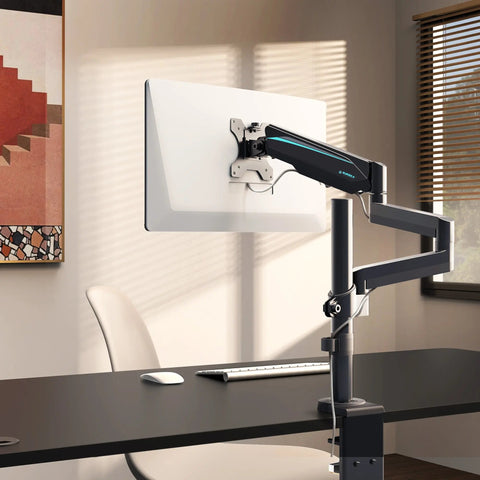
A significant "gotcha" in workstation setup is sacrificing monitor ergonomics for the sake of hidden cables. Many editors lower their monitors to hide wires behind the screen, leading to "tech neck." According to HSE guidelines on Display Screen Equipment (DSE), the top of the monitor should be at or slightly below eye level.
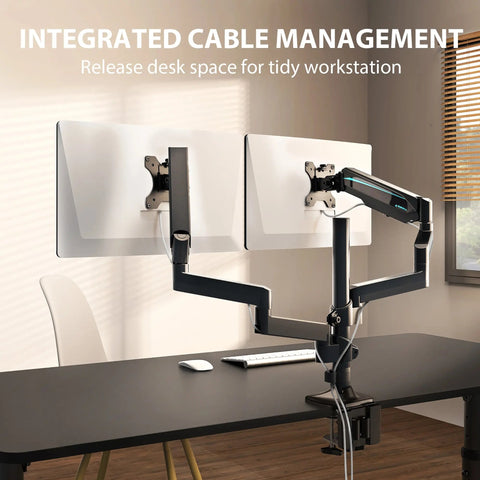
To achieve this without clutter, a Carbon Fiber Dual Monitor Stand can elevate screens to the correct height while providing a "garage" underneath for keyboards or notebooks. This dual-purpose design addresses the need for organization without violating ergonomic requirements.
Modeling Note (Scenario Analysis):
- Scenario A (The Standard Edit): A single monitor and keyboard setup. Standard ergonomic advice applies.
- Scenario B (The Power Suite): Triple monitors, two edit decks, and a mixer. In this scenario, the "Zone" strategy is mandatory. The primary deck must be central, with secondary decks on the non-dominant side to prevent repetitive crossing of the midline, which can strain the lower back.
Sustainable Cable Management and Safety
While plastic cable boxes are a common solution, they often represent a recurring clutter cycle. Organizational psychology research suggests that fixed cable solutions become obsolete as setups evolve. Instead, using adaptable solutions like magnetic cable ties or routed channels within the furniture—features often found in high-end executive desks—provides a lower long-term ecological footprint and better adaptability.
Safety and Compliance
When selecting furniture for a professional suite, safety standards are paramount. The Ark EL Executive Standing Desk (60"x26") includes integrated drawers, which should be evaluated against the CPSC STURDY / 16 CFR Part 1261 anti-tip standards. Ensuring that your desk is stable at full extension—especially when loaded with expensive editing gear—is a critical safety requirement.
Furthermore, for those concerned with indoor air quality during long studio hours, looking for UL GREENGUARD Certification ensures the materials used in the desk have low chemical emissions.
Practical Recommendations: A Post-Production Checklist
To transform a cluttered edit suite into a high-performance workstation, follow these actionable steps derived from Safe Work Australia's workstation setup guidelines:
- Define Your Zones: Place your keyboard centrally. Place your primary edit deck (e.g., Loupedeck) on the side of your dominant hand, aligned with the elbow. Place secondary devices (e.g., Stream Deck) on the opposite side.
- Monitor Alignment: Use a stand like the Carbon Fiber Dual Monitor Stand to ensure the top third of the screen is at eye level.
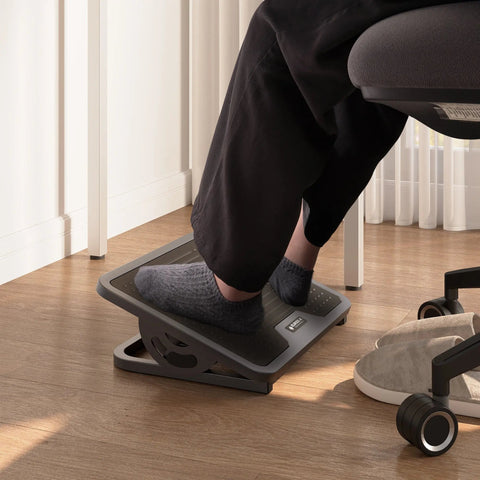
- Support Your Lower Extremities: Prolonged sitting or standing can lead to lower limb MSDs. An Adjustable Ergonomic Footrest helps maintain a neutral hip angle and promotes circulation, which is vital for long-form editing.
- Cable Management: Use adhesive clips under the front lip of the desk for temporary cables (like camera imports) and a central bundle behind the monitor arm for permanent wires.
- Future-Proofing: As workflows shift toward more specialized hardware, refer to resources like The 2026 Workstation White Paper: Converging Ergonomic Science and Sustainable Engineering to stay ahead of evolving standards in furniture technology.
The transition to a professional, organized edit suite is not merely an aesthetic choice. It is a strategic investment in your longevity as a creator. By applying the principles of neutral positioning, managing cognitive load, and utilizing height-adjustable engineering controls, you can create a workspace that sustains both your creativity and your health.
Disclaimer: This article is for informational purposes only and does not constitute professional medical advice. If you are experiencing chronic pain or have pre-existing musculoskeletal conditions, please consult a qualified healthcare professional or a certified ergonomist before making significant changes to your workstation.
References
- BIFMA G1-2013 Ergonomics Guideline for Furniture
- CCOHS: Office Ergonomics - Sit/Stand Desk
- ISO 9241-5:2024 Workstation layout & postural requirements
- OSHA eTools: Computer Workstations - Neutral Working Postures
- Cornell University Ergonomics Web — Workstation Guides
- WHO 2020 Guidelines on Physical Activity & Sedentary Behaviour
- Cochrane: Workplace interventions for reducing sitting at work (2018)
- Safe Work Australia: Workstation set-up infographic




Leave a comment