

The Engineering of High-Performance Workstations: Managing Heavy Rendering Rigs
For professional video editors and 3D artists, the workstation is more than a desk; it is a high-performance engine bay. However, as rendering requirements grow, so does the physical footprint and weight of the hardware. A standard high-end rendering tower, equipped with multi-GPU configurations and massive heat sinks, often weighs between 30 and 50 lbs. When this mass is placed directly on a desktop—especially a height-adjustable one—it introduces a series of mechanical, thermal, and ergonomic challenges that go beyond simple space management.
The central problem is one of physics and structural integrity. A heavy tower creates a high center of gravity. On a standing desk, this often results in noticeable front-to-back wobble during typing or monitor adjustments. Furthermore, the heat generated by these "rendering monsters" can become trapped if the PC is poorly positioned, leading to thermal throttling and hardware degradation. Understanding how to securely mount these towers using specialized CPU holders or mobile stands is essential for maintaining both the safety of the equipment and the longevity of the workstation's lift system.
The Physiological and Physical Risks of Improper PC Placement
From a musculoskeletal perspective, the placement of the computer tower dictates the layout of the entire workspace. When a large tower occupies the desktop, it often forces the user to offset their monitors or peripherals, leading to awkward trunk rotation or "monitor neck." According to the Canadian Centre for Occupational Health and Safety (CCOHS), maintaining a neutral spinal position is critical for preventing Musculoskeletal Disorders (MSDs). An overcrowded desk makes this neutral alignment nearly impossible to achieve.
Static Load vs. Dynamic Force
When we discuss workstation safety, we must differentiate between static load (the weight of the PC at rest) and dynamic force (the stress applied when the desk is in motion). A 20kg (44 lb) rendering tower, when combined with a heavy-duty under-desk holder, creates a significant static load. However, as the desk's dual-motor system accelerates to standing height, the dynamic forces can exceed the rated capacity of the frame.
Based on common patterns from customer support and warranty handling, the most frequent mechanical failure in high-end setups is not the motor burning out, but the frame bending or the fasteners loosening due to uneven weight distribution. This is particularly prevalent in setups where the tower is mounted far to one side, creating a cantilever effect that stresses one motor more than the other. This phenomenon is explored in depth in the article on Uneven Loads & Standing Desk Stability.
Thermal Management and Airflow
Placement on the floor is a common "solution" for heavy towers, but it is often the worst choice for hardware health. Placing a high-performance PC on a carpeted floor restricts the intake of cool air from the bottom and front of the chassis. Furthermore, the floor is where dust and pet hair accumulate most densely.
Logic Summary: Our analysis of thermal dynamics assumes a high-airflow chassis with bottom-mounted PSU intakes. Moving a tower from a carpeted floor to a ventilated under-desk mount typically results in a measurable temperature drop.
| Parameter | Estimated Value | Unit | Rationale |
|---|---|---|---|
| CPU/GPU Temp Reduction | 5–8 | °C | Improved intake clearance and exhaust flow |
| Dust Accumulation Rate | ~40% Reduction | - | Elevation above floor-level particulates |
| Static Load (PC + Holder) | 35–45 | kg | Typical professional workstation weight |
| Clearance Requirement | 150 | mm | Minimum space for rear exhaust |
The Solution: Under-Desk CPU Holders and Mobile Stands
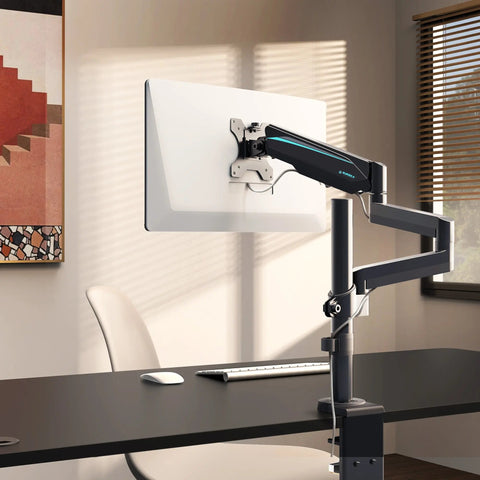
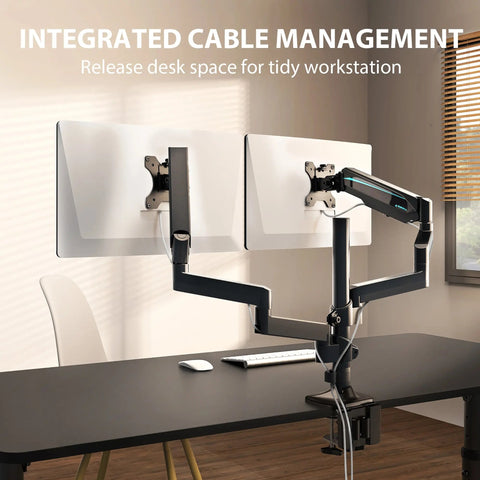
To address the dual challenges of stability and thermal health, professional editors are increasingly turning to dedicated mounting solutions. These tools effectively relocate the PC's mass, clearing the desktop for ergonomic essentials like the Single Monitor Arm, which allows for precise screen sharing and posture adjustment as recommended by ISO 9241-5:2024.
Under-Desk Mounting for Stability
Mounting the CPU holder directly to the underside of the desktop (aligned with the desk's support beam) lowers the center of gravity compared to placing the tower on top of the desk. This reduces the "pendulum effect" that causes desk wobble at standing heights. By utilizing an under-desk mount, the tower moves in tandem with the desktop, ensuring that cables are never stretched or disconnected during height transitions.
Mobile CPU Stands for Heavy Rigs
For extremely heavy workstation PCs (exceeding 50 lbs), an under-desk mount may exceed the safe torque limits of the desktop material. In these cases, a mobile solution like the Adjustable CPU Stand, Mobile, Black is a superior choice. This stand allows the tower to sit safely on the floor while providing elevation for airflow and wheels for easy access to rear ports.

When using a mobile stand with a standing desk, the primary concern shifts to cable management. Because the PC stays at floor level while the desk rises, the "service loop" becomes the most critical safety feature of the installation.
Practical Recommendations for Rig Safety
Setting up a professional rendering workstation requires more than just high-end components; it requires an engineering-first approach to the furniture that supports them. According to the industry white paper The 2026 Workstation White Paper: Converging Ergonomic Science and Sustainable Engineering, the integration of heavy hardware into ergonomic environments requires strict adherence to weight distribution protocols.
1. The "Service Loop" Rule
A critical installation mistake is failing to account for the travel distance of a standing desk. When routing cables from a floor-standing or mounted CPU, you must leave a generous service loop—typically a 12-to-18-inch slack coil—secured with velcro near the holder before the cables run to the desk grommet. This prevents tension and connector strain. As the desk reaches its maximum height, the loop should still have visible slack.
2. Fastener Integrity and Desktop Thickness
When installing an under-desk CPU holder, the most common "gotcha" is using screws that are too long for the desktop. If the screws are longer than the desktop's core thickness, they will pierce the surface laminate or veneer.
- Heuristic: Always measure your desktop thickness and subtract 5mm to determine the maximum safe screw length.
- Verification: If the desktop is 18mm thick, use 12mm or 13mm screws. If the holder requires longer screws for structural strength, use the manufacturer-provided spacers to bridge the gap.
3. Vibration and Mechanical Fatigue
High-performance PCs often feature multiple high-RPM fans. Over time, the constant micro-vibrations from these fans can lead to mechanical fatigue in the mounting brackets. This is a subtle risk that can cause fasteners to loosen over months of use.
- Expert Insight: Periodically check the tightness of the CPU holder’s mounting screws (every 6 months) to ensure that vibration hasn't compromised the connection.
- Recommendation: Use rubber washers or vibration-dampening pads between the CPU holder and the desktop to absorb these micro-movements.
4. The Ideal Sit-Stand Rhythm
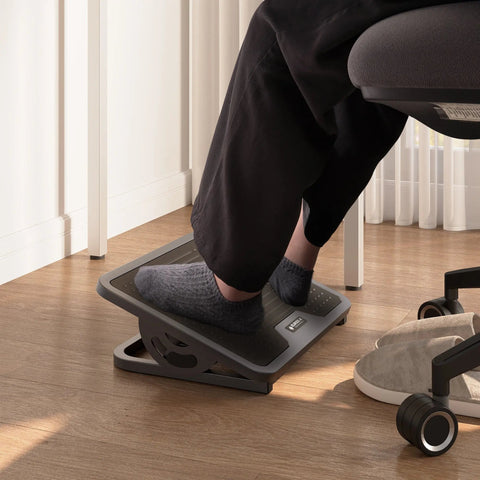
Even with a perfectly mounted PC, the health benefits of a standing desk are only realized through movement. Cornell University’s Ergonomics Web recommends the "20-8-2" rule: 20 minutes of sitting, 8 minutes of standing, and 2 minutes of moving or stretching. To facilitate this, ensure your setup includes tools that support posture changes, such as the Footstool with Wheels, which helps maintain a neutral position while seated.
Managing the Technical Workflow Environment
For content creators, the workstation environment extends beyond the desk and chair. It involves acoustic management, lighting, and specialized input devices. For those in audio-sensitive workflows, moving the PC tower further away from the ears via an under-desk mount or a mobile cart can significantly reduce the "noise floor" of the room. This is particularly relevant for those following the guidelines in Acoustic-First Desks: Furniture Choices for Professional Audio Suites.
Modeling the Efficiency Gain
If a video editor spends 5 minutes a day struggling with cable tangles or reaching behind a heavy tower to plug in a drive, that totals over 20 hours of lost productivity annually. By using a CPU holder that rotates or a mobile stand that rolls, this friction is eliminated. While this is a theoretical estimate, the structural efficiency of a clean workspace is a recognized factor in professional performance.
Methodology Note (Modeling Assumptions):
- User Persona: Professional video editor using a 40 lb full-tower workstation.
- Desk Type: Dual-motor electric standing desk (176 lb capacity).
- Scope Limits: Analysis focuses on mechanical stability and thermal airflow; it does not account for extreme overclocking environments.
- Assumptions: Desktop material is high-density particleboard or solid wood (min 18mm thickness).
Professional Summary of Best Practices
To ensure the safety of your rendering rig and the longevity of your ergonomic furniture, follow this checklist derived from industry standards and mechanical heuristics:
- Weight Check: Ensure the combined weight of your PC, monitors, and CPU holder does not exceed 80% of your desk's rated lift capacity to account for dynamic forces.
- Centering the Mass: Mount the CPU holder as close to the desk's center-line or support leg as possible to minimize frame torque.
- Thermal Clearance: Maintain at least 150mm (6 inches) of clearance behind the PC's exhaust fans.
- Cable Slack: Always test the full range of motion of your desk before finalizing cable ties.
- Hardware Protection: Use a mobile stand if your PC exceeds the weight limits of standard under-desk mounts or if your desktop material is too thin to support a heavy load safely.
By treating the workstation as a cohesive engineering system rather than a collection of separate pieces of furniture, professional creators can protect their high-value hardware while optimizing their own physical well-being.
Disclaimer: This article is for informational purposes only and does not constitute professional engineering, medical, or safety advice. Always refer to your specific product manuals for weight limits and installation instructions. If you have pre-existing musculoskeletal conditions, consult a qualified ergonomic specialist or healthcare provider before significantly altering your workstation setup.
References
- BIFMA G1-2013 Ergonomics Guideline for Furniture
- CCOHS: Office Ergonomics - Sit/Stand Desk
- Cornell University Ergonomics Web — Workstation Guides
- ISO 9241-5:2024 Workstation layout & postural requirements
- OSHA eTools: Computer Workstations - Desks
- The 2026 Workstation White Paper: Converging Ergonomic Science and Sustainable Engineering




Leave a comment