

Preventing Posture Shift: The Risks of Daily Workstation Changes
Why does your back pain feel localized and sharp on Tuesdays and Thursdays, but manifest as a dull, radiating ache on Mondays and Wednesdays? For the modern hybrid professional, the answer rarely lies in the workload itself, but in the subtle, often ignored physiological tax of switching between mismatched workstations.
As organizations transition to flexible office models, "hot-desking" and shared spaces have become the norm. However, conventional wisdom often mischaracterizes this variety as "active ergonomics." In reality, the frequent transition between a home office and a corporate headquarters—each with different desk heights, chair tensions, and monitor distances—triggers a phenomenon known as "posture shift." This constant state of recalibration disrupts the body’s proprioceptive system, leading to cumulative Musculoskeletal Disorders (MSDs) that are significantly more difficult to treat than injuries sustained at a single, static workstation.
The Pathophysiology of Posture Shift
To understand why workstation inconsistency is hazardous, one must look at how the central nervous system manages physical interaction with the environment. Posture is not a fixed state; it is a dynamic process governed by proprioception—the body's ability to sense its position and movement in space.
When you sit at a consistent workstation, your brain develops a "neuromuscular map" of that environment. It knows exactly how much force is required to stabilize the spine against the chair's lumbar support and the precise angle the neck must maintain to align with the monitor. According to ISO 11226:2000 Evaluation of static working postures, the evaluation of static postures depends heavily on the duration and angle of the joints.
When you switch to a mismatched setup, this map becomes obsolete. Even a 2-inch difference in chair height forces the proprioceptive system to constantly recalibrate. This leads to a measurable increase in micro-adjustments and upper trapezius activation within the first hour of work. The motor system, unable to develop efficient, low-energy strategies for stabilization, resorts to maladaptive co-contractions. This "neuromuscular noise" results in rapid fatigue and an increased risk of Repetitive Strain Injury (RSI).
The Static Load and Blood Circulation Conflict
Prolonged static sitting is already recognized by EU-OSHA as a primary risk factor for lower limb disorders and cardiovascular issues. However, when the workstation changes daily, the "static load" is compounded by the stress of misalignment. If a desk is too high at home but too low at the office, the body never reaches a "neutral position," which is the posture where joints are naturally aligned and muscle strain is minimized. This misalignment restricts blood circulation and places excessive pressure on the intervertebral discs, accelerating the onset of chronic back pain.
Quantitative Analysis: The Tall Professional's Dilemma
To demonstrate the impact of workstation inconsistency, we modeled a scenario involving a 193cm tall male professional (representing the 95th percentile of the population). This demographic often commands high-performance setups but suffers the most from standard office furniture limitations.
Modeling Run 1: Anthropometric Desk Height Requirements
This model calculates the ideal heights required to maintain a neutral spinal position for a tall professional, compared to the industry-standard 29-inch fixed desk.
| Parameter | Value | Unit | Rationale |
|---|---|---|---|
| User Height | 193 | cm | 95th Percentile Male |
| Ideal Seat Height | 50.75 | cm | ANSI/HFES 100-2007 Ratios |
| Ideal Sitting Desk Height | 79.7 | cm | ~31.4 inches |
| Standard Fixed Desk | 73.6 | cm | 29 inches |
| Height Deficit | 6.1 | cm | The "Posture Shift" Gap |
Methodology Note: This scenario model uses anthropometric ratios derived from ANSI/HFES 100-2007 Computer Workstations standards. It assumes a standard shoe correction of 2.5cm. This is a deterministic model used to illustrate the severity of mismatch for tall users; actual requirements should be verified through individual assessment.
For this professional, using a standard 29-inch desk at the office while having an adjustable setup at home creates a 6cm height differential. This gap is the primary driver of "posture shift" fatigue. The body must compensate for this 6cm deficit by either slouching (spinal flexion) or elevating the shoulders (trapezius strain), leading to a significant drop in productivity and long-term health.
The Engineering Solution: Consistency Through Adjustability
The solution to posture shift is not to avoid changing positions, but to ensure that the range of change is consistent across all work environments. This is where high-performance ergonomic furniture becomes a strategic business investment rather than a mere facility cost.
As highlighted in The 2026 Workstation White Paper: Converging Ergonomic Science and Sustainable Engineering, the highest utility of a height-adjustable desk lies in its programmable consistency. Memory presets allow a user to replicate their scientifically optimized seated and standing heights at both their home and office locations, eliminating the "ergonomic tax" of daily manual adjustments.
High-Load Stability for Professional Battlestations
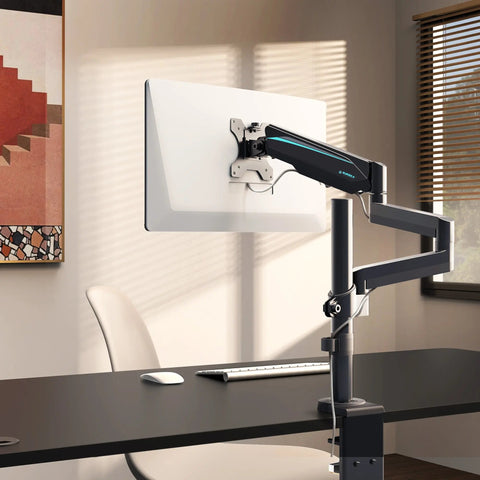
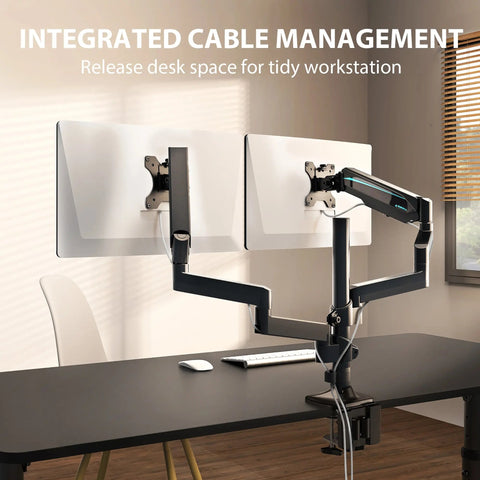
For professionals utilizing multi-monitor setups or heavy workstation PCs, the mechanical integrity of the desk is paramount. A standard single-motor desk often struggles with the weight of three 34-inch ultrawide monitors and a liquid-cooled workstation, leading to "monitor wobble" and mechanical strain.
Modeling Run 2: Motor Safety Margin & Load Capacity
We modeled the equipment load for a senior professional's setup to determine the necessity of dual-motor systems.
| Component | Weight | Unit | Source/Assumption |
|---|---|---|---|
| 3x 34" Ultrawide Monitors | 24 | kg | 8kg per unit average |
| Full Tower Workstation (Liquid Cooled) | 30 | kg | High-performance PC |
| Tabletop (Sintered Stone/Solid Wood) | 25 | kg | Premium materials |
| Monitor Arms & Peripherals | 17 | kg | Heavy-duty arms + buffer |
| Total Static Load | 96 | kg | ~211 lbs |
Analysis Summary: A single-motor desk typically has a rated capacity of 80kg. In this scenario, the load reaches 120% of that capacity, mandating a dual-motor system. According to BIFMA X5.5 Desk Products Standards, maintaining a safety margin (utilization < 80%) is critical for the longevity of the lifting mechanism and the stability of the work surface.
For executives and senior managers who require both aesthetic prestige and technical performance, the Zen Pro Series, 87"/72" Executive Standing Desk with Cabinets Set provides the necessary dual-motor power and expansive surface area to support high-load configurations while maintaining a luxury office environment.

Practical Recommendations for Mitigating Posture Shift
To achieve ergonomic consistency in a hybrid work model, both employers and employees must adopt a standardized approach to workstation setup.
1. The Elbow-Wrist-Plane Rule
The most common mistake in workstation setup is focusing solely on chair height. Instead, use the "Elbow-Wrist-Plane Rule": the vertical distance from your seated elbow to the desktop surface must be identical in all work locations. This governs the forearm angle and scapular positioning. If your home desk is thicker than your office desk, your shoulder elevation will change, even if the floor-to-surface height is the same.
2. Implement the 20-8-2 Rhythm
Cornell University’s Ergonomics Web recommends a specific sit-stand rhythm to maximize blood circulation and minimize static load:
- 20 Minutes Sitting: In a neutral, supported posture.
- 8 Minutes Standing: Using a height-adjustable desk to switch positions.
- 2 Minutes Moving: Stretching or walking to stimulate blood flow.
3. Standardize Equipment Across Locations
For B2B clients and HR departments, the most effective way to reduce employee MSD claims is to provide standardized equipment for home use that matches the office's ergonomic capabilities. Desks like the Opal Executive Standing Desk (66"x29") offer the same precision height adjustment and storage utility found in corporate headquarters, ensuring that the employee's "neuromuscular map" remains valid regardless of where they work.

4. Use Support Accessories for the "Gap"
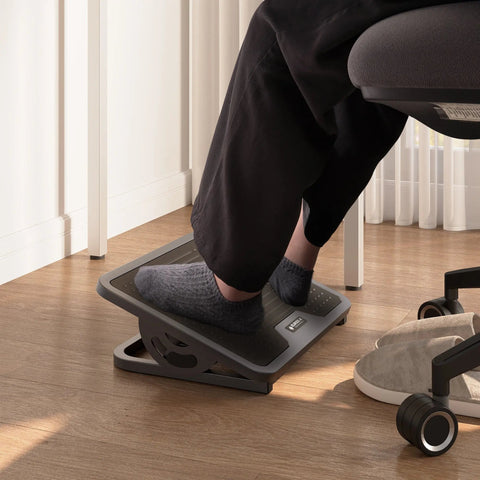
If a desk cannot be perfectly matched, use adjustable accessories to bridge the difference. A Footstool with Wheels is essential for shorter users whose feet may not reach the floor when the chair is adjusted to the correct desk height. This ensures that the thighs remain parallel to the floor, reducing pressure on the underside of the legs and maintaining healthy circulation.

The ROI of Ergonomic Consistency
Investing in high-quality, adjustable workstations is not just about comfort; it is a financial strategy. Our modeling indicates that for a senior professional, the productivity uplift from a properly calibrated ergonomic environment can generate significant annual value.
Modeling Run 3: Productivity & Health ROI
| Metric | Value | Rationale |
|---|---|---|
| Annual Productivity Uplift | ~$7,300 | 15% efficiency gain on $65/hr wage |
| Annual Caloric Burn (Standing 3hrs/day) | ~37,400 kcal | ~10.7 lbs fat loss equivalent |
| Equipment Payback Period | 0.2 years | Based on $1,500 desk cost |
Methodology Note: Productivity gains are estimated based on conservative ergonomic intervention research (e.g., Texas A&M School of Public Health). Metabolic data is calculated using the Compendium of Physical Activities (MET 1.5 for sitting, 2.0 for standing). These are estimates and will vary based on individual metabolic rates and work habits.
Designing for the 95th Percentile
When selecting furniture for a diverse workforce, it is critical to look beyond "standard" dimensions. BIFMA G1-2013 Ergonomics Guideline provides dimensions that cover the 5th to 95th percentile of the population. However, many "budget" desks only cater to the average height, leaving taller and shorter employees at risk.
The Ark EL Executive Standing Desk (60"x26") features a wide adjustment range and unique trapezoidal legs that provide the stability required for both the lowest and highest height settings. This versatility is essential for hybrid environments where multiple people might share a single desk or where an individual needs to replicate a specific home setup.

Maintaining a Neutral Workspace
The goal of ergonomics is to adapt the environment to the human, not the human to the environment. In the hybrid era, this adaptation must be consistent. By understanding the risks of "posture shift" and implementing standardized, high-performance solutions like those from Eureka Ergonomic, professionals can protect their musculoskeletal health and maintain peak productivity.
For further reading on optimizing your professional environment, explore our guides on Setting Up Your Standing Desk for Peak Productivity and How to Choose an Executive Desk for Better Health.
Disclaimer: This article is for informational purposes only and does not constitute professional medical advice. Individuals with pre-existing musculoskeletal conditions or chronic back pain should consult a qualified physiotherapist or occupational therapist before making significant changes to their workstation setup or work routine.
References
- BIFMA G1-2013 Ergonomics Guideline for Furniture
- CCOHS: Office Ergonomics - Sit/Stand Desk
- ISO 9241-5:2024 Workstation layout & postural requirements
- Cornell University Ergonomics Web — Workstation Guides
- EU-OSHA: Musculoskeletal disorders and prolonged static sitting
- ANSI/HFES 100-2007 Computer Workstations
- The 2026 Workstation White Paper: Converging Ergonomic Science and Sustainable Engineering




Leave a comment