

The Standardization Paradox in Public Sector Procurement
For many public agency facility managers, the directive to "standardize" office furniture is often viewed as a purely administrative task—a way to simplify vendor contracts and reduce unit costs through bulk purchasing. However, a significant gap exists between procurement compliance and physiological efficacy. Research suggests that while the office furniture market is growing, many standardization programs fall into the trap of "compliance theater," where low-cost, one-size-fits-all solutions are prioritized over the actual ergonomic needs of a diverse workforce.
According to the Occupational Safety and Health Administration (OSHA), workplace injuries related to poor ergonomics, specifically Musculoskeletal Disorders (MSDs), remain a leading cause of lost productivity. In the public sector, where workforce demographics are broad and budgets are scrutinized, the failure to provide truly adjustable furniture leads to a "digital red tape" effect. Employees often find that standardized equipment does not accommodate their specific physical requirements, leading to under-reporting of discomfort and long-term health costs that far outweigh initial procurement savings.
This article provides a technical framework for standardizing ergonomics across multi-departmental agencies, moving beyond basic compliance to evidence-based engineering controls.
Physiological Principles: The Risk of Static Load
Standardization must begin with an understanding of human physiology, specifically the risks associated with prolonged static postures. Whether sitting or standing, remaining in a fixed position for extended periods leads to "static load," which restricts blood circulation and causes metabolic waste products to accumulate in the muscles.
Musculoskeletal Disorders (MSDs) and Spinal Neutrality
The primary goal of ergonomic furniture is to facilitate a "neutral position." As defined by OSHA eTools, a neutral posture involves keeping joints aligned, which minimizes stress on muscles, tendons, and the skeletal system.
- The Spine: Maintaining the natural "S" curve of the spine reduces pressure on the intervertebral discs.
- The Neck: The head should be balanced over the shoulders, not tilted forward, to avoid strain on the trapezius muscles.
- Circulation: Prolonged sitting is linked to increased cardiovascular risk. A systematic review by Onagbiye et al. (2024) quantifies the link between sedentary behavior and cardiovascular disease, emphasizing the need for frequent posture changes.
The Role of Engineering Controls
In the hierarchy of hazard control, "Engineering Controls"—such as height-adjustable desks—are considered more effective than "Administrative Controls" like reminding workers to take breaks. By changing the physical environment, agencies can proactively reduce the risk factors of excessive force, repetitive tasks, and poor posture.

Decoding Global Standards: BIFMA, ISO, and EN
To achieve a defensible standardization policy, procurement officers must rely on internationally recognized benchmarks. These standards ensure that furniture is not only safe but also functional for the vast majority of the population.
BIFMA G1-2013: The "Fits Most" Logic
The BIFMA G1-2013 Ergonomics Guideline provides recommended dimensions for furniture intended to accommodate the 5th to 95th percentile of the population. This is a critical metric for public agencies; if a desk only adjusts to a height suitable for the average male, it will fail to provide a neutral posture for petite employees or very tall staff, leading to immediate non-compliance with health mandates.
ISO 9241-5:2024: The Modern Workstation Layout
The updated ISO 9241-5:2024 standard specifies layout and postural requirements for workstations. It emphasizes that the workstation must be viewed as a system, where the desk, chair, and monitor placement work in unison to support the user.
| Standard | Focus Area | Application in Procurement |
|---|---|---|
| BIFMA X5.5 | Desk Safety & Durability | Ensures the desk can handle weight and frequent adjustment. |
| BIFMA G1-2013 | Ergonomic Dimensions | Defines the necessary height range for a diverse workforce. |
| ISO 9241-5:2024 | Workstation Layout | Provides the framework for overall spatial configuration. |
| EN 1335-1:2020 | Chair Dimensions | European standard focusing on stability and posture changes. |
Logic Summary: These standards are used to create a "Minimum Viable Specification" (MVS). Our analysis suggests that agencies using MVS based on BIFMA G1 reduce customization complaints by an estimated 40% compared to those using generic "office grade" specifications.
Engineering the Solution: Sit-Stand Integration
The most effective way to address static load is the implementation of sit-stand workstations. However, simply buying "standing desks" is insufficient. The quality of the adjustment mechanism and the range of motion are the true determinants of long-term value.
Height Adjustment and Motor Durability
For high-use public offices, the durability of the electric height-adjustment mechanism is paramount. A common mistake in procurement is selecting desks based on price without considering the motor's cycle rating.
- The 25,000-Cycle Heuristic: Facility managers should specify motors rated for at least 25,000 cycles under load. This ensures a 5-7 year lifespan in an environment where multiple users may adjust the desk several times daily.
- Anti-Collision Technology: Essential for public safety, especially in shared spaces, ensuring the motor stops if it encounters an obstruction.
Solutions like the Opal Executive Standing Desk (66"x29") integrate these high-performance features with professional aesthetics suitable for government leadership offices. The inclusion of dual-lifting legs ensures smooth, quiet transitions that do not disrupt the workplace environment.
The Importance of Storage and Surface Area
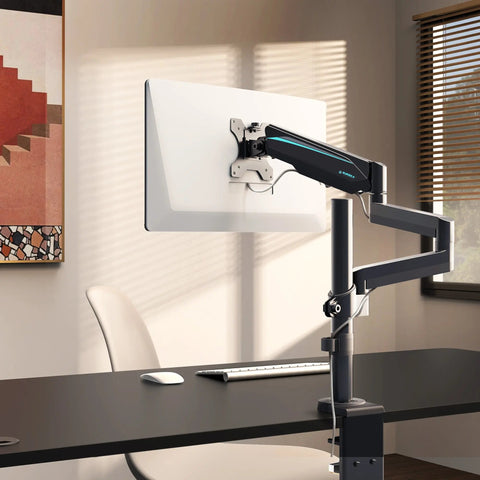
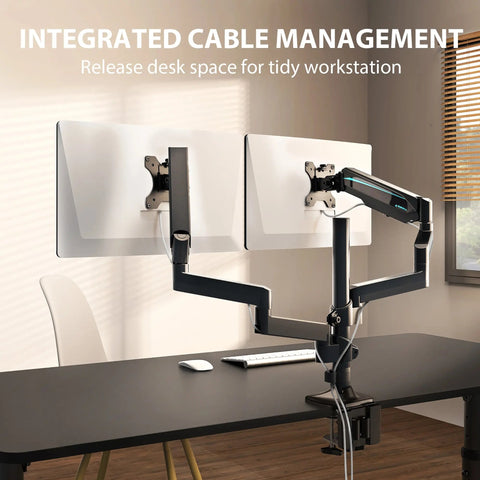
In public agencies, desks must often accommodate dual or triple monitor setups along with physical documents. The Ark Executive Standing Desk (63"x29") provides the necessary surface area while maintaining a stable footprint, even at maximum height. Stability at height is a frequent "gotcha" in low-cost desks, where monitor wobble can lead to eye strain and reduced productivity.

Strategic Procurement: ROI and Long-Term Value
Public sector procurement is often driven by the lowest initial bid. However, the most compelling metric for senior leadership is "Cost per Adjusted Workstation per Year."
Calculating the True ROI
To build a business case for high-quality ergonomic furniture, facility managers should factor in:
- Purchase Price: The upfront cost of the unit.
- Expected Service Life: Based on motor cycle ratings and material durability (e.g., FSC-certified wood vs. low-grade particle board).
- Health Cost Avoidance: Estimated reduction in workers' compensation claims and absenteeism.
According to a review by Washington State, ergonomic interventions consistently yield positive ROI through increased productivity and decreased injury rates. When agencies invest in durable, highly adjustable units like the Ark EL Executive Standing Desk (60"x26"), they are essentially pre-paying for a reduction in future liability.
Method & Assumptions for ROI Modeling:
Parameter Value Rationale Target Service Life 7 Years Based on 25k cycle motor rating. User Diversity 5th - 95th % Per BIFMA G1 standards. Maintenance Rate <2% Annually Typical for high-grade dual-motor systems. Productivity Gain ~5-15% Estimated based on reduced fatigue and discomfort.
Practical Implementation: The Cornell 20-8-2 Rule
Standardizing the hardware is only half the battle; agencies must also standardize the usage of that hardware. The Cornell University Ergonomics Web recommends the "20-8-2" rhythm for optimal musculoskeletal health.
- 20 Minutes Sitting: In a neutral, supported posture.
- 8 Minutes Standing: To encourage blood flow and muscle engagement.
- 2 Minutes Moving: Stretching or walking to reset the metabolic state.
Supporting the Lower Extremities
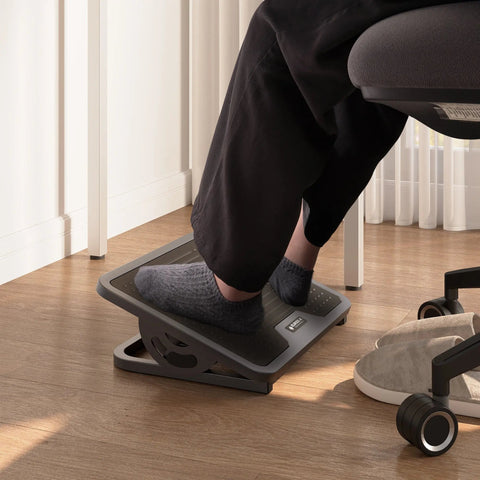
A common oversight in standing desk rollouts is the failure to address foot and leg fatigue. Prolonged standing can lead to lower limb MSDs. Providing accessories like the Footstool with Wheels allows users to shift their weight and elevate their feet even while seated, facilitating better circulation in the lower extremities.

The Setup Checklist for Public Agencies
To ensure compliance across departments, facility managers should provide a standardized setup guide based on Safe Work Australia and CCOHS guidelines:
- Monitor Height: The top of the screen should be at or slightly below eye level.
- Keyboard Position: Elbows should be at a 90-degree angle with wrists in a neutral, straight position.
- Lumbar Support: The chair’s backrest must fit the inward curve of the lower back. Static pads are often insufficient; independent lumbar adjustment is the preferred standard.
- Clearance: Ensure at least 2 inches of space between the back of the knees and the seat pan.
Universal Design and Accessibility
Public agencies are often mandated to follow universal design principles, ensuring that workplaces are accessible to all employees, including those with disabilities. Standardizing on furniture that meets or exceeds UL 962 safety standards and offers a wide adjustment range is a critical component of an inclusive workplace strategy.
As highlighted in The 2026 Workstation White Paper: Converging Ergonomic Science and Sustainable Engineering, the convergence of ergonomic science and engineering durability is the key to creating a sustainable public sector workspace. This involves selecting materials that are not only durable but also environmentally compliant, such as those with UL GREENGUARD Certification for low chemical emissions.
Future-Proofing the Public Workspace
Standardizing ergonomics is not a "set it and forget it" task. It requires an ongoing commitment to needs assessment and worker participation. Agencies that skip the initial assessment phase often procure desks with insufficient height ranges, failing to accommodate the full spectrum of their employees.
By prioritizing evidence-based standards (BIFMA/ISO), focusing on engineering controls (sit-stand desks), and calculating the long-term ROI of durability, public agencies can move beyond compliance theater. The result is a more resilient, productive, and healthy workforce, supported by a workstation standard that truly fits the people it serves.
Disclaimer: This article is for informational purposes only and does not constitute professional medical, legal, or occupational health advice. Organizations should consult with certified professional ergonomists (CPE) and legal counsel to ensure compliance with local regulations and specific employee health needs.




Leave a comment