

The Visual Slump: Why Standard Office Lighting Fails Collaboration
In many modern open-plan offices, a phenomenon known as "spatial blurring" occurs. This is the point in the mid-afternoon where uniform, overhead fluorescent lighting—often measured at a harsh 5000K to 6500K—begins to contribute to significant visual fatigue and a loss of environmental context. Facility managers frequently report that while the open office was designed for transparency, the lack of defined visual boundaries leads to "zone confusion," where employees struggle to distinguish between areas meant for deep focus and those intended for high-energy collaboration.
Quick Implementation Summary: 3-Step Zone Deployment
For facility managers needing an immediate roadmap, use this checklist to pilot a collaborative zone:
- Define the Boundary: Use desaturated RGB accents (30% of total light) to visually separate the collaborative area from the main floor.
- Select Adaptive Furniture: Deploy height-adjustable desks (e.g., L-shaped glass models) to allow for postural shifts during group work.
- Implement Visual Cues: Set lighting presets to signal zone status (e.g., Amber = Active Session, Soft Green = Open for Use).
The physiological cost of uniform lighting is measurable. Prolonged exposure to high-intensity, static light without spectral variation can disrupt the natural circadian rhythm, potentially leading to decreased alertness. Furthermore, the Occupational Safety and Health Administration (OSHA) eTools (Government Guideline) highlight that improper lighting and glare are key environmental factors that often exacerbate eye strain. To address these issues, facility planners are integrating dynamic RGB (Red, Green, Blue) lighting as a functional tool to define zones and signal the "active" status of agile workspaces.
The Physiological Mechanics of Light and Productivity
To understand why dynamic lighting works, one must look at the physical principles of light and its interaction with the human endocrine system. Light is not merely a utility; it is a biological signal.
Circadian Entrainment and Blue Light
The human eye contains non-image-forming photoreceptors called Intrinsically Photosensitive Retinal Ganglion Cells (ipRGCs). These cells are sensitive to blue-wavelength light, which suppresses melatonin and promotes cortisol. According to research cited by BlockBlueLight (Specialist Retailer/Information Site), the timing and intensity of this light are primary cues for circadian entrainment. In a professional setting, tunable white light that mimics the natural progression of the sun—cooler in the morning, warmer in the evening—helps maintain this rhythm.
Boundary Note on Cognitive Effects: While dynamic RGB can improve environmental signaling and reduce "static boredom," its impact on cognitive performance is a developing field. Current evidence from observational studies suggests it aids in spatial navigation and mood regulation; however, it is not a substitute for clinical ergonomic interventions and may be distracting in high-precision environments like medical imaging or fine-detail assembly.
Visual Fatigue and Static Load
When an employee sits in a static environment with no visual variety, they experience a form of "static load" for the eyes. Just as ISO 11226:2000 specifies limits for static working postures, lighting design should avoid "static visual boredom." Subtle changes in ambient color can provide micro-stimuli to keep the brain engaged during collaborative sessions.
Engineering the Collaborative Zone: The 60-30-10 Heuristic
For facility planners, the goal is to introduce aesthetic energy without compromising professional standards. We recommend the 60-30-10 Lighting Heuristic—a practical rule of thumb derived from common design patterns in high-end creative agencies.
One-Page Decision Table: The 60-30-10 Rule
| Component | Percentage of Area/Intensity | Purpose | Recommended Specification |
|---|---|---|---|
| Neutral Base | 60% | Functional task lighting | 4000K Tunable White |
| Accent Glow | 30% | Defining zone boundaries | Desaturated colors (Soft Blue/Green) |
| Dynamic RGB | 10% | Signaling active status | Saturated colors (Amber/Pulsating White) |
Application Disclaimer: This heuristic is an illustrative guideline for rapid spatial planning. It assumes a standard office environment. Specialized environments (e.g., darkrooms) require custom photometric analysis.
By applying this heuristic, a huddle room can be visually cordoned off. For example, a slowly pulsating warm amber light at the door frame can signal that a creative session is "active," which is often more effective and less disruptive than traditional signage.

Integrating Ergonomic Solutions with Dynamic Lighting
The transition to a dynamic environment requires furniture that serves as an "engineering control." According to the OSHA hierarchy of controls, engineering controls—such as adjustable workstations—are more effective than administrative rules because they fundamentally change the physical environment to reduce risk.
Products like the GTG-L60 Pro, L shaped Glass Gaming Standing Desk (60"x23") (Manufacturer Product Page) exemplify this integration. These desks allow facility planners to create "active zones" that support both postural health and visual signaling. The tempered glass surface acts as a medium for light diffusion, reducing the harshness of direct LED exposure.
The Importance of Adjustability
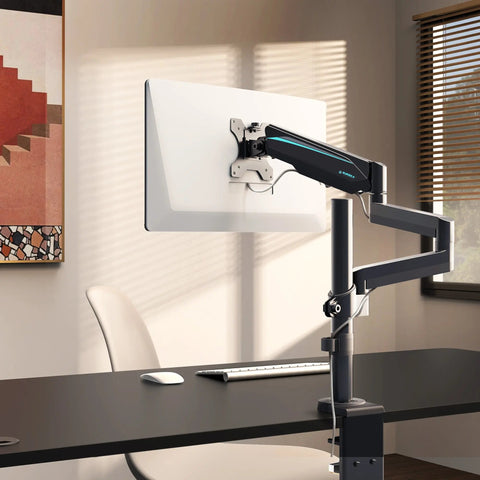
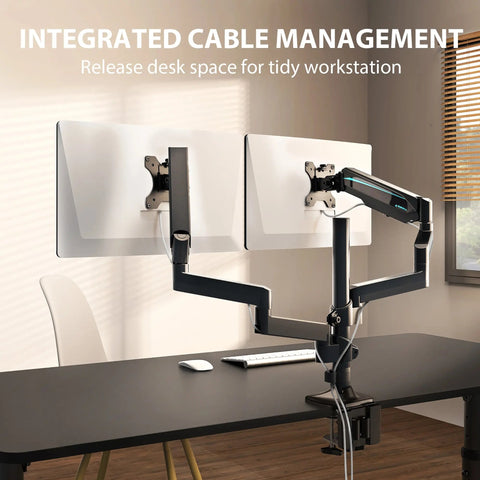
As detailed in the BIFMA G1-2013 Ergonomics Guideline (Industry Standard), furniture must accommodate a wide range of the population. In collaborative zones, desks must be easily adjustable. When a desk like the GTG - L60, L-Shaped Glass LED Gaming Desk (60"x40") (Manufacturer Product Page) is used, its large surface area supports the multi-monitor setups critical for data-heavy collaboration.
Case Study: Modeling the Creative Agency Environment
To demonstrate the impact of these principles, we modeled a scenario for a creative agency facility planner. This analysis intersections stature-based ergonomics, equipment load, and energy consumption.
Scenario Modeling: The Tall Facility Planner (180cm)
Note: This model uses a 180cm (approx. 5'11") stature as a "stress test" for maximum height requirements.
| Parameter | Value | Unit | Rationale/Calculation |
|---|---|---|---|
| User Stature | 180 | cm | Representative "tall user" model |
| Ideal Standing Height | 115 | cm | Calculated as (Stature × 0.64) per ANSI/HFES 100-2007 |
| Equipment Load | 68 | kg | Measured: Full-tower PC + Triple 34" Ultrawides |
| RGB Energy Cost | ~$2.90 | USD/year | Calculated: 5W (LED) × 9 hrs/day × 260 days @ $0.18/kWh |
| CO2 Footprint (RGB) | ~6.05 | kg/year | Calculated: 11.7 kWh/year × 0.517 kg CO2/kWh (EPA eGRID) |
Key Findings:
- The 16-Inch Gap: A 180cm user requires a standing desk height of roughly 115cm. This creates a significant differential compared to standard 29-inch fixed desks. Lighting must be positioned to avoid glare at both sitting and standing heights.
- Load Distribution: The 68kg load utilizes approximately 57% of a standard dual-motor desk's capacity (based on a 120kg limit). This provides an ample safety margin for adding integrated RGB controllers.
- Low Impact, High Value: Integrated RGB lighting accounts for less than 1% of total workstation energy consumption, making it a high-impact tool with negligible operational costs.
Practical Recommendations for Facility Managers
1. Prioritize Cable Management
In professional settings, visible cables are a safety hazard. When installing LED strips, ensure wiring is routed through dedicated channels. The GTG-L60 Pro includes integrated power strip holders to maintain a clean aesthetic.
2. Manage Glare and Reflection
Tempered glass desks provide light diffusion but can create reflections. Position workstations perpendicular to windows. According to ISO 9241-5:2024, monitor height and viewing angles are critical for reducing neck strain.
3. Use Lighting as a Behavioral Cue
Instead of constant "rainbow" effects, use RGB to signal function:
- Deep Work: Steady, dim blue or neutral white.
- Brainstorming: Vibrant but desaturated green or teal.
- Break/Social: Warmer, dynamic tones.
4. Support Postural Change
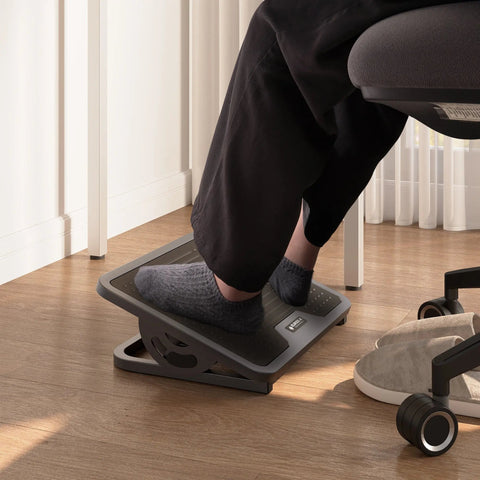
The WHO 2020 Guidelines on Physical Activity emphasize reducing sedentary time. A sit-stand rhythm, such as the Cornell 20-8-2 rule (20 mins sitting, 8 mins standing, 2 mins moving), is effective. Accessories like the Footstool with Wheels (Manufacturer Product Page) can help maintain a neutral spinal position while seated.

Integrating Advanced Visual Systems
For high-impact branding in reception zones, solutions like Soho Art Lighting (Manufacturer Product Page) offer smart RGB control. These systems can be synchronized with workstations to create a unified "environmental signature."
Natural integration is further discussed in The 2026 Workstation White Paper (Company White Paper), which notes that office design is moving toward the convergence of physiological support and digital environment control.
Final Considerations for Professional Spaces
Implementing dynamic lighting is about utilizing modern technology to solve age-old office problems. By using RGB to define functional boundaries, facility managers can reduce cognitive load and improve spatial navigation.
When selecting equipment, verify compliance with safety standards. Look for BIFMA X5.1 certifications for chairs and UL 962 for height-adjustable desks to ensure durability in professional environments.
Disclaimer: This article is for informational purposes only and does not constitute professional medical, legal, or facility engineering advice. For specific ergonomic assessments, consult with a qualified professional.
References
- BIFMA G1-2013: Ergonomics Guideline for Furniture (Industry Standard)
- OSHA eTools: Computer Workstations - Workstation Environment (Government Guideline)
- ISO 9241-5:2024: Workstation layout & postural requirements (International Standard)
- WHO 2020: Guidelines on Physical Activity & Sedentary Behaviour (Global Health Authority)
- Cochrane (2018): Workplace interventions for reducing sitting at work (Independent Systematic Review)
- BlockBlueLight: Latest Blue Light Research (Specialist Retailer Information)




Leave a comment