

The Cognitive Cost of the Static Workday: Why Focus Fades
For many professionals, the mid-afternoon "slump" is an expected part of the work cycle. We often attribute this dip in productivity to circadian rhythms or diet, yet a significant and often overlooked factor is the physical environment. Specifically, the physiological strain of maintaining a single, static posture—no matter how "ergonomic" that posture is—can lead to cognitive fatigue and musculoskeletal discomfort.
The traditional office model assumes that a high-quality desk and chair are sufficient. However, emerging research and industry standards suggest that the most effective way to sustain focus is through posture variety. The concept of the "Sit-to-Lounge Transition" moves beyond the sit-stand desk to incorporate a secondary "reflective zone." By strategically moving between an upright task-oriented position and a supported, semi-reclined lounge position, users can refresh blood circulation to cognitive centers and reduce the cumulative static load on the spine.
As noted in The 2026 Workstation White Paper: Converging Ergonomic Science and Sustainable Engineering, the future of the professional workspace lies in "dynamic office" environments that prioritize movement and task-based zones over static workstations.
The Physiological Mechanics: Why "Perfect" Posture Fails
The human body is not designed for prolonged stillness. According to the World Health Organization (WHO) 2020 Guidelines on Physical Activity and Sedentary Behaviour, reducing sedentary time is critical for long-term health. Even in a "neutral position," staying in one place for hours creates what is known as a static load.
Static Load and Blood Circulation
When muscles are held in a static position, intramuscular pressure increases, which can restrict blood flow and oxygen delivery to the tissues. This is particularly problematic for the back muscles. Research into muscle oxygenation and intramuscular pressure suggests that even low-level static contractions can lead to localized fatigue. In the brain, this reduced circulation may manifest as "focus fatigue," where the mental energy required to maintain postural alignment competes with the energy needed for complex cognitive tasks.
Spinal Disc Hydration (Imbibition)
The spinal discs do not have a direct blood supply; they rely on a process called "imbibition" to receive nutrients and expel waste. This process is driven by pressure changes—essentially, movement. Remaining in a seated position, even with excellent lumbar support, keeps the discs under constant pressure. Alternating between sitting, standing, and reclining creates the necessary pressure fluctuations to keep the discs hydrated and healthy.
The Posture-Cognition Tradeoff
An intriguing 2022 study by Baer (University of Idaho) highlights a "bidirectional effect" between posture and cognition. The research found that actively correcting one's posture can sometimes degrade cognitive performance because the brain must dedicate resources to motor control that would otherwise be used for the task at hand. This suggests that the optimal workspace should provide "dynamic support"—furniture that minimizes the conscious effort required to maintain a healthy posture.
The Resimercial Solution: Introducing the Lounge Zone
The "Resimercial" design trend—a blend of residential comfort and commercial-grade durability—addresses these physiological needs by introducing lounge and breakout spaces into the home office. However, not all lounge furniture is suitable for professional use. The goal is not "slacking," but "active recovery."
A common mistake is selecting a lounge chair that is too deep or soft. While comfortable for short periods, these chairs often lack the necessary lumbar support, leading to a collapsed "C-shaped" spine. For a lounge chair to be effective in a workspace, it must meet several criteria:
- Firm Lumbar Support: The chair should maintain the natural inward curve of the lower back.
- Facilitated Transition: The seat height and firmness should allow the user to transition back to a standing or seated desk position without excessive effort.
- Optimal Recline: Practitioners observe that a 10–15 degree recline is the "sweet spot" for reading or reflective tasks, providing enough relaxation to reduce spinal load without inducing sleepiness.

For the primary tasking zone, the Serene, Napa Leather Executive Office Chair provides the high-density support required for deep focus. Its adjustable design aligns with the BIFMA G1-2013 Ergonomics Guideline, which ensures that furniture dimensions accommodate a wide range of users (from the 5th to the 95th percentile).
Engineering the Transition: The 50/30/20 Framework
To maximize the benefits of posture variety, we recommend a structured approach to the workday. Based on the "20-8-2" rule popularized by Cornell University Ergonomics Web—which suggests 20 minutes of sitting, 8 minutes of standing, and 2 minutes of moving—we have developed a task-based model for the sit-to-lounge transition.
The Task-Based Posture Model
| Posture | Time Allocation | Recommended Tasks | Physiological Benefit |
|---|---|---|---|
| Sitting (Desk) | 25% | Intensive typing, data entry, precision work. | Stabilizes the upper body for fine motor tasks. |
| Standing (Desk) | 25% | Quick emails, short calls, "active" brainstorming. | Increases metabolic rate and restores blood flow. |
| Lounge (Reclined) | 30% | Reading reports, video calls, reflective thinking. | Reduces spinal disc pressure; shifts cognitive load. |
| Movement/Micro-breaks | 20% | Walking, stretching, refilling water. | Resets the musculoskeletal system; prevents static strain. |
Logic Summary: This 50/30/20 ratio is a heuristic (rule of thumb) designed to balance the high-intensity support of a desk with the restorative benefits of a lounge zone. It assumes a standard 8-hour workday and may need adjustment based on individual health needs.
Modeling the Productivity Gain
We estimate that by preventing the "3 PM crash" through posture variety, a professional can recover approximately 30–45 minutes of high-focus time daily. Over a standard working year (250 days), this equates to roughly 125–187 hours of regained productivity. While individual results vary, the mechanism of reducing "focus fatigue" via postural shifts is supported by Cochrane: Workplace interventions for reducing sitting at work.
Optimizing the Secondary Zone: Tools for Support
A lounge zone is only ergonomic if it supports the body correctly. This is where accessories like footrests and organized shelving become essential.
The Role of the Footrest
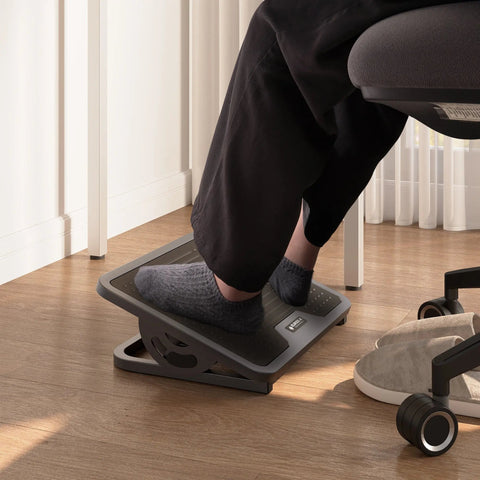
When reclining or sitting in a lounge-style chair, maintaining a neutral ankle and knee angle is vital. According to OSHA eTools: Computer Workstations - Neutral Working Postures, feet should be supported and flat on the floor or a footrest to prevent pressure on the back of the thighs.
The Footstool with Wheels is a versatile addition to a lounge zone. Its height adjustability ensures that users of different heights can find a position that keeps their hips slightly above their knees, reducing lower back strain. For those who prefer a stationary option under their primary desk, the Adjustable Ergonomic Footrest offers a textured surface that encourages micro-movements of the feet, which helps maintain circulation.

Organizing the Multi-Zone Office
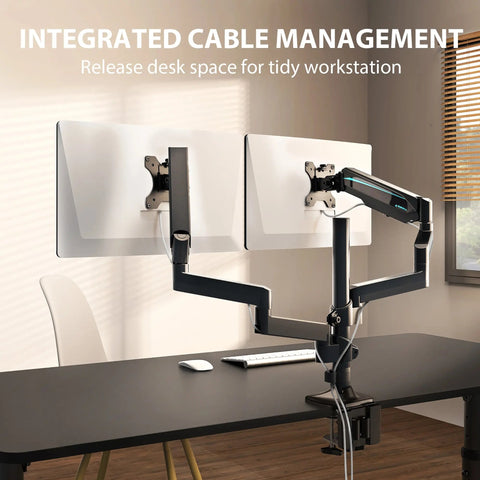
A common "gotcha" in multi-zone setups is the clutter created by having two separate work areas. Using Convertible Desktop Shelves, set of 2 can help maintain a clean primary desk, while a small side table in the lounge area (within arm's reach) should hold essentials like a tablet or notebook.
Expert Tip on Cable Management: To avoid a "trip hazard" between your desk and lounge area, use a central power distribution unit under the main desk. Route a single, high-quality extension cord along the baseboard to the lounge zone. This is significantly cleaner and safer than daisy-chaining multiple power strips.
Practical Recommendations for Setup
To implement a successful sit-to-lounge transition, follow these standardized guidelines derived from ISO 9241-5:2024 and HSE: Working safely with display screen equipment:
1. Monitor and Screen Placement
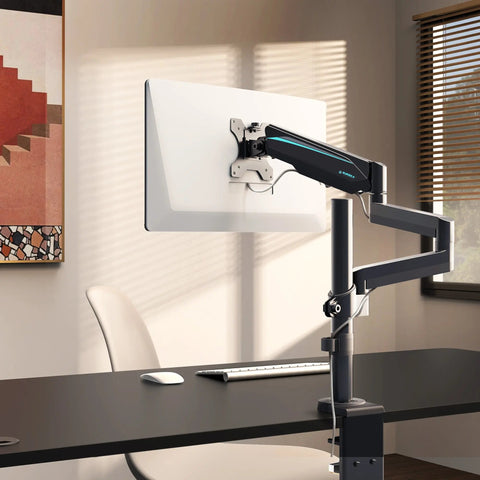
Whether at the desk or in the lounge, the top of your screen should be at or slightly below eye level. This prevents neck strain (cervical flexion). In the lounge zone, if you are using a tablet or laptop, use a stand or a document holder to bring the device to the correct height. OSHA eTools: Document Holders emphasizes that proper alignment reduces neck rotation and fatigue.
2. The Sit-Stand Ratio
Do not over-stand. Prolonged standing can be just as harmful as prolonged sitting, leading to lower limb disorders. The Canadian Centre for Occupational Health and Safety (CCOHS) recommends alternating between sitting and standing every 30 to 60 minutes.
3. Lighting and Environment
Ensure both zones have adequate lighting to prevent eye strain. The lounge area should ideally have soft, indirect light for reading, while the desk area requires brighter, task-oriented lighting. Avoid glare on screens, which can lead to "computer vision syndrome."
4. Intentional Scheduling
The lounge transition works best when it is intentional. Schedule specific tasks for the lounge zone—such as reviewing documents, participating in non-video calls, or "deep thinking" sessions. This mental association between the environment and the task helps improve focus.
Summary of Best Practices
- Move Every 30 Minutes: Use a timer to remind yourself to switch between sitting, standing, and reclining.
- Support Your Feet: Always use a footrest if your feet do not rest flat on the floor in your chosen chair.
- Prioritize Lumbar Support: Ensure your lounge chair is firm enough to support the spine's natural curve.
- Maintain Your Zones: Keep your desk for "output" (typing/creating) and your lounge for "input" (reading/absorbing).
By adopting a dynamic approach to office ergonomics, you can move beyond the limitations of static sitting. The sit-to-lounge transition isn't just about comfort; it's a strategic tool for maintaining musculoskeletal health and cognitive resilience throughout the professional day.
YMYL Disclaimer: This article is for informational purposes only and does not constitute professional medical advice, diagnosis, or treatment. The ergonomic recommendations provided are general guidelines and may not be suitable for individuals with pre-existing musculoskeletal conditions or chronic pain. Always seek the advice of a qualified healthcare professional or an ergonomics specialist before making significant changes to your workstation setup or work habits.
References
- BIFMA G1-2013 Ergonomics Guideline for Furniture
- CCOHS: Office Ergonomics - Sit/Stand Desk
- Cochrane: Workplace interventions for reducing sitting at work (2018)
- Cornell University Ergonomics Web — Workstation Guides
- HSE: Working safely with display screen equipment (DSE)
- ISO 9241-5:2024 Workstation layout & postural requirements
- ISO 11226:2000 Evaluation of static working postures
- OSHA eTools: Computer Workstations - Neutral Working Postures
- WHO 2020 Guidelines on Physical Activity & Sedentary Behaviour
- The 2026 Workstation White Paper: Converging Ergonomic Science and Sustainable Engineering
- Baer, J. (2022). Bidirectional Effects of Neck Posture and Cognition. University of Idaho.




Leave a comment