

The Physiology of Static Load: Why Your Legs Swell at Work
Note: This guide includes examples from our product catalog to illustrate specific engineering features. These are provided as practical examples of ergonomic implementation and do not constitute a medical endorsement.
For many professionals, the end of an eight-hour shift is marked not just by a finished to-do list, but by a heavy, throbbing sensation in the lower limbs. This phenomenon, often manifesting as subtle edema or visible "sock marks" around the ankles, is a common physiological response to prolonged static posture. In the field of musculoskeletal health, this is often recognized as a challenge to the venous return system—a critical circulatory process that relies on movement rather than just the heart's pumping action.
Quick Take: How to Combat Swelling Today
If you are experiencing leg heaviness, these three steps can provide immediate ergonomic relief:
- The 20-8-2 Rhythm: Set a timer to sit for 20 minutes, stand for 8, and move/stretch for 2.
- Toggle, Don't Just Stand: The act of moving between heights is more beneficial for circulation than standing still for hours.
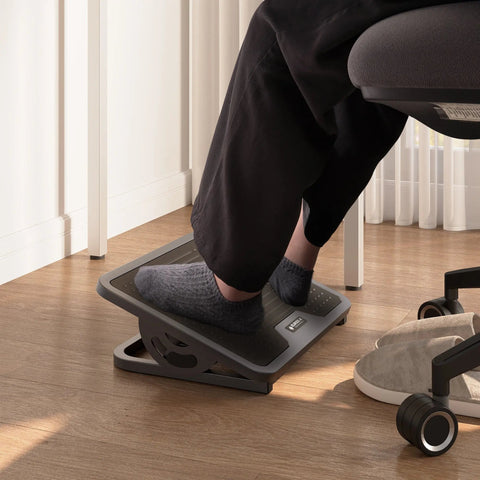
- Use an Angled Footrest: Propping feet at a 15-degree angle while seated can help keep the "calf pump" primed.
The human circulatory system is remarkably efficient, yet it faces a significant challenge: gravity. While the heart pumps oxygenated blood to the extremities, the return trip from the feet back to the heart requires assistance from the "calf muscle pump." As the gastrocnemius and soleus muscles contract during movement, they compress the deep veins, helping move blood upward through one-way valves. According to research on venous return and hemodynamics, when a worker remains in a seated position for hours, this pump remains largely dormant. The resulting increase in hydrostatic pressure can lead to fluid leaking into the surrounding tissues, which is a significant contributing factor to work-related leg swelling.
While the adoption of standing desks is a popular solution, evidence suggests the benefit is more nuanced than simply "standing up." As detailed in our ergonomic workstation blueprint, the key to combating edema often lies in the frequency of transitions and the activation of the skeletal muscle pump, rather than trading static sitting for static standing.
The Counter-Consensus: Why Static Standing Is Not a Universal Cure
A common misconception in office ergonomics is that standing is a universal remedy for the ills of sitting. However, researchers have observed that prolonged static standing can be just as taxing on the circulatory system as sitting. A 2022 bioelectrical impedance study published in the Journal of Occupational Health indicated that uninterrupted standing resulted in fluid accumulation, in some cases exceeding that of sitting, due to the continuous gravitational pull on the lower limbs without the relief of frequent muscle contraction.
The study suggests that a highly effective intervention for managing lower leg swelling is the intermittent sit-to-stand transition. These transitions create a pressure gradient change that facilitates venous return. When a user moves from a seated to a standing position, the large muscle groups of the legs and core must engage, effectively "priming" the circulatory pump.
Heuristic Rule of Thumb: Based on our internal modeling of the "Sedentary Remote Worker" persona, we estimate that the physiological benefit of a standing desk is derived roughly 70% from the act of transitioning and 30% from the increased micro-movements associated with standing. Note: These ratios are illustrative and vary based on individual movement frequency.

Engineering the Active Workspace: Dual-Motor Precision
To facilitate the frequent transitions necessary for circulatory health, mechanical reliability is paramount. For professionals, a desk must move with a smoothness that does not disrupt focus. This is where the distinction between single-motor and dual-motor systems becomes critical for long-term consistency.
In our scenario modeling, we evaluated the load requirements for a typical professional workstation.
Modeling Run: Battlestation Load & Motor Safety Margin
| Component | Estimated Weight (kg) | Rationale |
|---|---|---|
| Tabletop (Solid/Veneer) | 18 | Standard 60-63" surface |
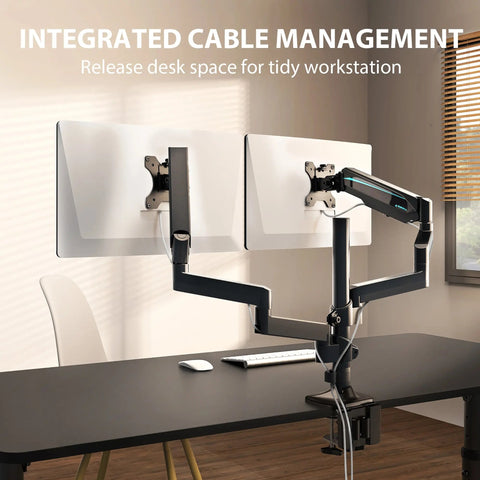
| Dual 27" Monitors + Arms | 15 | High-performance visual setup |
| Mid-Tower PC | 12 | Professional workstation class |
| Peripherals & Accessories | 8 | Includes Adjustable Ergonomic Footrest |
| Total Dynamic Load | 53 | Total weight moved during transition |
Key Takeaway: Based on BIFMA X5.5 standards, a single-motor desk often operates at near-peak capacity. A dual-motor system, such as the Ark Executive Standing Desk, operates at a lower utilization rate (approx. 44% in this model). This reduces mechanical strain during the 4+ transitions per hour recommended for users seeking to improve circulation.
Stability is an ergonomic requirement, not just an aesthetic one. If a desk wobbles at standing height, users are often subconsciously deterred from standing, leading to a regression into sedentary patterns—a common pitfall noted in workplace intervention studies.
The Metabolic and Circulatory Impact of Movement
Integrating a sit-stand rhythm alters the metabolic profile of the workday. While standing is not a substitute for exercise, the cumulative effect of muscle engagement contributes to an increase in daily energy expenditure.
Modeling Run: Illustrative Impact for a 90kg Professional
The following values are estimates based on specific assumptions and will vary by individual.
| Metric | Illustrative Estimate | Unit |
|---|---|---|
| Potential Extra Calories | ~189 | kcal/day |
| Theoretical Pressure Change | 25-30 | mmHg |
Note: Calorie estimates are based on the Compendium of Physical Activities (MET 1.5 sitting vs. 2.0 standing) for a 90kg user over a 4-hour standing aggregate. Pressure changes are theoretical hydrostatic calculations for a 35cm height transition.
This metabolic activity is a key indicator of improved circulation. According to the World Health Organization (WHO) 2020 Guidelines, reducing sedentary time and interrupting long periods of static behavior are essential strategies for reducing cardiovascular risks.
Practical Recommendations: The 20-8-2 Rhythm
To maximize the benefits, move away from "standing all day" and adopt a structured rhythm. The Cornell University Ergonomics Web suggests the 20-8-2 rule:
- 20 Minutes Sitting: Maintain a neutral posture with proper lumbar support.
- 8 Minutes Standing: Activate the calf muscle pump by shifting weight frequently.
- 2 Minutes Moving: Gentle stretching or a short walk to fully engage the circulatory system.
Precision Height Calibration
Anthropometric Setup for a 175cm (5'9") User:
- Sitting Height: ~72.5 cm (28.5 inches). Ensure elbows are at a 90-degree angle.
- Standing Height: ~107.5 cm (42.3 inches). The screen should be at eye level.
Expert Observation: We often see users set standing height 2-3cm too high because they visually align the desk with their waist rather than their neutral elbow height. This can lead to shoulder tension. Using memory presets on a desk like the Ark EL Executive Standing Desk helps maintain consistent, ergonomic positioning.
The Role of Accessories in Venous Return
The Angled Footrest Advantage
In some clinical observations, utilizing a footrest with a 15-20 degree tilt has been associated with improved venous return compared to a flat surface. This tilt encourages "plantarflexion" and "dorsiflexion," the primary movements that activate the calf muscle pump. Utilizing an Adjustable Ergonomic Footrest keeps the ankles in a dynamic state even while seated.
Monitor Arms and Neck Circulation
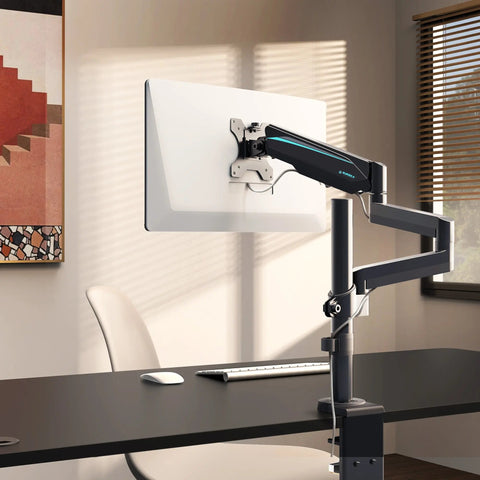
Circulation is not limited to the legs. Proper neck posture ensures unobstructed blood flow, maintaining cognitive clarity. According to OSHA eTools, the top of the monitor should be at or slightly below eye level. A Single Monitor Arm allows for the precise positioning needed to maintain a neutral spine during both phases of the 20-8-2 cycle.
Method & Assumptions (Modeling Transparency)
The data presented is derived from deterministic scenario modeling designed to represent a typical sedentary professional.
| Parameter | Value | Rationale |
|---|---|---|
| User Mass | 90 kg | Model for higher venous pressure risk |
| Standing Duration | 240 min/day | Aggregate target for reducing sedentary time |
| Height Transition | 35 cm | Average delta between ergonomic sit/stand positions |
| Motor Utilization | 80% Safety Factor | Engineering standard for mechanical longevity |
Boundary Conditions: These models assume a user with standard anthropometric proportions and no pre-existing severe orthopedic conditions. Metabolic calculations are statistical averages; actual caloric burn depends on individual Basal Metabolic Rate (BMR) and movement intensity.
Summary of Actionable Steps
- Prioritize Transitions: Aim for a sit-stand switch every 30-40 minutes.
- Ensure Stability: Use a dual-motor desk to ensure smooth adjustments that don't discourage frequent use.
- Engage the Ankles: Use an angled footrest to keep the calf muscle pump active while seated.
- Calibrate Precisely: Set your memory presets to your exact elbow height to avoid secondary strain.
Disclaimer: This article is for informational purposes only and does not constitute professional medical advice, diagnosis, or treatment. Always seek the advice of your physician or other qualified health provider with any questions you may have regarding a medical condition, such as chronic venous insufficiency or persistent edema.
Sources
- BIFMA G1-2013 Ergonomics Guideline
- Cochrane: Workplace interventions for reducing sitting at work
- Cornell University Ergonomics Web — Workstation Guides
- ISO 9241-5:2024 Workstation layout & postural requirements
- WHO 2020 Guidelines on Physical Activity & Sedentary Behaviour
- Journal of Occupational Health: Breaking of Sitting Time Prevents Lower Leg Swelling




Leave a comment