

The Physical Cost of the Budget Battlestation: Beyond the Price Tag
For the modern student, the desk is more than a piece of furniture; it is a high-traffic intersection of academic rigor and intensive digital recreation. However, a common health concern often emerges mid-semester: chronic lower back pain, neck stiffness, and a noticeable decline in afternoon focus. Many students operate under the misconception that ergonomic health is a luxury reserved for corporate executives. In reality, the "budget" setups found in most dorms—often characterized by fixed-height tables and non-adjustable chairs—foster poor posture that results in a cumulative "static load" on the musculoskeletal system.
The physical toll of these setups is not merely an inconvenience. According to the World Health Organization (WHO) 2020 Guidelines on Physical Activity & Sedentary Behaviour, adults should actively reduce sedentary time and interrupt long periods of static behavior. For a student spending six to eight hours daily between research and gaming, the initial savings on a cheap, static desk are often offset by the long-term costs of Musculoskeletal Disorders (MSDs).
This guide provides a technical framework for prioritizing setup spend. By shifting the focus from "lowest price" to "highest value-per-use," students can build a dual-purpose environment that supports both physiological health and academic performance.
The Science of Static Loading and Postural Neutrality
To understand why a setup fails, one must understand the physiological principles of the "spinal neutral position." When a student hunches over a laptop or reaches up toward a desk that is too high, they deviate from this neutral alignment. This deviation triggers a cascade of physical stress.
Musculoskeletal Disorders (MSDs) and Blood Circulation
Prolonged static sitting leads to the compression of intervertebral discs and the restriction of blood flow to the lower extremities. As detailed in the OSHwiki regarding musculoskeletal disorders and prolonged static sitting, this lack of movement increases pressure on the lumbar spine and can lead to chronic inflammation of the soft tissues.
Furthermore, recent systematic reviews, such as Onagbiye et al. (2024), quantify the link between excessive sedentary time and increased cardiovascular risk factors. For the student athlete or the dedicated gamer, this means that "just sitting" is a physiological stressor that undermines overall well-being.
The Role of Engineering Controls
In the hierarchy of hazard prevention, OSHA: Ergonomics - Solutions to Control Hazards identifies "Engineering Controls" as the most effective way to address ergonomic risks. This involves designing the workstation to fit the user, rather than forcing the user to adapt to the furniture. An adjustable desk is not a "gadget"; it is a primary engineering control that allows for frequent posture changes, thereby distributing the mechanical load across different muscle groups.
Logic Summary: Our analysis of the student persona assumes a high-usage environment (6+ hours/day) where the primary risk factor is static postural loading. Engineering controls like height adjustability are prioritized over administrative controls (like "taking breaks") because they fundamentally alter the physical interaction with the workspace.
The "60/40" Rule: A Heuristic for Budget Prioritization
Building a battlestation on a budget requires a strategic allocation of funds. Based on patterns observed in high-performance student setups, we recommend the 60/40 Budget Heuristic:
- 60% Foundation: Allocate the majority of your budget to the "Big Two"—the desk and the chair. These are the long-term assets that dictate your spinal health.
- 40% Accessories: Use the remainder for high-impact ergonomic tools like monitor arms and keyboard trays. These can be added incrementally as funds allow.
The Desk: Why Small and Adjustable Beats Large and Static
A common mistake among students is prioritizing a large, 72-inch fixed-height desk over a smaller, 55-inch adjustable model. While the larger desk offers more "surface," it offers zero postural support. A 55-inch electric standing desk provides far better long-term value because it facilitates the "sit-stand-move" cycle recommended by ergonomic standards.

The Chair: Material Science in the Dorm Room
In non-air-conditioned dorms or humid environments, material choice is critical. While faux leather (PU) may look premium, it lacks breathability and tends to degrade quickly under heavy use. Breathable mesh is the superior choice for students, as it promotes air circulation and maintains a consistent temperature during long sessions. This is aligned with ANSI/BIFMA X5.1 standards for durability and structural adequacy in general-purpose office chairs.
High-Value Accessories: Solving the Desk Depth Deficit
Even with a quality desk and chair, many students face a "depth deficit." Standard student desks are often only 24 inches deep. When a 27-inch monitor is placed on its original stand, it sits too close to the user, leading to eye strain and a "hunched" neck posture.
Monitor Arms: The Space-Efficiency King
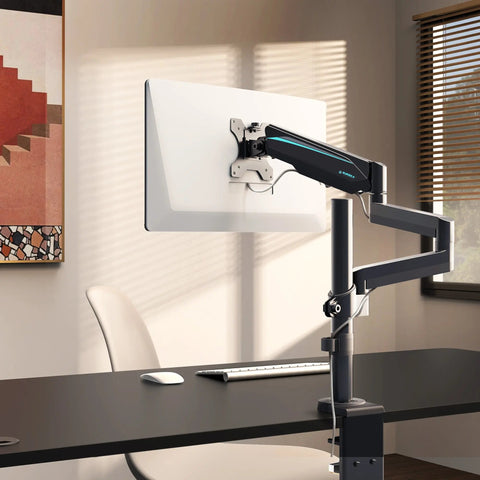
The Single Monitor Arm is perhaps the most cost-effective upgrade for a small room. By lifting the screen off the desk, you regain valuable real estate for textbooks while allowing the monitor to be positioned at the ideal ergonomic height—where the top third of the screen is at eye level.
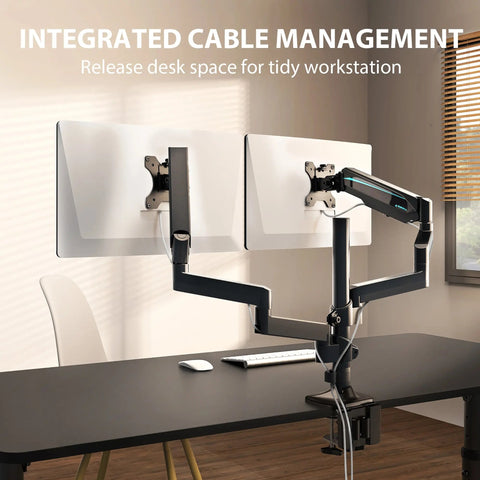
According to the Canadian Centre for Occupational Health and Safety (CCOHS), proper screen placement is vital for reducing neck rotation and fatigue. If you use a laptop alongside a primary screen, a Dual Monitor Arm allows you to align both screens at the same height, preventing the repetitive neck twisting that often leads to tension headaches.
The Keyboard Tray: Protecting the Wrists
If your desk is too high—a common issue for shorter students or those using standard 29-inch tables—an Adjustable Keyboard Tray is a non-negotiable intervention. It allows the elbows to remain at a 90-degree angle and the wrists to stay in a neutral, flat position, which is essential for preventing carpal tunnel syndrome and other repetitive strain injuries (RSIs).

Case Study: Modeling the Tall Student Scenario
To demonstrate the importance of adjustability, we modeled the requirements for a 190cm (approx. 6'3") tall male student. This "edge case" reveals why standard furniture often fails.
Analysis Setup: The 95th Percentile Student
- User Height: 190 cm
- Standard Desk Height: 29 inches (fixed)
- Equipment: Mid-tower PC, dual 27" monitors
| Metric | Required (Ergonomic) | Standard (Fixed) | Deficit |
|---|---|---|---|
| Sitting Desk Height | ~78.5 cm (31 in) | 73.6 cm (29 in) | -4.9 cm |
| Standing Desk Height | ~116.5 cm (46 in) | N/A | Total Gap |
| Viewing Distance | ~111 cm (44 in) | ~61 cm (24 in) | -50 cm |
Modeling Note (Method & Assumptions):
- Anthropometric Ratios: Based on ANSI/HFES 100-2007 standards.
- Viewing Distance: Calculated using SMPTE EG-18-1994 geometry for a 30-degree field of view.
- Boundary Conditions: This model assumes standard shoe height (2.5cm) and a 16:9 monitor aspect ratio. Results may vary for individuals with non-standard limb-to-torso ratios.
For this student, a standard desk creates a 2-inch deficit while sitting, forcing a permanent slouch. By investing in an adjustable desk and a monitor arm, the student eliminates this deficit, potentially increasing productivity by an estimated 8% due to reduced physical fatigue.
Practical Recommendations for the Workday Rhythm
Buying the right gear is only half the battle; you must use it correctly. We recommend adopting the Cornell University "20-8-2" Rhythm:
- 20 Minutes Sitting: Maintain a neutral posture with feet flat on the floor.
- 8 Minutes Standing: Switch to standing to re-engage the core and improve circulation.
- 2 Minutes Moving: Stretch or walk to facilitate blood flow.
As noted in the Cochrane Library review on workplace interventions, sit-stand desks can reduce sitting time by over 80 minutes per day, which is a significant step toward meeting the WHO's activity guidelines.
The Organization Factor
In a small dorm, clutter is a psychological and physical hazard. Tangled cables can snag when a desk is raised, potentially damaging equipment or creating a trip hazard. Utilizing storage solutions like the Ark ES, 29" File Storage Cabinet, White helps keep the workspace clear. A clear desk allows for the proper placement of the mouse and keyboard, ensuring you don't have to "reach" around clutter, which often leads to shoulder strain.

Safety, Compliance, and Long-Term Value
When selecting budget-friendly gear, look for certifications rather than marketing buzzwords. These standards ensure the product won't fail or off-gas harmful chemicals in your small living space:
- BIFMA G1-2013: Ensures the furniture is designed to fit at least 90% of the population.
- UL 962: A critical safety standard for electric height-adjustable desks, covering mechanical and electrical safety.
- GREENGUARD Gold: Ensures low chemical emissions, which is vital for maintaining indoor air quality in small dorm rooms.
For a deeper dive into how these standards are converging with modern design, refer to The 2026 Workstation White Paper: Converging Ergonomic Science and Sustainable Engineering.
Finalizing Your Investment
A student's budget is a finite resource, but your health is a long-term asset. By prioritizing an adjustable foundation and high-impact accessories like monitor arms, you aren't just buying furniture—you are investing in your academic and professional longevity. Start with the "60/40" rule, focus on breathable materials, and use the "20-8-2" rhythm to ensure your battlestation serves you well through graduation and beyond.
Disclaimer: This article is for informational purposes only and does not constitute professional medical advice. Individuals with pre-existing musculoskeletal conditions or chronic pain should consult a qualified healthcare professional or physical therapist before making significant changes to their workstation or activity levels.
Sources
- BIFMA G1-2013 Ergonomics Guideline for Furniture
- Canadian Centre for Occupational Health and Safety (CCOHS): Office Ergonomics
- WHO 2020 Guidelines on Physical Activity and Sedentary Behaviour
- OSHA: Computer Workstations eTool
- Cornell University Ergonomics Web: Workstation Guides
- Cochrane Library: Workplace interventions for reducing sitting at work
- The 2026 Workstation White Paper




Leave a comment