

Quick Action Summary: Top 3 Ergonomic Wins
For logistics managers and analysts looking to optimize high-traffic monitoring stations, prioritize these three adjustments:
- Adopt an Asymmetric Primary-Focused Layout: Center your most critical dashboard (TMS) directly at eye level; use side monitors for secondary feeds to reduce constant neck rotation.
- Calibrate the "Nudge Test": Tension your gas-spring arms so the monitor resists a deliberate 1-inch (2.5 cm) displacement from an accidental bump, preventing postural "sagging" over 12-hour shifts.
- Implement the 20-8-2 Rhythm: Every 30 minutes, rotate through 20 minutes of sitting, 8 minutes of standing, and 2 minutes of active movement to maintain circulation and focus.
Note: This guide is provided by the engineering team at Eureka Ergonomic and includes insights based on our internal product testing and customer support data from logistics center deployments.
The Operational Cost of Visual Friction in Logistics Centers
In high-pressure logistics hubs and e-commerce operations centers, the workstation is more than a desk; it is a critical node in a global supply chain. Logistics analysts often manage complex multi-system monitoring tasks, where a single second of delay in identifying a shipment exception can cascade into significant delivery delays. A common health concern observed in these environments is the gradual onset of back pain and eye strain as the shift progresses. This is frequently linked to "visual friction"—the subtle but persistent physical effort required to track data across poorly configured screens.
Many operations managers assume that a symmetrical, equally spaced triple-monitor arc is the gold standard for productivity. However, field observations in these high-traffic environments suggest otherwise. Symmetrical setups can force repetitive neck rotation and focal eye fatigue, as the analyst's attention is rarely distributed evenly across all three displays. By understanding the physiological principles of musculoskeletal health and the technical requirements of triple-monitor hardware, organizations can optimize these stations for both human well-being and operational efficiency.
Physiological Principles: Static Load and Musculoskeletal Disorders (MSDs)
The human body is not designed for the prolonged static postures often required by 12-hour monitoring shifts. According to the U.S. Occupational Safety and Health Administration (OSHA), core risk factors for Musculoskeletal Disorders (MSDs) include excessive force, repetitive tasks, and poor posture. In a triple-monitor environment, a primary hazard is "static load"—the sustained effort required by muscles to hold the body in a fixed position.
The Mechanism of Focal Eye Strain
When an analyst monitors a central dashboard while sporadically checking side screens for alerts, the eyes must constantly adjust their focal length. If the monitors are not positioned at a task-appropriate viewing geometry, the trapezius and levator scapulae muscles often remain in a state of constant contraction. This can lead to "alert fatigue," where the physical discomfort of looking at a secondary screen may cause the analyst to subconsciously ignore incoming notifications.
Blood Circulation and the Sit-Stand Imperative
Prolonged static sitting has been linked to reduced blood circulation. The World Health Organization (WHO) 2020 Guidelines emphasize reducing sedentary time and interrupting long periods of static behavior. In a logistics context, the transition between sitting and standing should ideally be rapid to avoid interrupting data flows. This is where ergonomic furniture, such as the GTG - L60, L-Shaped Glass LED Gaming Desk (Brand Source), provides a functional advantage. Its L-shaped surface and robust build support the complex multi-monitor arrays required for logistics dashboards.
Expert Insight: Our analysis of logistics workflows suggests that focal stability is often more critical than symmetry. This is based on practical heuristics regarding "task-appropriate viewing geometry" (Source: The 2026 Workstation White Paper, Eureka Ergonomic).
Technical Performance of Triple-Monitor Arms
To mitigate physiological risks, the hardware must offer more than simple height adjustment. For real-time shipment tracking, the technical requirements for monitor arms are rigorous.
Independent Articulation and VESA Compatibility
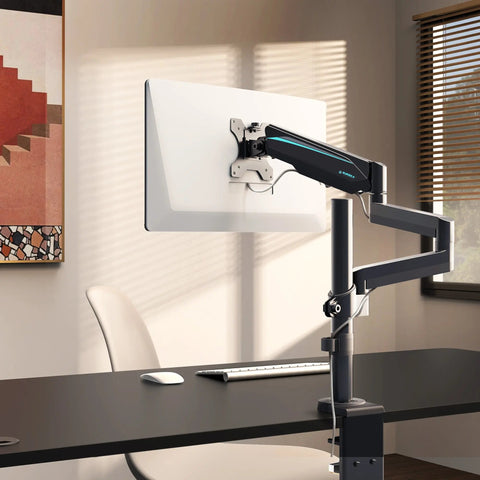
A common mistake in procurement is selecting triple-monitor arms that move as a single unit on a crossbar. While these provide a clean look, they often lack the "independent articulation" required for an asymmetric layout. Logistics dashboards often benefit from a mixed portrait-landscape configuration.
According to ISO 9241-5:2024, workstation layout should support postural requirements that minimize strain. This is best achieved with monitor arms featuring fully articulated VESA plates that allow one screen to rotate 90 degrees without disturbing the alignment of the others.
The "Nudge Test" for Gas-Spring Tension
In 24/7 operations centers, monitor wobble is a significant distraction. We frequently observe analysts under-tensioning their gas-spring arms.
Measurable Heuristic (The Nudge Test):
- Position your monitor at the desired height.
- Apply a light "nudge" with your forearm to the side of the monitor frame (simulating an accidental bump).
- The Goal: If the monitor moves more than 1 inch (2.5 cm) or fails to return to its original position immediately, the tension is too low.
- Adjustment: Use the tension screw to increase resistance until the arm holds the position firmly but still allows for deliberate, two-handed adjustment. This prevents "sagging" that leads to slumped postures.
Mounting Stability: C-Clamp vs. Grommet
While a grommet mount (drilling through the desk) is stable, a heavy-duty C-clamp is often superior for the evolving needs of logistics centers. A high-quality C-clamp allows for rapid hardware reconfiguration as software interfaces change, without permanently damaging the desk surface.
Optimizing the Layout: The Asymmetric Primary-Focused Model
For real-time tracking, we recommend the "Primary-Focused" layout over a traditional "Symmetrical Arc." This model prioritizes focal stability.
| Monitor Position | Function | Recommended Orientation | Ergonomic Benefit |
|---|---|---|---|
| Center (Primary) | TMS / WMS / Live Map | Landscape (Eye Level) | Minimizes vertical/lateral neck movement. |
| Left (Secondary) | Communication (Slack/Email) | Portrait or Landscape | Closer inward angle for quick scanning. |
| Right (Tertiary) | Reference / Carrier Portals | Portrait | Ideal for long lists; reduces scrolling. |
Visual Parallax and Eye Level
The BIFMA G1-2013 Ergonomics Guideline suggests the top of the screen should be at or slightly below eye level. This is critical to prevent "visual parallax," where the user tilts their head back to see the top of the screens, potentially straining the cervical spine. If additional organization is needed, a Carbon Fiber Dual Monitor Stand (Brand Source) can act as an ergonomic riser, elevating secondary devices to a comfortable viewing height.

Operational Reliability: Cable Management
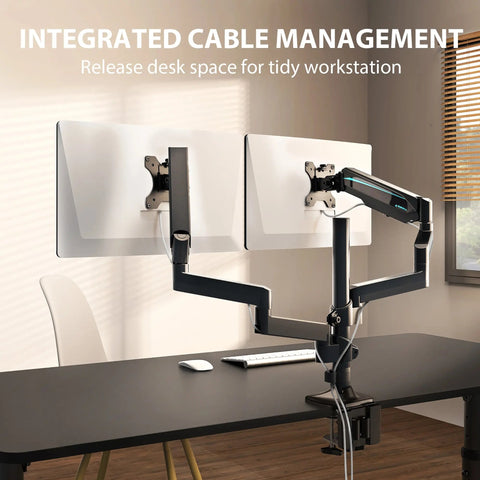
In a professional environment, cable management is an operational requirement. With nine or more cables running to a single triple-monitor workstation, the risk of accidental disconnection during a shift change is high.
Integrated cable trays significantly reduce maintenance downtime. Clean routing through the monitor arm's internal channels is essential. Furthermore, using accessories like Soho Art Lighting (Brand Source) can provide bias lighting. This reduces the contrast between bright monitors and dark surroundings, which can help mitigate eye strain during night shifts.
Practical Recommendations for the Workday
The 20-8-2 Sit-Stand Rhythm
Based on research from the Cornell University Ergonomics Web, we suggest the "20-8-2" rule:
- 20 Minutes Sitting: Use a neutral position with lumbar support.
- 8 Minutes Standing: To encourage blood flow and change the static load.
- 2 Minutes Moving: Stretching or walking to reset the musculoskeletal system.
Postural Support and Lower Limb Health
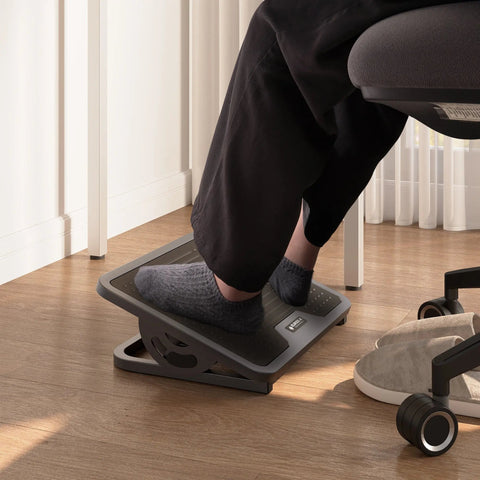
ISO 11226:2000 provides a basis for avoiding prolonged static standing. To alleviate lower limb discomfort, analysts should consider using a Footstool with Wheels (Brand Source) when seated. This allows for micro-adjustments in leg position, promoting circulation.
Illustrative ROI Scenario: Operational Efficiency Model
The following table represents a hypothetical scenario model to estimate the potential impact of an optimized workstation on analyst performance.
| Parameter | Value | Unit | Assumption/Source |
|---|---|---|---|
| Average Exceptions per Shift | 150 | count | Est. for mid-sized logistics hub. |
| Time Saved per Exception | 4 | seconds | Est. reduction in visual search time. |
| Annual Shifts | 250 | days | Standard full-time equivalent. |
| Total Time Saved | ~41 | hours | Calculated efficiency gain per year. |
| Potential Error Reduction | ~5% – 10% | range | Est. based on reduced focal fatigue. |
Note: This is an illustrative model based on industry heuristics and internal observations. Individual results may vary significantly based on specific software interfaces and analyst experience.
Summary of Best Practices
- Prioritize Independent Articulation: Use arms that allow portrait/landscape mixing.
- Apply the Nudge Test: Ensure gas-spring arms resist a 1-inch displacement.
- Adopt an Asymmetric Layout: Place the most critical data directly in front at eye level.
- Manage Cable Overhead: Use integrated trays to prevent safety hazards.
- Encourage Dynamic Movement: Follow the 20-8-2 rule to combat static load.
Disclosure: This article is published by Eureka Ergonomic. It contains references to our own products and internal whitepapers. Our recommendations are based on our experience as a manufacturer of ergonomic hardware and are intended for informational purposes.
Disclaimer: This article does not constitute professional medical, legal, or occupational safety advice. The ergonomic recommendations provided are based on general industry standards and may not be suitable for all individuals. Always consult with a qualified medical professional or a certified professional ergonomist (CPE) before making significant changes to your workstation.
References
- BIFMA G1-2013 Ergonomics Guideline for Furniture
- OSHA eTools: Computer Workstations - Monitors
- Cornell University Ergonomics Web — Workstation Guides
- WHO 2020 Guidelines on Physical Activity & Sedentary Behaviour
- The 2026 Workstation White Paper (Brand Source)
- ISO 9241-5:2024 Workstation layout & postural requirements
- CCOHS: Office Ergonomics - Sit/Stand Desk




Leave a comment