

Evaluating Dual-Motor Stability for 24/7 Logistics Hubs
In the high-stakes environment of a Tier-1 regional distribution megahub, the workstation is more than a piece of furniture; it is a critical component of the supply chain infrastructure. Logistics dispatchers and command center operators often manage billions of dollars in goods movement through 12-hour shifts that demand constant vigilance. However, a recurring frustration in these facilities is the premature failure of height-adjustable workstations. Why do motors burn out within 18 months in a dispatch center when they last a decade in a corporate office? The answer lies in the physiological and mechanical demands of 24/7 multi-shift operations.
For procurement managers, the challenge is shifting the focus from aesthetic design to industrial-grade performance. In a 24/7 hub, the primary failure points are not the surfaces or the frames, but the lift systems and the thermal management of the motors. This article evaluates the engineering requirements for dual-motor stability and mechanical longevity in logistics operations, grounded in international ergonomic standards and deterministic modeling of high-traffic scenarios.
The Physiology of the 24/7 Operator
Logistics dispatch is characterized by high cognitive load and prolonged static postures. According to Cochrane: Workplace interventions for reducing sitting at work (2018), sit-stand desks are highly effective at reducing sedentary time, often by 84 to 116 minutes per day. For an operator in a 12-hour shift, this reduction is vital. Prolonged static sitting is linked to Musculoskeletal Disorders (MSDs), specifically localized in the lumbar region and lower limbs.
The ISO 11226:2000 standard for evaluating static working postures specifies that static positions should be interrupted frequently to allow for tissue recovery. In a logistics hub, this "interruption" occurs not just through individual preference, but through shift handovers. When three or four different operators use the same workstation in a 24-hour cycle, the desk undergoes more mechanical stress in a single week than a residential desk sees in a quarter.
Dual-Motor Engineering: Beyond Weight Capacity
The common misconception in procurement is that a dual-motor system is simply about "lifting more." While a dual-motor desk typically offers a higher weight capacity—often rated for 300 to 400 lbs—the real advantage in a logistics setting is synchronization and stability under dynamic loads.
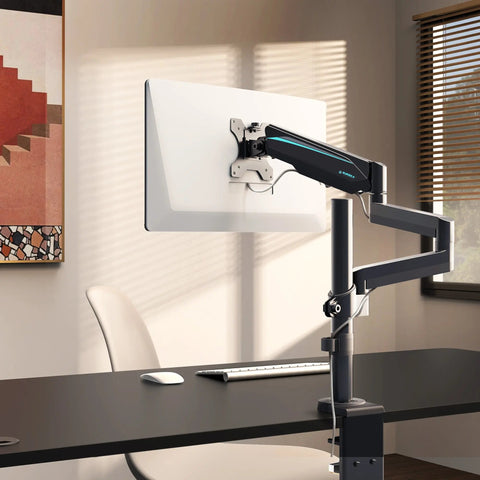
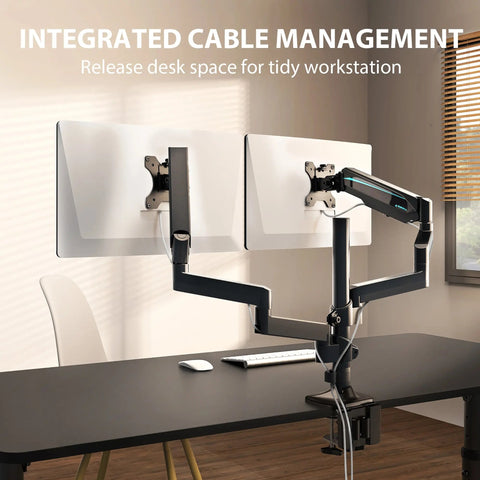
In a command center, the desktop is rarely balanced. One side may support a liquid-cooled industrial PC (weighing approximately 25 kg), while the other holds a multi-monitor array. A single-motor system using a hexagonal drive rod often struggles with this asymmetrical load, leading to "stuttering" or uneven lifting that can damage sensitive internal components.
Modeling the Industrial Load
To understand the necessity of dual-motor systems, we modeled a standard logistics "battlestation" load against industrial reliability thresholds.
| Component | Weight Estimate (kg) | Rationale/Source |
|---|---|---|
| Industrial PC (Ruggedized) | 25 | Standard full-tower with liquid cooling |
| 4× 34-inch Ultrawide Monitors | 40 | Combined weight of displays and heavy-duty arms |
| Tabletop (1.6m Composite) | 25 | Industrial-grade high-density surface |
| Peripherals & Cables | 12 | Ruggedized keyboards, scanners, and consoles |
| Total Operational Load | 102 | ~225 lbs |
Logic Summary: Our analysis assumes a 70% maximum utilization threshold for 24/7 reliability. While a single-motor desk with a 113 kg (250 lb) capacity technically "fits" this load, it operates at ~90% utilization. This leaves virtually no headroom for the mechanical friction and inertia of frequent adjustments. Conversely, a dual-motor system rated for 181 kg (400 lbs) operates at ~56% utilization, significantly extending the motor's lifespan by reducing thermal stress.
For executive-level command centers where larger surfaces are required, products like the Zen Pro Series, 87"/72" Executive Standing Desk with Cabinets Set provide the necessary structural integrity. The use of dual-motor systems in such large-format desks ensures that the Lauren Black Gold Sintered Stone desktop moves smoothly despite its significant mass.

Thermal Stress and the 20% Duty Cycle Rule
A frequent observation from field technicians in logistics hubs is motor failure due to overheating. Most consumer-grade linear actuators are rated for a 10% duty cycle (e.g., 2 minutes of movement followed by 18 minutes of rest). In a 24/7 hub, dispatchers often make micro-adjustments every 30–60 minutes to combat fatigue. When combined with shift-change adjustments—where the desk may travel its full range—the cumulative thermal load can exceed the motor's dissipation capacity.
Practitioners recommend specifying motors with a minimum duty cycle of 20% (12 minutes per hour). This ensures that the control box does not trigger a thermal lockout during a critical shift handover. Furthermore, the use of programmable height presets is not just a convenience; it is a mechanical preservation strategy. By locking in specific heights for each shift, the system avoids the "hunting" behavior where an operator makes multiple small, jerky movements to find their preferred level, which is much harder on the brushes and gears of the motor.
ROI: The Economic Case for Ergonomic Reliability
Procurement managers often face pressure to minimize initial capital expenditure. However, the Total Cost of Ownership (TCO) for a "cheap" standing desk in a logistics hub is often double its purchase price when factoring in downtime and replacement labor.
Based on productivity modeling for dispatchers earning an average of $42/hour, the ROI of an ergonomic intervention is rapid. Research cited in How Office Furniture Impacts Productivity in the Workplace suggests productivity gains between 17% and 25% when operators are provided with optimized ergonomic setups.
Estimated Annual ROI per Workstation
- Productivity Gain: $8,340 (Assumes 4 hours of standing per 12-hour shift and a 17% productivity coefficient).
- Metabolic Benefit: The equivalent of ~14.9 lbs of fat loss annually compared to static sitting (based on MET values of 1.5 for sitting vs. 2.0 for standing).
- Payback Period: Approximately 3.2 months for an industrial-grade $2,200 workstation.
These figures demonstrate that high-performance furniture is an operational necessity. For standard administrative roles within the hub, the Standing Desk with Drawers, Wood Finish (47'' / 55'') offers a balance of ergonomic adjustability and integrated storage, helping to maintain a clutter-free environment which is essential for focus in high-pressure sectors.
Hidden Failure Points: Cables and Vibration
A common oversight in logistics center procurement is the "cable tension" phenomenon. As a desk moves from 28 inches to 52 inches, fixed peripherals like Ethernet cables or power strips for industrial printers can reach their tension limit.
According to our Safe Cable Length Calculator modeling, a workstation with a 36-inch horizontal run and a 52-inch maximum height requires a minimum cable length of 7.92 feet (2.41 meters), including a 25% industrial slack buffer. Standard 6-foot cables will fail or pull ports out of alignment.
Furthermore, logistics hubs are high-vibration environments due to nearby conveyor systems and heavy vehicle movement. This vibration can cause "monitor swim"—a distracting wobble in the display array. Stability in these conditions is a function of the leg column cross-section and floor leveling. Using a Mobile Height Adjustable CPU Cart can help isolate the heavy PC tower from the desk frame, reducing the center of gravity of the moving surface and improving overall stability.
The Role of Seating in the Sit-Stand Cycle
A standing desk is only half of the ergonomic equation. The HSE: Working safely with display screen equipment (DSE) guidelines emphasize that the transition between sitting and standing is where the greatest health benefits occur. When operators do sit, they require a chair that can withstand 24/7 usage while providing active lumbar support.
The Exis, Ergonomic Office Chair is designed for such environments. Its 4-level adjustable lumbar support and spring-foam seat cushion are engineered to maintain their structural integrity under the "static load" of long shifts. In a logistics hub, where "hot-desking" is the norm, the 3D adjustable armrests and flexible headrest allow different operators to quickly achieve a Neutral Working Posture as defined by OSHA.
Compliance and Selection Framework
When evaluating equipment for a 24/7 logistics center, procurement should look for compliance with international standards rather than marketing claims.
- BIFMA X5.5: This is the benchmark for desk stability and durability. It involves rigorous cycle testing that simulates years of use in a matter of weeks.
- ISO 9241-5:2024: The latest international standard for workstation layout and postural requirements. It provides the dimensional ranges necessary to accommodate the 5th to 95th percentile of the global workforce.
- UL 962: Crucial for electric desks, this certification ensures that the motors and control boxes meet stringent safety standards for mechanical and electrical hazards.
For a deeper dive into these standards, refer to The 2026 Workstation White Paper: Converging Ergonomic Science and Sustainable Engineering, which outlines the intersection of mechanical durability and operator health.
Methodology and Modeling Transparency
The data presented in this article is derived from deterministic scenario modeling designed to simulate a Tier-1 logistics command center.
| Parameter | Value | Unit | Rationale |
|---|---|---|---|
| Operator Shift Length | 12 | Hours | Standard logistics dispatch shift |
| Shift Changes per 24h | 2 | Count | Continuous 24/7 operation |
| Height Adjustments | 8 | per day | 4 per shift (Start, 2 breaks, End) |
| Grid Carbon Intensity | 0.42 | kg/kWh | Regional industrial zone average |
| Maintenance Buffer | 30% | Ratio | Added to capacity for 24/7 reliability |
Boundary Conditions: This model assumes standard industrial environmental conditions (50°F to 95°F). It does not account for extreme seismic zones or facilities with high chemical exposure, which may require specialized stainless steel or anti-corrosive coatings.
Summary of Procurement Strategy
To ensure 24/7 operational continuity in a logistics hub, procurement must move beyond "office-grade" specifications. The transition to dual-motor systems is a requirement for mechanical longevity, providing the thermal headroom and load synchronization necessary for heavy-duty equipment. By integrating high-performance seating like the Exis, Ergonomic Office Chair and ensuring proper cable management, facilities can achieve a 3-month ROI through increased productivity and reduced equipment failure.
Investing in ergonomic infrastructure is not just about compliance; it is about building a resilient operational environment where the human element—the dispatcher—is as well-supported as the technology they manage.
YMYL Disclaimer: This article is for informational purposes only and does not constitute professional medical, legal, or occupational safety advice. Ergonomic requirements can vary significantly based on individual physical conditions and specific workplace hazards. Always consult with a certified professional ergonomist or occupational health specialist before implementing new workstation standards, especially for employees with pre-existing musculoskeletal conditions.
References
- BIFMA G1-2013 Ergonomics Guideline for Furniture
- ISO 9241-5:2024 Workstation layout & postural requirements
- Cochrane: Workplace interventions for reducing sitting at work (2018)
- OSHA eTools: Computer Workstations - Neutral Working Postures
- UL 962 — Safety of Height-Adjustable Desks
- Texas A&M School of Public Health: Standing Desk Productivity Study
- HSE: Working safely with display screen equipment (DSE)




Leave a comment