

The Hidden Health Impact of the Standard Recliner
Why does a relaxing afternoon in a favorite chair often end in stiffness or localized back pain? For many older adults, the traditional recliner—often perceived as the pinnacle of home comfort—can inadvertently contribute to musculoskeletal strain. While the soft, "cloud-like" padding of conventional seating provides immediate tactile satisfaction, it frequently lacks the structural integrity required to maintain a spinal neutral position over extended periods.
As we approach 2026 Mother's Day, the choice of a gift for an aging parent or a loved one with chronic back issues shifts from a matter of aesthetics to a practical health intervention. Research indicates that standard consumer recliners are often associated with pressure ulcer development and global functional loss in elderly populations when used for more than two hours daily. The core issue lies in "static load"—the physical stress placed on tissues and joints when the body remains in a fixed position without adequate support or the ability to shift weight effectively.
This guide examines the physiological requirements of therapeutic seating, grounded in international ergonomic standards and clinical modeling, to help you select a recliner that truly serves as a "relaxation zone" rather than a source of secondary discomfort.
Physiological Principles: Why Static Sitting Fails the Spine
To understand the value of an ergonomic recliner, one must first understand the mechanics of the human frame in a seated position. According to the U.S. National Institute for Occupational Safety and Health (NIOSH), musculoskeletal disorders (MSDs) are frequently triggered by prolonged poor posture and excessive force on specific muscle groups.
The Role of Spinal Neutrality
The spine is designed to maintain a natural "S" curve. In a poorly designed chair, the pelvis often tilts backward (posterior pelvic tilt), causing the lumbar spine to flatten or round. This increases pressure on the intervertebral discs and strains the surrounding ligaments. An ergonomic recliner must provide active lumbar support that fills the natural gap in the lower back, ensuring the spine remains in a neutral alignment.
Blood Circulation and the "Tilt" Misconception
A common misconception is that any reclining chair improves circulation simply by elevating the legs. However, a study published in ResearchGate suggests that most consumer recliners only achieve tilt angles of 5–15°, which may reduce sitting pressure by approximately 15–20% but does not significantly improve blood flow. True circulatory benefits typically require tilt-in-space angles of 25–45°, a feature often reserved for specialized therapeutic equipment.
The Risk of Nerve Compression
For older users, seat depth is a critical safety parameter. If a seat is too deep, the front edge of the chair can press against the area behind the knees (the popliteal fossa). This can compress the femoral nerves and restrict blood flow to the lower limbs. Clinical experience suggests that a clearance of 2–3 inches between the front of the seat and the back of the knees is essential to prevent this "tourniquet effect."
Engineering the Solution: Ergonomic Recliners for 2026
Modern ergonomic recliners, such as those discussed in The 2026 Workstation White Paper: Converging Ergonomic Science and Sustainable Engineering, are designed to mitigate these risks through adjustable geometry and high-performance materials.
Transitioning from Task to Rest
The concept of "posture variety" is essential for long-term health. Moving between an upright seated position and a reclined state helps redistribute weight and reduces the cumulative load on the lumbar region. You can learn more about this in our guide on the sit-to-lounge transition.
Key Features to Prioritize
When evaluating a recliner for an older mother with chronic back pain, look for the following engineering benchmarks:
- High-Resilience Foam: Unlike standard "soft" foam that bottoms out, high-resilience foam provides consistent support and maintains its shape over years of use, preventing the "sinking" that makes it difficult for older adults to stand up.
- Smooth Mechanical Transitions: Abrupt drops during reclining can cause vestibular disturbances (dizziness) in older users. A manual or motorized mechanism with a gradual, controlled motion is safer.
- Moisture-Wicking Fabrics: Thermoregulation is a common challenge for seniors. Fabrics like breathable chenille or eco-fabrics help manage heat and moisture, reducing the risk of skin irritation.

Case Study: Modeling the Ideal Fit for a 75-Year-Old Recipient
To provide a concrete example of how ergonomic principles apply to real-world gifting, we conducted a scenario modeling analysis for a typical high-need user.
Methodology Note (Scenario Modeling): This model is a deterministic analysis based on anthropometric data for the 50th percentile female aged 70–80. It is a decision-making aid, not a clinical prescription.
| Parameter | Value | Rationale / Source | | :--- | :--- | :--- | | User Height | 160 cm (5'3") | CDC/NHANES average for 75F | | Target Seat Height | ~41 cm | ANSI/HFES popliteal height ratio | | Max Seat Depth | 36 cm (14") | Femoral nerve clearance safety | | Min Weight Capacity | 100 kg | 25% dynamic loading buffer | | Clearance Zone | 120 inches | ADA mobility aid access standards |
Analysis of Findings
For a mother with osteoarthritis and reduced mobility, a seat height of approximately 41 cm is ideal. Many commercial recliners are set at 45–48 cm, which can leave the user's feet dangling, leading to increased pressure on the thighs and lower back strain. Furthermore, the 10-foot (120-inch) clearance requirement is vital for ensuring that there is enough room for a walker or cane to maneuver around the chair when it is fully reclined.
Practical Recommendations: Setting Up the Ultimate Relaxation Zone
Gifting a recliner is only the first step. Proper setup and usage habits are what transform a piece of furniture into a therapeutic tool.
Optimal Positioning and Layout
- Ankle Alignment: Ensure the footrest positioning allows the user to maintain an ankle angle between 90–100 degrees. This prevents "plantar flexion strain," which can lead to foot and calf discomfort.
- The 20-8-2 Rhythm: While the recliner is for rest, we recommend following the Cornell University Ergonomics Web "20-8-2" rule: 20 minutes of sitting (or reclining), 8 minutes of standing, and 2 minutes of moving. Even small micro-breaks help maintain circulation.
- Accessibility: Place the chair near essential storage. A unit like the Ark ES, 29" File Storage Cabinet, White can serve as a sturdy side table for remotes, water, and medication, reducing the need for the user to twist or reach excessively.
Product Selection for Mother's Day 2026
Based on the ergonomic criteria discussed, here are three high-performance options for different user needs:
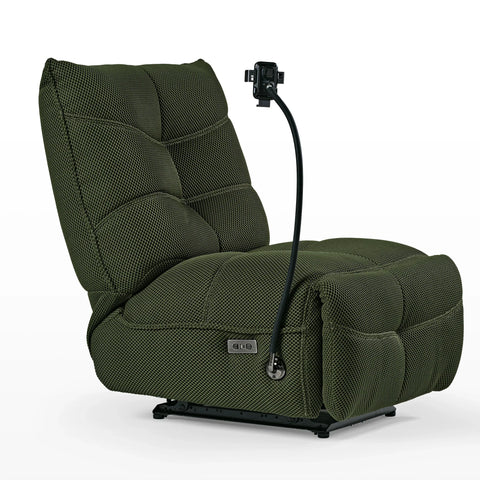
- For Versatile Support: The Lucia,Swivel Rocking Manual Recliner offers a 360° swivel and gentle rocking motion. Its ergonomic curves are specifically designed to align with the spine's natural posture, providing targeted lumbar support that is often missing in standard recliners.
- For Comfort and Utility: The Grayson, Manual Recliner Chair Rocking Swivel with Storage features high-resilience foam and a built-in storage compartment. This is particularly useful for keeping the living area clutter-free, which reduces trip hazards for older adults.
- For Aesthetic and Sustainable Luxury: The Lounge Chair-Red Yellow & Blue Yellow Stripe uses eco-fabric and features adaptive lumbar zones. While it is an accent chair, its sculptural silhouette is calibrated through pressure mapping to support a wide range of body types.

Avoiding the "Gotchas" of Furniture Gifting
Before finalizing your 2026 Mother's Day gift, consider these expert insights derived from pattern recognition in consumer behavior and gift psychology:
- The Obligation Trap: Research from Qualtrics suggests that recipients of large, expensive furniture often feel a 3x higher sense of "obligation stress." Ensure the recipient has the space and a genuine desire for the item before delivery.
- Fabric Choice Matters: For users with thermoregulation issues, avoid dark, heavy velvets. Opt for breathable, moisture-wicking materials like those found in the Lucia,Swivel Rocking Manual Recliner to ensure comfort during long periods of use.
- Safety Certifications: Always verify that the chair meets safety standards. For instance, the ANSI/BIFMA X5.1 standard ensures the structural adequacy and durability of the chair, which is a non-negotiable for user safety.
Summary of Ergonomic Benchmarks
| Feature | Ergonomic Standard / Heuristic | Why It Matters |
|---|---|---|
| Lumbar Support | Aligns with OSHA eTools: Chairs | Maintains spinal neutrality; prevents lower back pain. |
| Seat Height | ~41 cm (for 5'3" user) | Allows feet to rest flat; reduces thigh pressure. |
| Seat Depth | 2–3 inch popliteal clearance | Prevents femoral nerve compression and edema. |
| Fabric | Breathable/Moisture-wicking | Manages thermoregulation and prevents skin irritation. |
| Weight Buffer | 25% over static weight | Accommodates sudden "dynamic" movements safely. |
Designing a Healthier Future
Choosing a recliner for an older parent is an act of care that requires more than just testing for "softness." By applying the principles of musculoskeletal health—such as maintaining spinal neutrality, ensuring proper clearance for nerve protection, and prioritizing high-resilience materials—you can provide a gift that offers genuine therapeutic value.
For more information on selecting the right seating, explore our comprehensive ergonomic chair guide.
Disclaimer: This article is for informational purposes only and does not constitute professional medical advice. Individuals with pre-existing musculoskeletal conditions, chronic pain, or mobility limitations should consult a qualified physician or occupational therapist before purchasing or using specialized ergonomic furniture.




Leave a comment