

High-Density Dev Pods: Maximizing Office Floor Productivity
In the competitive landscape of the technology sector, the optimization of office floor space often stands in direct opposition to developer productivity. Traditional open-plan layouts frequently fail to account for the unique cognitive and physiological requirements of software engineering—a discipline characterized by long durations of "deep work" and complex multi-monitor visual processing. As companies scale, the "dev pod" has emerged as a popular compromise. However, poorly executed high-density layouts often lead to a "collaboration tax," where the friction of entering and exiting cramped spaces increases context-switching costs, potentially negating the very productivity gains they were intended to provide.
For office managers and facilities directors, the challenge is twofold: maximizing the number of high-performance workstations per square foot while strictly adhering to ergonomic standards that prevent long-term musculoskeletal disorders (MSDs). This article provides a technical framework for designing high-density developer pods that balance individual focus with floor-space efficiency, grounded in international ergonomic standards and practical spatial modeling.
The Physiology of the Developer Workflow: Why Static Load Matters
To understand the necessity of ergonomic furniture in a high-density environment, one must first examine the physiological impact of prolonged software development. Developers are prone to "static load"—a condition where muscles remain in a constant state of contraction to maintain a specific posture. According to the Occupational Safety and Health Administration (OSHA), repetitive tasks and poor posture are primary risk factors for work-related MSDs.
When a developer is confined to a cramped pod that limits movement, the body’s natural blood circulation is impeded. The World Health Organization (WHO) emphasizes that adults should reduce sedentary time and interrupt long periods of static behavior to mitigate cardiovascular risks. In a high-density setting, the risk is that the furniture becomes a "cage" rather than a tool. If a desk is too shallow or a chair lacks the clearance to recline, the developer is forced into a rigid, forward-leaning posture that increases intradiscal pressure in the lumbar spine.
The goal of a professional workstation is to facilitate a "neutral position"—a posture where joints are naturally aligned, reducing stress on muscles, tendons, and the skeletal system. As detailed in The 2026 Workstation White Paper: Converging Ergonomic Science and Sustainable Engineering, the integration of adjustable components is not a luxury but a fundamental requirement for maintaining the 5th to 95th percentile of the workforce, as recommended by the BIFMA G1-2013 Ergonomics Guideline.
The Spatial Math of High-Density Pods
A common mistake in tech office design is underestimating the "active zone" required for a developer to function effectively. A high-density pod is more than the footprint of the desk; it is the sum of the desk, the chair’s range of motion, and the necessary clearance for egress and accessibility.
The 36-Inch Clearance Rule
In practice, we often observe that the most frequent failure point in high-density layouts is the space behind the chair. Based on common patterns from facility management and ergonomic audits, a minimum clearance of 36 inches (91 cm) from the desk edge to any wall or furniture behind is crucial. This is not merely for fire safety or egress; it allows for the chair’s full recline range. Without this "active zone," developers feel physically confined, which has been shown to impact focus and increase the perceived stress of the environment.
Desk Depth and Visual Ergonomics
For developer teams, dual 27-inch monitors are the industry standard. However, placing these on a standard 24-inch deep desk often leads to "tech neck" or eye strain because the screens are too close to the user. According to the Canadian Centre for Occupational Health and Safety (CCOHS), the viewing distance should be at least the length of the arm.
Logic Summary: Our spatial modeling assumes that for dual 27-inch setups, a desk depth of at least 30 inches (76 cm) is non-negotiable. This depth allows for a 20-inch viewing distance while leaving sufficient space for a keyboard and wrist support without the user’s elbows hanging off the edge.

Engineering Solutions: Sit-Stand Integration and Dynamic Support
The transition from static to dynamic workstations is the most effective engineering control for reducing workplace sedentary behavior. A systematic review by Cochrane concluded that sit-stand desks can reduce sitting time by approximately 84 to 116 minutes per day.
For B2B decision-makers, the Ark EL Executive Standing Desk (60"x26") offers a professional solution that fits the "managerial pod" or lead developer profile. Its 60-inch width provides ample horizontal space for multi-monitor arrays, while the motorized height adjustment allows for the "20-8-2" rhythm (20 minutes sitting, 8 minutes standing, 2 minutes moving) recommended by Cornell University Ergonomics Web.
However, a standing desk is only as effective as the chair that supports the "sitting" portion of the cycle. The Flex, Dual-Backrests Ergonomic Office Chair addresses the "static load" issue through its independent dual-backrest design. Unlike traditional single-back chairs, this system adapts to the user's lateral movements, providing continuous lumbar support even as they shift during intense coding sessions. This aligns with ISO 9241-5:2024 requirements for furniture that encourages posture changes.
The "Gotchas" of High-Density Design: ADA and Air Quality
When maximizing floor productivity, two often-overlooked factors can derail a project: accessibility compliance and indoor air quality.
The ADA Accessibility Gap
A significant "counter-consensus" insight in office design is that high-density pods often inadvertently violate ADA accessibility mandates. The ADA requires a 60-inch diameter wheelchair turning space and 36-inch clear aisles. In a standard 8x8 foot bay, a pod with a 48-inch deep desk and chair setup leaves no room for a compliant turning circle. Facilities managers must ensure that a percentage of pods are designed with expanded clearances to remain inclusive and legally compliant.
The CO2 Buildup Risk
In small, enclosed pods or high-density clusters, air quality degrades faster than in open areas. OSHA ventilation standards recommend 15-20 cfm of outdoor air per person. In a cramped pod, CO2 levels can rapidly rise above the 1000 ppm threshold, which research suggests can impair cognitive function and decision-making—critical faculties for developers. Ensuring that pod designs do not obstruct HVAC airflow is a technical necessity.

Practical Recommendations for Facilities Managers
To achieve a benchmark-level office setup, we suggest the following technical specifications for developer pods, based on industry heuristics and ergonomic standards.
Workstation Specification Table (Modeling Note)
The following values are estimated based on standard industry rates and the BIFMA X10.1-2024 ultimate test for fit.
| Parameter | Recommended Value | Unit | Rationale |
|---|---|---|---|
| Desk Depth | 30 | Inches | Accommodates dual monitors + 20" viewing distance |
| Active Zone (Rear) | 36 | Inches | Allows for chair recline and safe egress |
| Pod Footprint | 60 - 70 | Sq. Ft. | Balances density with well-being (includes aisle share) |
| CO2 Limit | < 1000 | PPM | Maintains cognitive function for deep work |
| Monitor Height | Eye Level | N/A | Top 1/3 of screen at eye level to prevent neck flexion |
Methodology Note: This model assumes a "high-density pod" configuration using 60-inch wide desks. The square footage includes a proportional share of primary and secondary aisle space.
Cable Management: The Reliability Factor
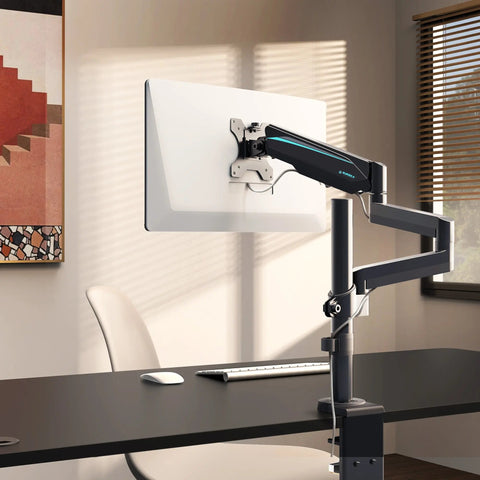
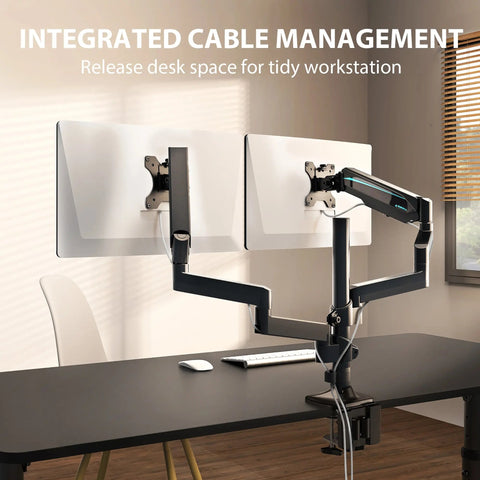
In height-adjustable environments, cable management is a frequent failure point. We recommend moving away from adhesive ties, which often fail under the tension of repeated desk adjustments. Instead, use a split loom sleeve from the monitor arm down into a central cable tray. This prevents tangling and "cable tug" on sensitive ports when the desk moves from sitting to standing height.
For additional storage without expanding the pod's footprint, a vertical solution like the Ark ES, 29" File Storage Cabinet can be placed at the end of a pod row, serving as both a storage unit and a privacy buffer between the "active zone" and the main aisle.
Implementation Checklist for Tech Teams
- Verify Monitor Depth: Ensure the desk allows for at least 20 inches of distance between the eyes and the screen. For more details, see our guide on Monitor Height Strategies for Multi-Screen Devs.
- Audit the "Active Zone": Measure 36 inches from the desk edge. If a wall or another desk enters this zone, the layout is too dense for ergonomic safety.
- Prioritize Adjustability: Select chairs with independent lumbar support and desks with dual-motor lift systems to ensure smooth transitions.
- Environmental Check: Confirm that the pod layout does not create "dead zones" for the office’s HVAC system.
- Compliance Review: Ensure that at least 5% of the workstations meet full ADA turning radius requirements.

Maximizing Long-Term Value
Investing in high-quality ergonomic furniture is an investment in the company’s most valuable asset: human capital. While high-density layouts are necessary for managing real estate costs, they must be implemented with a "human-centric" engineering approach. By prioritizing the "active zone," ensuring proper visual ergonomics with deeper desks like the GTG-G55, Glass Desktop Gaming Standing Desk, and providing dynamic support through advanced seating, tech companies can build a workspace that drives both density and peak performance.
Properly configured pods reduce the risk of MSDs, lower absenteeism, and foster an environment where developers can focus on what they do best: building the future. For more on optimizing your office layout, explore our analysis on L-Shaped Desks for Productivity in Tight Spaces.
Disclaimer: This article is for informational purposes only and does not constitute professional medical or legal advice. Ergonomic requirements may vary based on individual physical conditions and local workplace safety regulations. Consult with a certified ergonomist or healthcare provider for specific health concerns.
Sources
- BIFMA G1-2013 Ergonomics Guideline for Furniture
- OSHA eTools: Computer Workstations - Neutral Working Postures
- Cochrane: Workplace interventions for reducing sitting at work
- Cornell University Ergonomics Web — Workstation Guides
- ISO 9241-5:2024 Workstation layout & postural requirements
- The 2026 Workstation White Paper: Converging Ergonomic Science and Sustainable Engineering




Leave a comment