

Proper how to adjust lumbar support ergonomic chair setup starts with comfort and alignment, not guesswork. If the lower back is supported in the right place, sitting usually feels more stable during long desk days, gaming, or mixed work sessions. The key is to set the chair first, then fine-tune the lumbar contact, and stop if the setup makes pain worse.
Why Lumbar Support Changes Everything
Lumbar support matters because the lower spine naturally curves inward, and a good chair tries to support that shape instead of letting you collapse into a slump. OSHA's computer workstation purchasing guide and Mayo Clinic's office ergonomics article both point in the same direction: the support should match the lower-back curve and remain adjustable.
For most people, the goal is not a rigid posture. It is a steadier one. If lumbar contact lands too high, it can feel like pressure in the ribs or mid-back. If it lands too low, the lower back keeps rounding forward and the chair starts to feel less helpful over time.
This is why how to adjust lumbar support ergonomic chair advice works best when it focuses on fit, not force. A better setup should help you sit more upright without pushing your spine into an uncomfortable arch.
You can also start your chair search in broader categories like Home Office Chairs if you are still comparing formats before buying.
Set the Chair Before Fine-Tuning
Lumbar support works best when the rest of the chair is already close to right. The GSA ergonomic seat adjustment guide emphasizes seat height and seat depth first, because they affect whether your feet stay flat, your hips stay stable, and your back actually reaches the backrest.

Match Seat Height to Feet and Hips
Start by setting the seat so your feet rest flat on the floor and your thighs feel comfortable. That basic position matters more than many people expect, because if the seat is too high, you may slide forward and lose back contact. If it is too low, the hips can feel cramped and the lumbar pad may sit in the wrong spot.
A good first check is simple: can you sit all the way back without feeling like you are reaching for the floor? If not, correct height before touching lumbar settings.
Check Seat Depth Before Back Support
Seat depth decides whether your body can stay against the backrest. If the seat is too deep, many users sit a little forward to avoid pressure behind the knees, and that breaks lumbar contact. If it is too shallow, the seat may feel unstable or incomplete.
In practical terms, this means lumbar tuning is often wasted when the seat itself is wrong. Adjust the seat depth so you can sit fully back, then see whether the lower-back contact improves on its own.
Set Armrests and Recline to Reduce Slouching
Armrests and recline can either support your posture or quietly undo it. Too much recline during focused work often turns into a slow slide forward. Armrests that sit too high can lift the shoulders, while armrests that are too low may encourage the torso to collapse.
If you are trying to fix lower-back discomfort, do the small mechanical things first. A chair that is close to correct everywhere else makes lumbar support easier to judge and less likely to feel misleading.
Find the Right Lumbar Height and Depth
The safest way to learn how to adjust lumbar support ergonomic chair settings is to change one variable at a time. Start from a neutral seated position, then move the lumbar support in small steps until it meets the lower back curve without feeling forced.
- Sit fully back in the chair and keep both feet flat.
- Raise or lower the lumbar support until it sits in the lower-back area, not the middle of the back.
- Add depth or tension only until you notice steady contact.
- Pause for a few minutes, then check whether the support still feels natural after your body settles.
- If it starts to feel like a hard push, back it off one step.
The best setting is usually the one you forget about after a few minutes. If you keep noticing the support, that can be a sign the position is too aggressive. In real use, especially during long work sessions, the right lumbar setting should feel present without demanding constant attention.
Here is a simple rule of thumb: if the chair pushes your torso forward, it is too much. If your lower back still rounds no matter what you do, it is probably too little or placed too low.

Dynamic and Static Support Compared
Different lumbar systems solve different problems. Some chairs are better when you want one stable contact point, while others are better when your posture changes a lot during the day. The table below shows the safest setup sequence and why more adjustable chairs usually give you a wider fit window.
| Chair | Seat height first | Seat depth first | Lumbar tuned last | Notes |
|---|---|---|---|---|
| Lark | Preferred | Preferred | Recommended | Highest adjustability for shifting postures |
| Onyx | Good | Good | Recommended | Balanced mesh option for consistent use |
| Royal Slim | Good | Good | Acceptable | Stable curve for longer fixed sessions |
Dynamic Lumbar Fits Better When You Shift Often
Dynamic lumbar support moves with posture changes, so it can be useful if you lean, recline, or reposition frequently. That makes it a strong match for people who switch between focused work and relaxed sitting during the same session.
The trade-off is that dynamic systems are not always the simplest if you want one exact feel and never want to revisit it. If you prefer a "set it once" setup, a static adjustable system may be easier to live with.
Static Adjustable Support Works When You Sit More Consistently
Static lumbar support is usually easier to judge when your daily routine is mostly upright and stable. Once you find the right spot, you can leave it there and use the chair the same way every day.
That is why the better choice depends on how much you move. If your posture changes a lot, dynamic support may save you from constant micro-adjustments. If your posture is fairly consistent, static support can feel more predictable.
What the Chair Style Means in Practice
For long work sessions, a stable setup often matters more than fancy movement. For gaming or streaming, the best chair is usually the one that still supports you when you shift from forward-leaning focus to a more reclined break.
If you want a broader method guide after this section, the related article on What Is Dynamic Lumbar Support and How Does It Work? is a useful follow-up, and the comparison in Adjustable vs. Dynamic Lumbar Support: Which Is Better? helps when you are deciding between mechanisms rather than just adjusting one chair.
Match Support to Your Work or Gaming Style
Different users tend to notice different friction points. Remote workers often need something that stays comfortable through long upright sessions. Executives may care more about a polished chair that still supports the lower back during a full workday. Gamers and streamers usually need a setup that keeps working when they lean forward, recline, or switch positions often.
Remote Work Setup for Long Desk Days
If you sit upright for hours, the best lumbar setup is usually the one that disappears into the background. Too much movement can be distracting, but too little support often leads to a slow slump by the afternoon.
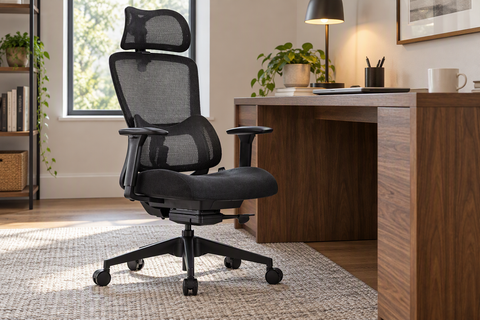
The Onyx, Ergonomic Office Chair is a conservative fit example here because it pairs adjustable lumbar support with a breathable mesh back and flip-up armrests. The chair page also lists a recommended height range of 5'1'' to 5'9'' and a 275 lb maximum weight capacity, so it is worth checking those limits before you treat it as a fit.
Executive Chair Comfort for Formal Workspaces
If you want a more polished office look, a chair with firm lumbar shaping and a stable backrest can be a better fit than one that feels highly active. That matters in offices or home workspaces where the chair has to look appropriate as well as feel supportive.
The Royal Slim, Executive Office Chair fits this pattern well. Its product details list an ergonomic lumbar curve, a high-back design, 4 tilt-and-lock settings, and a 90-135° tilt range. It is also rated for users around 5'1" to 6'1" and up to 300 lbs, which makes it a useful check-before-buying option for a wider executive-style fit.
Gaming and Streaming Sessions With Frequent Leaning
Gamers often change posture more than office workers do. A chair that works in a strict upright desk posture can feel less helpful once you lean forward for a match or recline between sessions.
The Lark, Adjustable Lumbar Ergonomic Office Chair is the most flexible fit example in this group because its 3D adaptive lumbar support moves forward and backward, up and down, and side to side. It also lists a recommended height range of 4'9'' to 6'1'' and a 275 lb maximum weight capacity, so it makes sense to check the fit range before you assume the chair will solve posture problems on its own.
Check Your Setup and Know When to Readjust
A good lumbar setup should feel supportive without feeling poky or forced. If the support sits too high, it may press into the ribs or upper back. If it sits too low, the lower back still rounds forward and the benefit drops off quickly.
Use this quick self-check after you sit for a while:
- If the chair presses above the lower-back curve, lower the lumbar support.
- If you still feel yourself hunching, raise it or add a little more contact.
- If the back feels overly arched, reduce depth or tension.
- If your posture changes after a longer workday or a more reclined session, recheck the setting.
This is also where the boundary matters. Mayo Clinic's office ergonomics article notes that persistent pain after proper adjustment deserves professional advice. In other words, chair tweaks are useful for comfort, but they are not a substitute for medical care when pain does not improve.
Build a Chair Setup You Can Actually Keep
The best lumbar support is the one that matches your habits, not someone's ideal posture. Start with seat height, then seat depth, then lumbar height and depth. If you lean and recline often, dynamic support may be worth the flexibility. If you sit mostly upright, a simpler adjustable system may be easier to live with. If discomfort keeps building despite a good setup, stop adjusting the chair and get help.
Quick daily checks help maintain results:
- Feet flat, thighs parallel.
- Lower back in gentle contact.
- Shoulders relaxed, screen at eye level.
Related Resources
- How to Adjust Your Lumbar Support for Maximum Comfort
- Ergonomic Chair Adjustments for Tall and Petite Users
- What Helps With Back Pain From Gaming?
FAQs
Q1. How High Should Lumbar Support Sit on an Ergonomic Chair?
A good starting point is the lower-back curve, usually around the area just above the pelvis. The exact spot depends on your torso length and chair shape, so aim for contact that feels supportive without pressing into the ribs or the middle of the back.
Q2. What If Lumbar Support Feels Too Aggressive?
Reduce the depth or tension first, then check seat depth and recline. Many people blame the lumbar pad when the real issue is that they are sitting too far forward or slightly away from the backrest. If the chair still feels intrusive, back off another step.
Q3. Can Dynamic Lumbar Support Work Better for Long Sitting Sessions?
It can, especially if you change posture a lot during the day. Dynamic support helps maintain contact as you lean or shift, which is useful for gaming or mixed work sessions. If you stay mostly upright, a static adjustable system may be simpler and just as comfortable.
Q4. Why Does My Lower Back Still Hurt After Adjusting My Chair?
The issue may be seat height, desk height, seat depth, or a non-chair cause. A chair can improve comfort, but it cannot fix every source of back pain. If the pain persists after a sensible setup, it is better to get professional advice than keep chasing chair settings.
Q5. Can I Use One Lumbar Setting for Both Work and Gaming?
Sometimes, yes, but it depends on how much your posture changes. If you work upright and game in a more reclined position, you may need small readjustments between tasks. A more adaptive chair can reduce that friction, but it still needs to be matched to your body and use pattern.




Leave a comment