

A hybrid command center works best when you plan the room as one system, not as a desk plus a gaming corner. Start with the mode you use most, then build around layout, posture, storage, and camera visibility. That order keeps the room useful for workdays and relaxed enough for after-hours play.
Sources
- Ergonomic Chair Setup for Productive Home Offices
- Ergonomic Chairs That Blend Into Home Interiors
- The Executive Gamer: Blending Luxury Aesthetics with Pro Gaming Tech
- Frictionless Integration: Why Built-in Cable Management is the 2026 Standard

Map the Room Around Work and Play
Choose the Primary Mode
If the room is work-first, gaming-first, or evenly split, the answer changes what you buy first. A hybrid command center should follow the mode that happens most often, because that mode drives desk shape, storage needs, and how much of the room can stay visible between sessions.
The practical question is simple: what stays out every day, and what can be stored away? If a second monitor, camera, or game console is always visible, that should shape the room plan from the start. If it only appears at night, the room can stay visually calmer during work hours.
A useful first step is to define a clear hybrid desk setup before you browse products. If that part stays fuzzy, the room usually feels like two setups forced together instead of one coherent space.
Fit the Layout to the Room
Room shape matters as much as furniture style. Measure usable floor area, door swing, wall access, and the path you walk when entering or leaving the room. That is often the difference between a layout that feels intentional and one that feels crowded.
In a spare bedroom, an L-shaped or corner-friendly layout can separate work and gaming zones without adding extra furniture. In a small apartment corner, the safest move is usually to keep circulation open and reduce the number of visible items. For a dedicated room, you have more room to create a polished command center furniture for work and play setup.
If you want a deeper layout lens, the pillar guide to room ecosystems is a useful next step. It helps you think about the room as a whole instead of buying one item at a time.
Plan for Camera and Gear Visibility
For remote workers, the camera frame is part of the room plan. Decide what should appear behind the chair, what should stay hidden, and what can live off to the side. That is especially important if you want a polished background for calls without losing quick access to gaming gear.
The goal is not perfect emptiness. It is a controlled visual zone that stays consistent across modes. A few intentional objects can work well, but stray boxes, cords, and mismatched accessories usually make the room feel unfinished.

Choose a Desk That Can Switch Modes
The right desk is the one that fits the room and the way you switch between work and play. For many buyers, a straight desk works in a narrow room, while an L-shaped desk helps create separate zones when the room can support the footprint.
A desk with built-in routing and accessories can also reduce desktop clutter. The featured L-shaped standing desk includes a 61-inch L-shaped desktop, a dual-motor height adjustment range of 29.5 to 48 inches without the monitor riser, a slide-out keyboard tray, a cable management tray, a cup holder, and a headphone hook. Those are useful fit details, not promises of universal comfort.
| Desk style | Best fit | Main advantage | Where it breaks down |
|---|---|---|---|
| Straight desk | Narrow rooms and simple setups | Easier to place and easier to keep visually light | Less zoning for work and gaming gear |
| L-shaped desk | Spare bedrooms and corner spaces | Creates separate surfaces for different modes | Can overwhelm a tight room if the footprint is too large |
| Standing desk with accessories | Users who want more flexible posture changes | Adds sit-stand variety and built-in organization | Still needs room fit checks and cable planning |
If you are comparing shapes, browse L shaped standing desks only after you know the room can support the footprint. The wrong desk shape usually creates more friction than it solves.
Build a Chair and Monitor Setup
For most hybrid rooms, posture and screen placement matter more than extra decor. OSHA recommends a neutral body position, which means the head and neck stay balanced over the torso and the feet are supported. That is a practical fit check, not a guarantee that any chair will feel great all day.
Mayo Clinic advises placing the monitor directly in front of you, about an arm's length away, with the top of the screen at or slightly below eye level in typical office setups. That matters because screen position affects both neck comfort and how clean the desk looks on camera.
The NIH workstation checklist also emphasizes chair height, seat and back adjustability, and lower-back support. If a chair does not let you tune those basics, it may look fine but still be a poor match for long hybrid days.
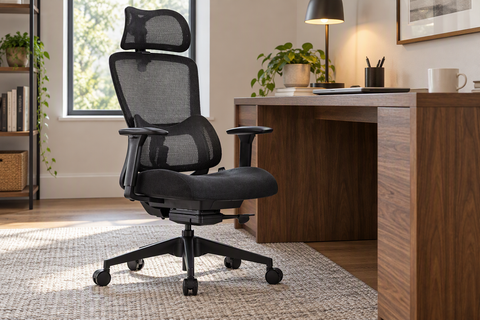
The featured Nox executive chair gives you a 97° to 121° tilt range, three locking positions, a seat height range of 19 to 22.2 inches, and a 300 lb weight capacity. Those facts make it a reasonable candidate for buyers who want a polished chair profile, but the real test is whether it fits your body and desk height.
A dual monitor arm can help clear the desktop when you need more room for calls, notes, or a controller. It fits most 17-inch to 32-inch monitors, supports VESA 75x75mm and 100x100mm, and works with table thicknesses from 0.4 inches to 3.5 inches. If your monitors or desk do not match those limits, check current specs before buying.
For a more screen-focused layout view, dual-monitor desk planning is worth a look. It is especially helpful if your setup leans toward gaming after work.
Add Storage and Cable Control
Storage is what keeps a hybrid room from feeling like a permanent gaming cave. Use it for anything that does not need to stay on the desktop between sessions, including controllers, extra cables, headsets, and work supplies.
A simple rule helps: if you use it every day, keep it accessible; if you use it occasionally, give it a home off the desk. That one habit usually does more for visual clarity than adding more decor.
Magnetic cable ties are a practical way to bundle cords and keep them off the floor. The magnetic cable tie is reusable and designed for organizing gaming and office accessories, but it should be treated as one part of the system, not the whole solution.
If you want broader storage options, the storage collection is a useful browsing path for items that can hide clutter without making the room feel overbuilt.
Make the Room Look Unified
The room feels more polished when the desk, chair, lighting, and accessories share a limited visual language. You do not need every piece to match exactly, but repeating a few materials or colors helps the room read as one system.
This is where a hybrid work and gaming desk setup often succeeds or fails. If the work side looks corporate and the gaming side looks unrelated, the room feels split. If the finishes, lighting, and accessory style repeat across the space, the setup looks intentional even when the gear changes.
A clean background matters too. Keep the chair zone, nearby shelves, and desktop accessories aligned with the room's main visual tone. If you want a broader design reference, the command center room guide is a good companion read.
The featured standing desk with accessories can also help here because its built-in tray, monitor riser, and accessory set reduce the number of loose items that can break the visual flow.
Your Final Hybrid Setup Checklist
Before you buy, check the room footprint, desk shape, chair clearance, and where the cables will travel. Then decide what stays visible, what gets mounted, and what gets stored. If the room still feels busy in your head, simplify the plan before adding more gear. The best hybrid command center is the one that works cleanly on a workday and still feels easy to switch into play mode.
Related Resources
FAQs
How Do You Decide Whether a Hybrid Room Should Be Work-First or Game-First?
Use the mode you repeat most often as the starting point. That choice should drive desk size, storage, and background layout. The secondary mode still matters, but it should shape accessories and flexibility rather than overriding the room's main function.
What Desk Shape Works Best for a Work-And-Gaming Setup?
A straight desk is usually easier in tight spaces, while an L-shaped desk works better when you have room to separate tasks and gear. If the room is small, pick the shape that preserves circulation first. If the room is larger, zoning becomes more valuable.
Can One Chair Work for Both Video Calls and Gaming Sessions?
Yes, if the chair fits your body, desk height, and room style. Look for adjustability, a supportive back, and a seated position that does not dominate the room visually. If the chair only feels right for one mode, it may not be a true hybrid fit.
How Do You Keep a Hybrid Setup Looking Professional on Camera?
Keep the area behind the chair simple and consistent. Hide the clutter, limit visible cables, and avoid mixing too many finishes in the camera frame. A polished background is less about perfection and more about controlling what the lens sees.
What Should You Prioritize First When Building the Room?
Start with room fit and workflow, then choose the desk, then the chair and monitor setup, then storage and cable control, and finally visual cohesion. That order keeps the room from becoming a pile of disconnected purchases.




Leave a comment