

The Invisible Impact of the Modern Workstation
When selecting a gift for a tech enthusiast or a dedicated home office professional, the focus often gravitates toward performance metrics: CPU clock speeds, monitor refresh rates, or mechanical keyboard actuation points. However, for those spending upwards of 12 hours a day at a digital rig, the most critical "spec" isn't electronic—it is the chemical and structural integrity of the workspace itself.
A common frustration among remote workers is the "new desk smell"—that sharp, chemical odor that often accompanies a fresh unboxing. While frequently dismissed as a temporary nuisance, this scent is a primary indicator of volatile organic compound (VOC) off-gassing. In poorly ventilated spaces, these emissions can reach concentrations that trigger headaches, respiratory irritation, and reduced cognitive performance within the first 48 to 72 hours.
For the health-conscious gift-giver, the objective is to provide a "Safe Tech Space." This involves moving beyond aesthetics to understand the physiological and environmental principles that define a high-performance workstation. By prioritizing low-emission, certified ergonomic furniture, you aren't just giving a desk; you are gifting long-term wellness and systemic health.
The Physiology of the Static Load
To understand why a high-quality desk is essential, one must first examine the impact of prolonged sedentary behavior on the human body. The World Health Organization (WHO) 2020 Guidelines emphasize that adults should significantly reduce sedentary time and interrupt long periods of static behavior to mitigate cardiovascular risks.
When a user remains in a seated position for extended periods, they subject their body to a "static load." Unlike dynamic movement, which facilitates blood circulation, static loads cause muscles to remain in a state of constant contraction. According to the OSHwiki guide on Musculoskeletal Disorders and Prolonged Static Sitting, this lack of movement leads to decreased blood flow to the muscles, resulting in the accumulation of metabolic waste products and subsequent tissue inflammation.
The Mechanism of Musculoskeletal Disorders (MSDs)
The transition from simple discomfort to a chronic Musculoskeletal Disorder (MSD) is a process of tissue adaptation. As explained in the Pathophysiological mechanisms of MSDs, repetitive strain and poor posture cause micro-trauma to tendons and ligaments. Over time, if the body is not allowed to return to a Neutral Working Posture, these micro-injuries lead to chronic pain in the lumbar region, neck, and shoulders.
Logic Summary: Our understanding of MSD progression is based on the "static loading" model, which assumes that the risk of injury is a function of duration and posture angle. This model is supported by ISO 11226:2000, which provides quantitative limits for static working postures.

Material Safety: Beyond the Surface
For tech enthusiasts, the environment is as important as the equipment. Many modern desks utilize composite wood products like Medium-Density Fibreboard (MDF) or particleboard. While cost-effective, these materials are the most common sources of formaldehyde emissions if they are not properly sealed or manufactured with low-emitting cores.
The VOC Reality
Volatile Organic Compounds (VOCs) are carbon-based chemicals that evaporate at room temperature. Research on VOC emissions from wooden furniture indicates that emissions are dynamic. They can increase significantly with rising indoor temperatures—a common occurrence in gaming rooms filled with high-heat-output hardware.
To ensure a safe environment, gift-givers should look for specific certifications:
- GREENGUARD Gold: This is a more stringent standard than the base GREENGUARD certification. It includes stricter limits for over 360 VOCs and is designed to protect sensitive individuals.
- CARB Phase 2 / TSCA Title VI: These standards regulate formaldehyde emissions from composite wood products sold in the United States. Understanding CARB standards is essential for verifying that a desk meets legal safety thresholds.
The "Sniff Test" and Edge Encapsulation
In our experience auditing workstation setups, a practical rule of thumb is the "24-hour sniff test." If a strong chemical odor persists after 24 hours in a well-ventilated area, the product likely has high VOC levels. Furthermore, superior engineering often involves full laminate or veneer encapsulation on all edges—not just the visible ones. This seals the emission pathways of the inner core, significantly reducing the off-gassing rate.
Engineering the Solution: The Mechatronic Desk
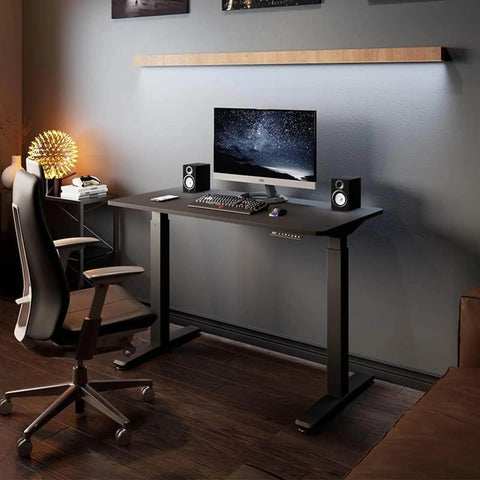
A modern standing desk is more than a piece of furniture; it is a "mechatronic consumer system." This term, highlighted in The 2026 Workstation White Paper: Converging Ergonomic Science and Sustainable Engineering, refers to the integration of mechanical structures with electronic controls to facilitate movement.
According to the OSHA Hierarchy of Controls, a sit-stand desk represents an "Engineering Control." This is fundamentally more effective than "Administrative Controls" (like simply reminding yourself to take breaks) because it changes the physical environment to eliminate the hazard of prolonged static sitting.
Selecting the Right Platform
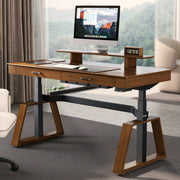
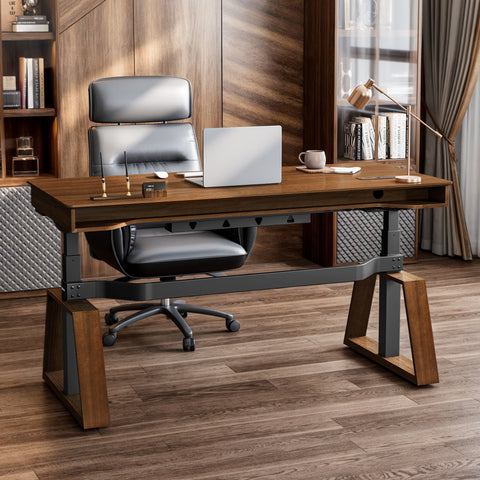
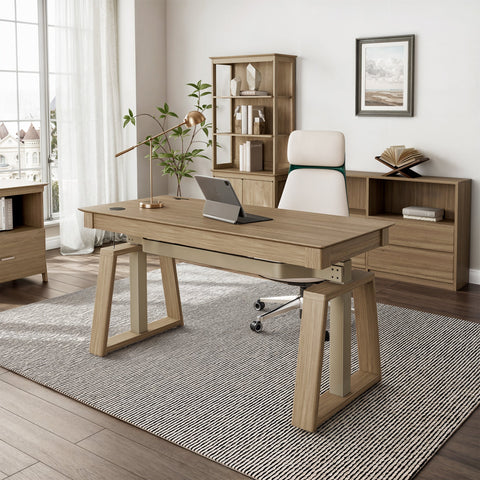
For those seeking a blend of professional aesthetics and rigorous safety, the Ark X Executive Standing Desk (60"x26") serves as a benchmark. It combines a leather-finish desktop with integrated charging and storage, addressing the organizational needs of high-level managers while providing the height adjustability required for postural rotation.
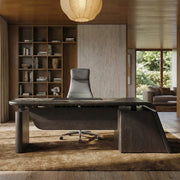
For power users with more extensive setups, the Zen Pro Series, 87"/72" Executive Standing Desk with Cabinets Set offers a larger footprint and a sintered stone surface. This material is naturally low-emission and highly durable, making it an ideal choice for those prioritizing Eco-Friendly Ergonomic Solutions.

The Wellness Gift Strategy: A Comparison of Standards
When evaluating a gift, it is helpful to compare industry standards to ensure the product "fits" the user. The BIFMA G1-2013 Ergonomics Guideline provides recommended dimensions that cover the 5th to 95th percentile of the population.
| Feature | Standard Requirement | Wellness Benefit |
|---|---|---|
| Height Range | ~22" to 48" (BIFMA G1) | Accommodates both seated and standing neutral postures for most users. |
| VOC Emissions | GREENGUARD Gold | Reduces risk of respiratory irritation and "Sick Building Syndrome." |
| Stability | BIFMA X5.5 | Prevents monitor wobble and structural failure under heavy tech loads. |
| Anti-Tip | CPSC STURDY (ASTM F2057) | Essential for desks with integrated drawers or heavy storage. |
Methodology Note: The values in this table are derived from a comparative analysis of North American (BIFMA) and International (ISO) standards. This represents a "best practice" framework for selecting high-reliability furniture.
Practical Recommendations for the Perfect Setup
Buying the desk is only the first step. To truly provide a Wellness Gift, the recipient must know how to use it.
1. The 20-8-2 Rhythm
Developed by the Cornell University Ergonomics Web, this is the "gold standard" for sit-stand behavior. For every 30 minutes of work:
- 20 minutes sitting in a neutral position.
- 8 minutes standing.
- 2 minutes of moving or stretching.
2. Achieving the Neutral Position
To prevent RSI, the workstation must be adjusted to the user's specific dimensions. According to the CCOHS guide on Sit/Stand Desk setup:
- Monitor Height: The top of the screen should be at or slightly below eye level to reduce neck extension.
- Elbow Angle: Your elbows should be at a 90-degree angle, with wrists straight (neutral) while typing.
- Foot Support: When seated, feet should be flat on the floor. If the desk is too high, a footrest is necessary.
3. Supporting the Lumbar
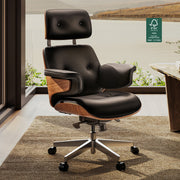
A desk is only half of the equation. A chair that supports the natural "S-curve" of the spine is vital. The Royal, Microfiber Leather Executive Office Chair is designed with high-back support and pressure-reducing cushions to maintain spinal alignment during the "20" portion of the 20-8-2 cycle.

The Recovery Zone: Beyond the Desk
Wellness doesn't end when the laptop closes. For the tech enthusiast who also enjoys gaming or media consumption, recovery is key. Integrating a piece like the Grayson, Manual Recliner Chair Rocking Swivel with Storage into the space allows for a transition from "active work" to "restorative rest." This supports the WHO recommendation to interrupt static work with varied movement and relaxation.

Summary: A Gift of Longevity
Choosing a low-emission, ergonomic desk is a sophisticated way to show you care about someone’s long-term health. By selecting products that meet BIFMA and GREENGUARD standards, you eliminate the hidden risks of VOCs and provide the structural support necessary to prevent chronic MSDs.
Whether it is the executive elegance of the Ark X Executive Standing Desk (60"x26") or the expansive utility of the Zen Pro Series, the goal remains the same: creating a workspace that enhances performance without sacrificing the person behind the screen. For more detailed insights on building a compliant, high-performance office, refer to our Standing Desk Setup Guide.
Disclaimer: This article is for informational purposes only and does not constitute professional medical advice. Always consult with a qualified healthcare provider or ergonomics specialist before making significant changes to your workstation or if you have pre-existing musculoskeletal conditions.
Sources
- BIFMA G1-2013 Ergonomics Guideline for Furniture
- Canadian Centre for Occupational Health and Safety (CCOHS): Office Ergonomics
- Cochrane Library: Workplace interventions for reducing sitting at work
- Cornell University Ergonomics Web — Workstation Guides
- OSHA eTools: Computer Workstations - Neutral Working Postures
- WHO 2020 Guidelines on Physical Activity & Sedentary Behaviour
- UL GREENGUARD Certification Overview
- ISO 11226:2000 Evaluation of static working postures

Leave a comment