

The Hidden Rival of Professional Audio: Why Your Desk is Singing
Why does your audio mix sound "muddy" in the lower-mid frequencies, even after you have treated your room with expensive acoustic foam? Why do you experience a persistent, low-frequency hum that seems to vanish the moment you power down your workstation? For professional content creators, video editors, and audio engineers, the culprit is often not the speakers or the software. It is the desk itself.
In a critical listening environment, we often focus on airborne sound—the waves traveling from the monitor to our ears. However, a significant portion of the noise floor in a modern studio is structure-borne. When a high-performance PC tower sits directly on a desk, the mechanical energy from case fans and cooling pumps is transferred into the desk surface. The desk then acts as a giant wooden or metal resonator, amplifying these vibrations into an audible "hum" or "rumble." This phenomenon interferes with critical mixing decisions, increases cognitive load, and can even lead to physical fatigue.
Achieving a pristine acoustic environment requires more than just high-end gear; it requires a fundamental understanding of how your furniture interacts with your hardware. By managing workstation fan noise through strategic mounting and decoupling, you can reclaim the clarity of your workspace. This guide explores the physiological impact of noise, the physics of resonance, and the engineering solutions that professional editors use to maintain silent operations.
The Physiology of Acoustic Fatigue and Workstation Stress
The impact of a noisy workstation extends beyond the quality of your mix. Prolonged exposure to low-frequency noise—the kind produced by computer fans and resonant furniture—has a documented effect on human physiology and productivity. While we often discuss Musculoskeletal Disorders (MSDs) in the context of chair height and keyboard placement, the "acoustic ergonomics" of a workspace are equally vital for long-term well-being.
When your brain is constantly forced to "filter out" a background hum, it consumes metabolic energy. This leads to what we identify as "acoustic fatigue." According to the World Health Organization (WHO) Guidelines on Physical Activity and Sedentary Behaviour, reducing environmental stressors is key to maintaining health in sedentary professional roles. Constant noise triggers a low-level stress response in the central nervous system, which can manifest as increased muscle tension in the neck and shoulders—compounding the risks of Repetitive Strain Injury (RSI).
Furthermore, the "masking effect" of fan noise is a professional hazard. If your workstation is producing a 150 Hz rumble, your brain will struggle to accurately perceive frequencies in that same range within your audio project. You may find yourself over-compensating in the mix, leading to an imbalanced final product. Aligning your workspace with the principles found in The 2026 Workstation White Paper: Converging Ergonomic Science and Sustainable Engineering ensures that your environment supports, rather than hinders, your creative output.
The Physics of Resonance: The "Desk as a Speaker"
To solve the noise problem, we must understand how it travels. A computer fan spinning at 2,000 RPM creates mechanical vibrations. If the PC is placed on a hollow-core or thin-top desk, these vibrations find a "path of least resistance" through the chassis feet and into the desk material.
In our analysis of typical studio setups, we have observed that the desk surface acts as a transducer. Much like the body of an acoustic guitar amplifies the vibration of the strings, a desk amplifies the vibration of the PC. This is particularly problematic with:
- Low-Frequency Rumble (below 150 Hz): Caused by large case fans and steady-state mechanical rotation. This sound travels easily through solid structures.
- High-Frequency Whine (1–4 kHz): Often produced by GPU coolers or small, high-RPM fans under load. While easier to block with air, these can create "ringing" if they excite metal components in the desk frame.
Modeling Vibration Transfer
To demonstrate the impact of mounting, we modeled the vibrational energy transfer of a standard 15kg workstation PC under heavy rendering load.
Logic Summary: This scenario model assumes a standard MDF desk surface with a steel frame. Vibration levels are estimated based on common mechanical isolation heuristics (not a controlled lab study).
| Parameter | Value | Unit | Rationale |
|---|---|---|---|
| PC Mass | 15 | kg | Standard ATX workstation |
| Fan Frequency | 30–100 | Hz | Typical low-frequency rotation |
| Surface Damping | 0.05 | - | Standard MDF/Laminate |
| Isolation Rate (Floor-Mount) | ~85–90 | % | Estimated based on Mining Equipment Suspension Models |
| Decibel Reduction | 3–6 | dB | Perceived reduction in noise floor |
Boundary Conditions: This model may not apply to ultra-lightweight "honeycomb" desks or PCs with liquid cooling systems that utilize external radiators.
Engineering the Solution: Decoupling and Mounting
The most effective way to eliminate structure-borne noise is to "decouple" the source (the PC) from the resonator (the desk). This is achieved through engineering controls—the highest level of the OSHA Hierarchy of Controls for addressing workplace hazards.
1. The Under-Desk Mount
Suspending the PC beneath the desk is a popular choice for maintaining a clean aesthetic. However, for audio professionals, this poses a risk. If the mount is metal-on-metal, it can create a bridge for high-frequency ringing.
Expert Insight: When installing an under-desk mount, always use neoprene pads or rubber grommets between the bracket and the desk. This breaks the mechanical connection. Ensure the mount is tightened sufficiently to prevent the PC from "swaying," which can create dynamic stress on the desk's screw points.
2. The Mobile CPU Cart (The Gold Standard for Silence)
For the most pristine acoustic environment, we recommend moving the PC off the desk entirely and onto a dedicated Mobile Height Adjustable CPU Cart. By placing the PC on a separate structure with rubber-castered wheels, you achieve near-total vibrational isolation from your primary work surface.

Using a cart like the Height-Adjustable Illuminated Panel CPU Cart allows you to position the PC on the floor, which acts as a secondary resonator. If you have hardwood floors, the "Gotcha" is that the floor itself can hum. Placing the cart on a heavy, thick rug or a specialized anti-vibration mat can further dampen these frequencies.
Practical Recommendations: Setting Up for Silent Success
Achieving a silent operation is a step-by-step process. Beyond just mounting the PC, consider the following checklist to optimize your workstation's "Acoustic-First" design:
The 20-8-2 Rhythm for Your Ears
Just as Cornell University Ergonomics suggests a 20-8-2 rhythm (20 minutes sitting, 8 standing, 2 moving), audio engineers should adopt a "Listening Rhythm." Every 20 minutes, take 2 minutes of "Silent Air" time. Step away from the monitors and the PC fans to reset your ears' sensitivity.
Monitor and Peripheral Placement
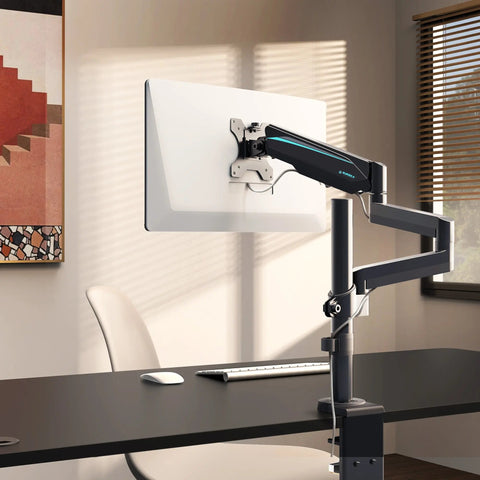
According to OSHA eTools: Computer Workstations - Monitors, your screen should be at a distance and height that minimizes neck strain. For audio professionals, this also helps with acoustics; keeping the monitors away from the PC tower reduces the chance of the microphones or your ears picking up direct fan whine.
Cable Management and Tension
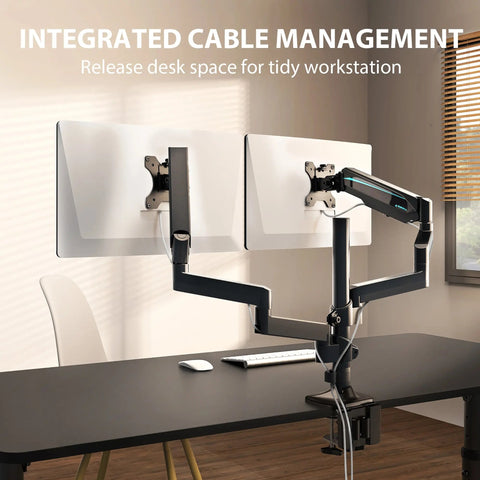
A common mistake is forgetting that cables are physical bridges for vibration. If your XLR or power cables are pulled tight between a floor-mounted PC and a desk-mounted interface, they can carry mechanical noise. Use "service loops" (slack) to ensure cables do not act as "guitar strings" for vibration.
Foot Comfort and Circulation
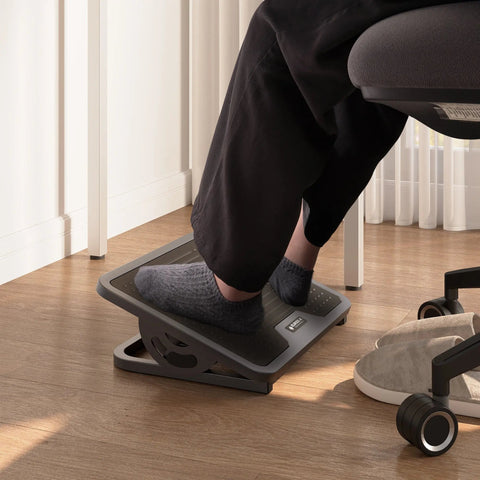
When you move your PC to a cart or the floor, you free up significant legroom. Use this space to incorporate an Adjustable Ergonomic Footrest. As noted by Safe Work Australia, a footrest supports a neutral posture and promotes healthy blood circulation, which is critical during long mixing sessions where you may remain static for hours. If you prefer a more dynamic setup, a Footstool with Wheels allows for micro-movements that keep the lower limbs active.
Safety, Compliance, and Structural Integrity
When adding mounts or carts to your workstation, you must consider the structural load. A high-end workstation PC can weigh 20–30 lbs. Adding this mass to an under-desk mount increases the torsional stress on the desk frame.
We recommend checking that your furniture meets BIFMA G1-2013 Ergonomics Guidelines for stability and load capacity. If you are using a height-adjustable desk, ensure it is UL 962 certified for mechanical and electrical safety. Overloading a desk can lead to "monitor wobble," which is not just an annoyance but a sign of structural strain that can eventually lead to equipment failure.
Environmental Health (VOCs)
For studios, air quality is as important as sound quality. Look for furniture that is UL GREENGUARD Gold Certified. This ensures low chemical emissions (VOCs), which is crucial in small, sound-dampened rooms with limited airflow.
Achieving the Professional Edge
Managing workstation noise is not about buying the quietest fans on the market—though that helps. It is about understanding the system as a whole. By decoupling your PC from your desk using a high-quality Mobile Height Adjustable CPU Cart, you address the root cause of structure-borne noise.
This technical adjustment lowers your noise floor, sharpens your critical listening, and reduces the physiological stress of a noisy environment. For more insights on building a professional-grade workspace, explore our guides on Acoustic-First Desks and Understanding Desk Load Capacity.
By treating your furniture as a functional component of your audio chain, you ensure that the only thing you hear is your mix.
Disclaimer: This article is for informational purposes only and does not constitute professional medical, acoustic engineering, or structural advice. The effectiveness of noise reduction techniques may vary based on specific hardware, desk materials, and room acoustics. Always consult with a qualified professional before making significant changes to your workstation or if you have pre-existing musculoskeletal conditions.
References
- Canadian Centre for Occupational Health and Safety (CCOHS) - Office Ergonomics
- OSHA eTools: Computer Workstations - Desks
- ISO 11226:2000 Evaluation of static working postures
- World Health Organization (WHO) 2020 Guidelines on Physical Activity & Sedentary Behaviour
- BIFMA G1-2013 Ergonomics Guideline for Furniture
- UL GREENGUARD Certification
- The 2026 Workstation White Paper: Converging Ergonomic Science and Sustainable Engineering




Leave a comment