
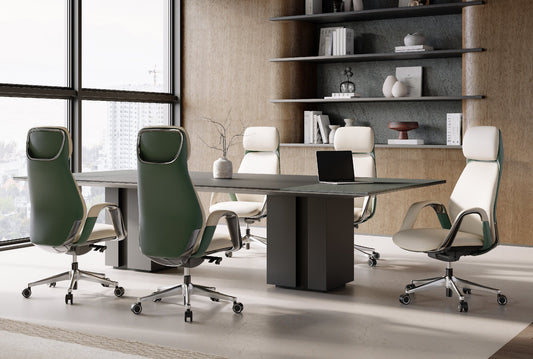
Discover how bulk office furniture purchases can save costs, simplify setup, and create a cohesive, ergonomic workspace. Learn smart planning tips to design a productive and stylish office that grows with your team.

Optimizing Triple-Monitor Arms for Real-Time Shipment Tracking
A guide to ergonomic triple-monitor setups for logistics analysts, covering layout, adjustments, and standards to reduce strain and improve tracking efficiency.

Evaluating Dual-Motor Stability for 24/7 Logistics Hubs
Covers industrial standards (BIFMA X5.5, ISO 9241), mechanical synchronization, failure analysis, and deterministic ROI modeling for 12-hour shifts.

Evaluating Desk Converters for Compact Warehouse Check-Points
A guide to implementing compliant, durable desk converters in compact warehouse environments, covering technical specs, safety standards, and ROI analysis.

L-Shaped Desk Layouts for Dual-Zone Logistics Management
This guide details the Dual-Zone layout strategy, includes a technical case study, and provides recommendations for workflow and cable management.

DevOps Dashboard Ergonomics: Positioning Monitors for Uptime
Covers ISO 9241-5 standards, motor load safety for heavy monitors, and furniture like dual-motor desks to improve focus and infrastructure uptime.

Dual-Rig Productivity: Managing Work and Personal Dev PCs
A guide to managing dual-PC setups for developers. Learn space-saving layouts, peripheral switching, and cable management for a productive workflow.

Why Heavy Mechanical Keyboards Need a Sturdy Desk Frame
A guide on why heavy mechanical keyboards require stable desk frames to prevent wobble and strain. Learn about desk engineering and ergonomic setup principles.

The On-Call Station: Ergonomic Setups for Incident Response
Covers the 20-8-2 sit-stand rhythm, cable management, circadian lighting, and ergonomic standards for high-pressure troubleshooting sessions.

Home Lab Storage: Organizing Under-Desk Server Hardware
Covers ergonomic standards, under-desk mounting, thermal management for AI workstations, and the 12-18 inch cable rule for adjustable desks.

Using RGB Lighting as a Deep Work Status Signal for Devs
Covers the Traffic Light heuristic, automation via IDE plugins, and integration with high-performance ergonomic furniture like standing desks and chairs.

Standing for Standups: Using Desk Height to Time Scrums
A guide on using height-adjustable desks as physical timers for daily scrum meetings to improve efficiency and reduce prolonged sitting risks.

Keyboard Tray vs. Desktop: The Best Choice for Vim Users
Covers ergonomic trade-offs, the Pinky Test, negative tilt benefits, and workstation setup modeling for tall developers using standing desks.

Troubleshooting Motor Noise in Quiet Engineering Offices
Covers noise physics, load balancing, vibration isolation, and standards like ISO/BIFMA for silent ergonomic workstations.

The Linux Power User Workspace: Layouts for Tiling WMs
A guide to ergonomic workstation design for Linux developers using tiling window managers, focusing on monitor geometry, desk stability, and sit-stand rhythm.

Ergonomic Checklist for Setting Up a New Engineering Hub
Covers dual-backrest seating, sit-stand transitions, monitor arm procurement, and conduit-first cable management to prevent musculoskeletal disorders.

Why DevOps Engineers Prefer L-Shaped Desks for Monitoring
A guide on how L-shaped standing desks improve ergonomics and focus for DevOps and SRE professionals during system monitoring and incident response.

Acoustic-First Desks: Furniture Choices for Professional Audio Suites
Covers load capacity for studio gear, motor noise limits, comb filtering, and the 20-8-2 sit-stand rhythm for critical listening environments.

Client-Facing Studio Design: Using Furniture to Signal Brand Quality
Covers the 10-second rule, 20-8-2 movement rhythm, BIFMA/ISO standards, and GREENGUARD air quality for transforming agency workspaces.

The Hybrid Artist’s Desk: Integrating Digital and Analog Tools
Covers workspace zoning, the 12-18 inch clear sweep rule, monitor placement, vertical storage, and the Cornell 20-8-2 sit-stand rhythm for hybrid creators.

Agency War Rooms: Designing Collaborative Zones for Creative Sprints
Covers BIFMA/ISO standards, height-adjustable desks, task-to-perch seating ratios, and creating a Workspace Sanctuary to reduce fatigue during sprints.

Video Editor Workstations: Layouts for Multi-Screen Post-Production
Covers L-shaped desk zoning, BIFMA/ISO monitor placement standards, cable management, and the 20-8-2 sit-stand rhythm for video editing studios.
